

Medical AI Drives Industrial Transformation: Guangzhou Nansha Emerges as a Global Hub for Artificial Intelligence
On June 24, VCBeat (WeChat Official Account: vcbeat) learned that during the 2018 Guangzhou International Artificial Intelligence Work Exchange Conference, a roundtable forum titled “Medical AI Driving Industrial Transformation,” themed “Embracing Change, Co-Creating an Intelligent Future” and focusing on the practical implementation of artificial intelligence applications, was held in Nansha, Guangzhou.
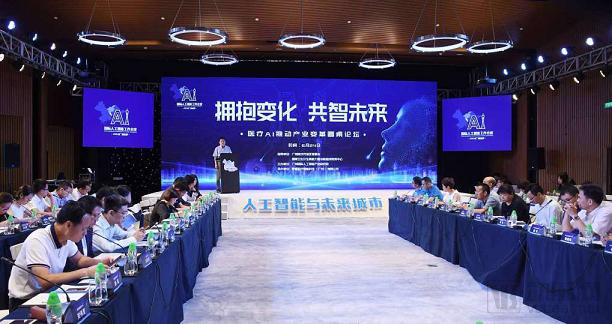
Guided by the Guangzhou Municipal People’s Government, hosted by the Nansha Development Zone Administrative Committee and the International Institute of Artificial Intelligence Industry, and organized by LinkDoc Health Intelligent Technology (Guangzhou) Co., Ltd.
Attendees included Tian Suning, Dean of the Guangzhou International Institute of Artificial Intelligence Industry; Professor Gu Dongfeng, Academician of the Chinese Academy of Sciences and Vice President of Fuwai Hospital; Professor Liu Shiyuan, Director of the Department of Radiology and Nuclear Medicine at Shanghai Changzheng Hospital; Professor Sun Dongdong from Peking University Law School; Liu Bo, Chief Scientist at LinkDoc Technology; and Jiang Xiaodong, Partner at Changling Capital, among other distinguished guests from government, industry, healthcare, and other sectors. They conducted in-depth discussions on the development direction and practical implementation of artificial intelligence in the medical field from three perspectives: policy, industry, and application.
Policies and Laws: The Foundation of Big Data and AI
Policies and laws serve as the fundamental guarantee for the development of big data in health and healthcare, as well as artificial intelligence. Zhou Gongwei, Deputy Director of the Statistical Information Center of the National Health Commission, has identified a basic trajectory characterized by gradual progression and deepening integration through his interpretation of policies on health and healthcare big data over the years.
Zhou Gongwei stated, “2014 was the year the concept of ‘big data’ emerged; 2015 was the year for top-level design of big data; 2016 was the year for policy refinement; and 2017 was the year for industrial incubation of big data. By 2018, it became the year for standardization of big data, as the China Electronics Standardization Institute and the Big Data Standards Working Group of the National Information Technology Standardization Technical Committee jointly released the White Paper on Big Data Standardization in that year.”
From a legal perspective, Professor Sun Dongdong of Peking University believes that due to the exponential surge in data within the healthcare industry and the continuous expansion of market size, data security cannot be overlooked. Legal regulation of the medical big data industry warrants serious attention from all stakeholders.
“The sources, quality, and security of medical data are issues that many national government departments will need to address in the future. In the process of building a unified national big-data platform for general health, China has initially drafted standards for this universal platform to enable organic interconnectivity and interpretation of data among different medical units, health institutions, and related enterprises,” stated Professor Gu Dongfeng, an academician of the Chinese Academy of Sciences and Vice President of Fuwai Hospital, emphasizing that artificial intelligence (AI) applications in healthcare cannot thrive without big data. In recent years, the state has introduced policies concerning internet-based mobile healthcare and general health, while hospitals have promoted the adoption of structured electronic medical records, leading to the storage and analysis of vast amounts of data. Meanwhile, he recommended prioritizing patient privacy protection; when promoting big data applications, personal identifiers such as names and addresses should be anonymized. “As far as I know, companies like Tencent and LinkDoc Technology attach great importance to the protection of personal private information. In addition to healthcare institutions and enterprises maintaining strong security awareness, relevant laws and regulations must be further improved.”
Currently, China faces a significant shortage of long-term law enforcement practices related to data security. Although relevant legal provisions exist as the basis for data security enforcement, the practical implementation of data protection laws needs to be further strengthened. On one hand, supporting data security standards and guidelines should be established to regulate the healthy development of emerging big data application models. On the other hand, China needs to continuously draw on international legal practices to enhance the proactive protection awareness among data owners, including enterprises and individuals, thereby further raising societal legal awareness regarding data security protection.
Su Zheheng, founder of AsiaInfo Security, advises that the industry should achieve comprehensive big data security protection by focusing on the following aspects: First, compliance with laws and regulations must be prioritized during the construction of security systems. Second, a three-dimensional approach covering pre-event, in-event, and post-event stages should be adopted to ensure system stability beforehand, maintain business continuity during operations, and guarantee timely maintenance and rectification afterward. Third, personnel management and training should be strengthened within the information security environment. Fourth, proactive protection measures should be implemented to build an active defense information security system.
Industry and Capital: The Fuel for Big Data and Artificial Intelligence
Public data shows that 2016 marked the first year when “AI + Healthcare” emerged as a major investment trend in China. In that year, a total of 27 companies secured financing, with 16 of them raising amounts in the tens of millions of RMB or USD.
Abroad, Flatiron Health, the most representative big data company in oncology, completed financing rounds of $130 million and $175 million in 2014 and 2016, respectively, and was acquired by Roche in 2018 for a total consideration of $2.1 billion. This case affirms the application value of artificial intelligence in the healthcare sector.
In most industries, the concept of a “unicorn” is defined purely by valuation: a company valued at $1 billion or RMB 6 billion is considered a unicorn. However, according to Jiang Xiaodong, Partner at Changling Capital, the essence of a unicorn lies in the three Chinese characters: “Du” (unique), “Jiao” (horn), and “Shou” (beast).
“Du” signifies that a company possesses unique characteristics; “Jiao” refers to a company’s competitive advantages, which can be continuously strengthened; and “Shou” denotes animalistic instinct, specifically the “wolf culture” frequently emphasized in Chinese business contexts. Only teams embodying this wolf-like spirit can rapidly stand out in fiercely competitive markets. Jiang Xiaodong believes that LinkDoc Technology, one of the early domestic pioneers in exploring medical big data applications, is such a company. Its development path mirrors that of Flatiron Health in the United States: while strategically laying the groundwork for intelligent clinical decision support solutions over the long term, it began expanding into the AI sector as early as 2017.
Although artificial intelligence is developing rapidly in the healthcare sector, Jiang Xiaodong emphasizes that its ultimate form in China’s medical field will by no means be to replace physicians, but rather to reshape and build the infrastructure for China’s future new healthcare system.
Specifically, artificial intelligence is driving transformative changes in the infrastructure of China’s future new healthcare system, primarily in two areas: first, New Medicine, which includes disease screening and prediction, patient selection for clinical trials, tumor diagnosis and treatment, drug discovery, and the identification of new targets and biomarkers; second, New Healthcare, which encompasses data structuring and standardization, aggregation and mining of multi-source heterogeneous data, computer-aided diagnosis, lesion delineation to optimize treatment plans, and health management.
Application and Implementation: The Value of Big Data and Artificial Intelligence
Prior to the clinical deployment of AI products, product approval constitutes a critical step. Peng Liang, Deputy Director of Department I at the Center for Medical Device Evaluation (CMDE) under the China Food and Drug Administration (CFDA), stated that artificial intelligence is fundamentally algorithm-driven, relying on data and computing power. AI-enabled medical devices are defined as medical devices incorporating artificial intelligence technologies. From the perspective of medical device software, they can be categorized into two types: standalone AI software and AI software components. Within the realm of medical devices, AI applications primarily encompass workflow optimization, pre-processing, routine post-processing, assisted diagnosis, and assisted treatment.
Currently, AI is widely applied in healthcare, with its utility spanning virtually every aspect of the field. However, determining what types of AI products hospitals truly need remains a critical consideration for numerous medical AI enterprises during product implementation and deployment. According to Professor Liu Shiyuan from Shanghai Changzheng Hospital, the AI products that hospitals genuinely require are those that align with clinical workflows, enhance efficiency and accuracy, offer user-friendly human-computer interaction, and demonstrate high sensitivity and specificity, ultimately providing terminal solutions tailored to specific anatomical regions and diagnostic objectives.
Liu Bo, Chief Scientist at LinkDoc Technology, strongly endorsed Professor Liu Shiyuan’s perspective. He stated that, guided by the principle that AI products must align with clinical usage scenarios, LinkDoc has reached a consensus on collaboration with Tianjin Chest Hospital to jointly establish the first AI-assisted diagnosis and treatment center for lung cancer in the Beijing-Tianjin-Hebei region. Headquartered in Nansha, Guangzhou, LinkDoc leverages its advanced data and algorithm platforms to distribute medical AI capabilities across China.
It is reported that LinkDoc Technology has established collaborative partnerships with more than 500 Grade IIIA hospitals and set up data centers. Currently, the LinkDoc medical big data platform has aggregated 2.8 million valid oncology patient records, with a single-disease tumor penetration rate exceeding 60%. In other words, 60% of newly diagnosed cancer cases each year are entered into LinkDoc Technology’s system.
Recently, Han Zheng, a member of the Standing Committee of the Political Bureau of the Communist Party of China Central Committee and Vice Premier of the State Council, inspected LinkDoc Technology, encouraging independent innovation in China’s medical big data and artificial intelligence sectors.
In the field of medical big data and artificial intelligence, many internet giants have also made strategic investments. Taking Tencent as an example, its AI product, Tencent Miying, is the only national open platform for AI-based medical imaging designated by the Ministry of Science and Technology of China.
According to Li Zhifeng, General Manager of Tencent’s Internet Business Group, “In 2018, Tencent Miying will explore applications in diabetic retinopathy, cervical cancer, breast cancer, and other areas. Rather than entering too many fields at once, Tencent will first deepen its technological capabilities before gradually expanding its scope.”
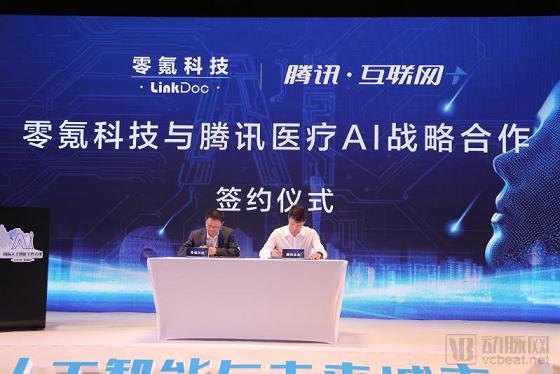
At the conference, Tencent and LinkDoc Technology also signed a strategic agreement on medical AI. Leveraging Tencent’s computing power and “Internet+” capabilities, along with LinkDoc’s extensive expertise in oncology, both parties will strengthen their collaboration in hospital integration and the refinement of AI products, forming a powerful alliance.
Guangzhou is one of the earliest hubs in China for artificial intelligence research. As a cluster and comprehensive pilot zone for the AI industry, Nansha District has been committed to building a global center for AI applications. In 2017, the Guangzhou International AI Research Institute was established. LinkDoc Medical Intelligence Technology (Guangzhou) Co., Ltd., as one of the first enterprises to settle in the institute and a government-backed medical AI unicorn, will drive industrial transformation and help Guangzhou’s medical AI sector establish a local foundation, extend its reach across China, and engage globally, becoming a new engine for the worldwide medical AI industry.