

Lian Technology Secures CFDA Approval After 5-Year R&D, Serves 100 Communities in Yinchuan with Seven-Scenario Health Management Solutions
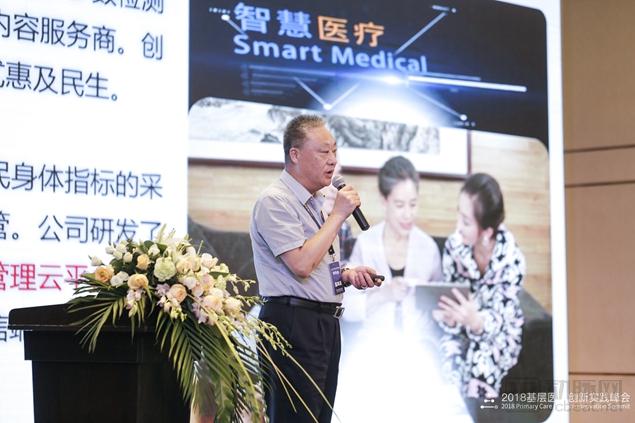
Feng Nanhai, Founder of Li'an Technology
Conference: 2018 Summit on Innovative Practices in Primary Healthcare
Location: Landison Plaza Hotel, Hangzhou
Presenter: Feng Nanhai, Founder of Li'an Technology
From June 9 to 10, the “New Structure – 2018 Summit on Innovative Practices in Primary Healthcare,” co-hosted by the National Engineering Laboratory for Internet Medical Systems and Applications, Sir Run Run Shaw Hospital affiliated with Zhejiang University School of Medicine, the Internet Medical Health Industry Alliance, and VCBeat, was grandly held in Hangzhou. The event featured six specialized forums, bringing together more than 1,000 top experts, scholars, industry talents, and investors from across China, and garnered attention from over 30 industry media outlets.
Feng Nanhai, founder of Li’an Technology, attended the summit at invitation and delivered a keynote speech titled “The ‘Mobile Internet + Health Dual-Entity’ Model Benefits Public Livelihood” at the sub-forum on frontiers in chronic disease management and health management. The following is curated by VCBeat (WeChat ID: vcbeat):
As of the end of 2017, the number of individuals with chronic diseases in China was approximately 300 million, among whom those under the age of 65 accounted for 50% of the chronic disease burden. In urban and rural areas of China, the proportion of deaths attributable to chronic diseases reached 85.3% and 79.5%, respectively, while the resulting disease burden accounted for 70% of the total disease burden. Chronic diseases in China are characterized by a large number of patients, prolonged disease duration, high medical costs, and substantial demand for healthcare services.
Medical wearable devices can transform healthcare models, reduce medical costs, and address the uneven distribution of medical resources. Among these benefits, dynamic monitoring of health indicators and timely feedback and assistance enable patients with chronic diseases to better manage their conditions, helping to tackle the challenge of the high prevalence of chronic diseases.
From 2012 to 2020, the development trend of health-oriented smart hardware in China saw a total market size exceeding RMB 8 trillion. The United States began research and development (R&D) on wearable devices in 2012. In the same year, Lian Technology simultaneously entered the R&D and application of medical and healthcare wearable technologies alongside the U.S. After years of exploration from 2013 to 2017, it became evident that medical-grade applications of wearable devices remained scarce. Throughout this period, Lian Technology has been continuously striving in these areas, exploring business models through demonstrations in various scenarios, and steadily advancing its journey.
Smart “Dual Consortium”: Applications of IoT Devices in Health Management
There are four key points regarding the implementation of chronic disease management through health information technology:
1. Leverage national healthcare reforms to establish an electronic health record system for residents, thereby forming a networked system for chronic disease management;
2. Leverage the chronic disease surveillance network system to monitor dynamic trends in chronic diseases;
3. Leverage universal detection/monitoring technology products and smart home health networks to meet the needs of out-of-hospital chronic disease management;
4. Establish a health service network platform, integrating health check-ups and post-examination services to enhance chronic disease management.
Among these, an important category of universal technical product applications for detection/monitoring is the use of IoT devices to measure physiological parameters. By continuously or real-time collecting long-term information from the human body, physiological indicators such as electrocardiogram (ECG), blood pressure, blood glucose, body temperature, heart rate, and respiration are gathered. The monitored data is then transmitted through a platform to empower primary care contracted physicians in providing health intervention services.
Regarding health management with broader population coverage, Feng Nanhai believes that the pain points in the primary healthcare management industry lie in the lack of service support mechanisms, the limited variety of home health monitoring products, and the difficulty in tracking long-term health data for patients. The most challenging aspects of appropriate health management technologies are the collection of residents’ physiological indicators and the community physicians’ supervision of patients with chronic diseases.
“Health management must be grounded in home-based monitoring data. Lian Technology has pioneered a service model that integrates ‘home health informatization’ with ‘medical informatization,’ while delivering robust cloud services to establish a national health management cloud platform. We have spent seven years advancing our ‘Internet + Health Management’ services.”
Feng Nanhai proposed the “Dual-Entity” model, a service mode that integrates “Home Health Informatics,” based on mobile internet and physiological parameter collection, with “Medical Informatics.”
“One is family health data; without it, medical data serves only to treat diseases rather than to prevent them.”
Lian Technology has developed a cloud-based platform for population health management with independent intellectual property rights, promoted intelligent multi-parameter health monitors, and provided personalized smart health management cloud service solutions via WeChat.
The integration of home health informatics with medical informatics aims to jointly address the current shortage of community healthcare professionals by ensuring effective health management at the household level. This is Lian Technology’s goal: to serve as the gatekeeper of family health.
"Multi-parameter, high precision, compact size, low cost, intelligent transmission"
What would it look like if there were an IoT product capable of detecting multiple health parameters with simple operation?
When formulating product design plans, the hardware standards for multi-parameter detectors encompass five aspects: first, multi-parameter capability; second, high precision; third, compact size; fourth, ultra-low cost; and fifth, intelligent data transmission.
In terms of technology, the multi-parameter detector utilizes infrared, photoelectric, and bioelectrical sensing technologies to measure 18 physiological parameters of the human body. The device is no larger than the palm of a hand, allowing users to perform measurements simply by touching it with their fingers.
In 2016, Li’an Technology launched a cloud-based service platform for nationwide health management, centered on home-based testing using wearable multi-parameter health monitoring devices. This system establishes a complete closed-loop process, ranging from household health data collection to health intervention services.
This intelligent multi-parameter health monitor can measure 18 physiological indicators—including blood pressure, blood glucose, blood oxygen saturation, heart rate, body temperature, respiratory rate, body mass index (BMI), basal metabolic rate (BMR), and body fat percentage—within minutes. It also features an integrated “one-cloud, three-terminal” service ecosystem, comprising a cloud-based population health management service, a physician PC terminal, a patient PC terminal, and a WeChat push notification service.
On November 6, 2017, the multiparameter monitor obtained Class II medical device registration from the CFDA; on November 29, 2017, it obtained the Medical Device Production License from the CFDA.
Multi-scenario applications for home health monitoring
Currently, Lian Technology’s products have been deployed in scenarios such as insurance, smart cities, integrated medical and elderly care, and occupational health services for functional communities. In collaboration with mobile carriers, its wearable devices for home health data collection are widely applied in various fields, including health-focused poverty alleviation and employee care programs.
1. Provide health management services for health insurance products of insurance companies
Collaboration with insurance companies primarily involves customizing exclusive management platforms and purchasing outsourced service projects to provide health management services to clients. Service offerings include health examinations, risk assessments, health interventions, and health education. The substantial data generated through this collaboration enables insurance companies to collect and analyze information for the development of personalized products, thereby shifting their role from mere post-event claims processing to proactive prevention and real-time intervention.
2. Establish a Regional Population Health Management System in the Construction of “Smart Cities”
Currently, in the smart city initiatives in Yinchuan City, Ningxia; Shuangluan District, Chengde; and the single-point access project of the Qinghai Health and Family Planning Commission to the Home Health Management Cloud Platform Service, Li’an Technology serves as the implementing entity through managed health kiosks or community health service centers/stations. It designs health management service packages tailored to the actual needs of regional health management services, oversees and manages their effective implementation, and provides residents with health management services by leveraging multi-parameter home testing devices and a comprehensive health management cloud platform system.
It was revealed that Lian Technology has provided health management services to residents in 100 communities in Yinchuan.
3. Public Health Sector Supports Family Doctor Contract Services
Although favorable policies guide the family doctor contracting service, the urgent need to empower this service remains unresolved. The shortage of primary care personnel and inadequate management tools hinder primary healthcare institutions from providing large-scale population health management services, thereby constraining their ability to fulfill this mandate. Addressing the issue of “contracts signed but services not delivered” requires relying on a fully closed-loop, intelligent system to empower family doctor contracting services.
(1) Establish a closed-loop system for resident health data collection and health management services;
(2) The innovative “WeChat Official Account Interactive Information System” achieves real-time synchronization between the platform and WeChat Official Accounts, enabling the delivery of personalized health promotion plans based on users’ current test results. This system truly liberates community physicians by facilitating continuous interaction with users and ensuring committed follow-up care.
(3) Intelligent health information collection, unrestricted by time (anytime, anywhere) or space (within or outside the hospital), supports the integration of clinical data, daily wearable monitoring data, and basic medical and health management data, enabling health data analysis and response across an individual’s entire life cycle.
4. Health Management for Employees of Enterprises and Public Institutions
Lian Technology adopts a B2B2C model to provide enterprises with employee health management solutions. Characterized by the synchronization of technology and services, it employs contractual trusteeship, on-site staffing, and periodic management models. Through remote monitoring, automated online assessment and feedback, as well as offline consultation and evaluation, Lian Technology issues personalized health plans to achieve individual health management.
5. Integration of Medical and Elderly Care
China entered an aging society as early as 2001. Physiological parameter monitoring and disease prevention for the elderly population have become significant social issues. By implementing long-term monitoring and health management for individuals in institutional care and those aging at home, it is possible to effectively intervene in the prevention and control of chronic diseases, thereby reducing their incidence and mortality rates. This approach not only enhances the level of informatized services in elderly care institutions but also improves operational efficiency and reduces operating costs.
6. Hospitals implement a care model combining in-hospital nursing with out-of-hospital monitoring for chronic diseases
In China, the treatment of two highly prevalent chronic diseases—hypertension and diabetes—is largely confined to in-hospital care. After discharge, patients often lack follow-up intervention and guidance. Coupled with poor medication adherence and limited self-management capabilities, this results in suboptimal treatment outcomes and poor prognosis. The integrated model of in-hospital monitoring and out-of-hospital follow-up management significantly contributes to effective chronic disease control, reduction of complications, and improvement in quality of life. This approach has been adopted and promoted as part of the health management center model at the Third Xiangya Hospital.
7. Carrier Business Expansion
With the rapid development of internet technologies and the continuous enhancement of operators’ innovation capabilities, the internet healthcare industry chain will develop in greater depth. Health management services have become part of operators’ IT product portfolios, enabling operational exploration in mass markets, government and enterprise sectors, health-focused poverty alleviation initiatives, and employee health care programs. This effectively fills the gap in operators’ medical product offerings, drives IT-related revenue growth, and enhances user stickiness and loyalty.
China Mobile, China Unicom, and China Telecom have all launched multiple product lines, including smart hospitals, telemedicine, regional healthcare, health management, and big data. This demonstrates that telecommunications operators are no longer just traditional service providers; by leveraging their data processing capabilities and technology, they have penetrated numerous vertical industries, reshaping public perception. Multi-parameter monitoring devices for home health empowerment have become key partnerships for telecom operators in initiatives such as poverty alleviation through healthcare and employee care programs, as they explore innovative commercial service models.
Currently, Lian Technology’s products have entered markets in Ningxia, Qinghai, Gansu, Hebei, Shanxi, Beijing, Zhejiang, Nanjing, Shenyang, Xinjiang, and other provinces and cities. The “Smart Hardware + Health Management Services” package series is priced comparably to an ordinary smartphone and has been well received by the general public.
Feng Nanhai believes that Lian Technology is doing more than just hardware devices; it is providing health management solutions. It is not merely about data collection, but also about health data analysis and artificial intelligence systems. By integrating home health informatization with primary healthcare informatization, the company uses smart hardware for collecting human physiological indicators as an entry point to implement applications in multiple scenarios.