

From Technical Specifications to Brand Trust: Healthcare Goes Global at a Higher Gear in 2026
At the recently held 2026 Future Healthcare and Medicine Conference in Shanghai, leading executives and investors from China and the global healthcare industry gathered to discuss the future of medical and pharmaceutical innovation. The agenda covered not only technology-driven trends such as AI-enabled innovation and end-to-end digitalization, but also a critical challenge facing Chinese healthcare companies as they expand globally: how to move beyond “product expansion” and achieve “true brand expansion”.
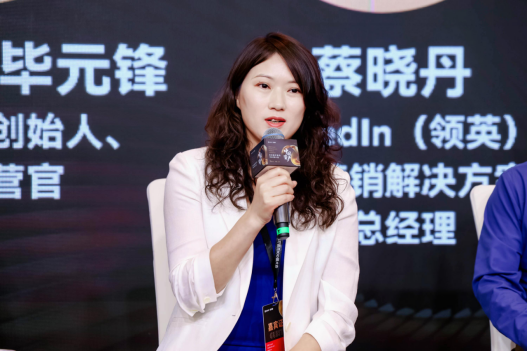
During the conference, Vianne Cai, Head of Marketing Solutions, LinkedIn China, noted that many Chinese healthcare companies encounter bottlenecks in overseas markets not because of insufficient product or technological competitiveness, but because of a gap between brand awareness and deep trust. “When overseas buyers have not yet included a company on their list of trusted suppliers, decision-making often defaults to the simplest dimension: price,” Vianne Cai said.
This gap is emerging against the backdrop of a broader structural upgrade in the industry. Industry data shows that China’s medical device exports have been shifting from traditional consumables toward equipment and higher-value product categories. In 2024, medical equipment accounted for 43.6% of China’s medical device export structure, while medical consumables accounted for 38.0%. However, a structural upgrade does not automatically translate into an upgrade in trust. According to Vianne Cai, brand capability is increasingly becoming part of a company’s organizational capability. Brand influence is not merely the result of external communications; rather, it is the external manifestation of internal capabilities. “In global markets, brands are not simply ‘created’; they are built through continuous practice and organizational discipline,” she said.
As a global professional networking platform with 1.3 billion members, LinkedIn brings together 61.3 million healthcare professionals worldwide, including 10.6 million medical professionals. Compared with many other sectors, the trust-building mechanism in healthcare is far more rigorous, given the industry’s long decision-making cycles, fragmented stakeholder roles and heightened sensitivity to risk. LinkedIn’s insights into healthcare decision-makers in North America show that 54% of healthcare decision-makers say that purchasing decisions involve more than four stakeholders. These stakeholders are not limited to procurement and clinical teams, but also include “hidden buyers” from finance, legal, business development and other functions. This means that companies need to influence not just one individual, but an entire committee-style decision-making chain.
“Many companies mistake exposure for trust. But in overseas healthcare markets, exposure is only the beginning,” Vianne Cai pointed out. Overseas buyers rarely start by searching for an unfamiliar brand from scratch. Instead, they tend to conduct long-term observation and pre-screening. They examine whether a company consistently produces professional content, whether its leadership communicates with stability and credibility, and whether it has third-party endorsements such as international certifications, benchmark case studies, expert validation and authentic customer voices. When these signals are missing, procurement decisions often revert to the lowest-risk option, where price becomes the only comparable factor.
To turn trust into a replicable growth pathway, Vianne Cai emphasized two key priorities: entering the “trusted entry points” of overseas decision-makers and turning content into assets that are verifiable, cumulative and convertible. She noted that the most efficient path for healthcare companies going global is not to “invest more broadly,” but to “go deeper.” Companies should first establish a publicly referenceable benchmark case in a key market, then build academic and professional trust through experts, KOLs and customer testimonials, and finally use long-form content such as white papers and webinars to support evaluation and conversion.
LinkedIn platform research shows that 87% of B2B buyers are more likely to trust credible industry experts or thought leaders. Meanwhile, video is becoming an increasingly effective format: 63% of purchasing decision-makers say they want to use video content to support their buying decisions.
In practice, more companies are replacing one-off advertising with a more systematic content matrix. For example, leading global CDMO companies are using LinkedIn to build top-of-funnel awareness of their technology platforms, compliance capabilities and manufacturing strengths. They then use carousel posts, document ads and webinars to continuously move professional information deeper into the mid- and lower-funnel stages.
In another case, a Chinese biotech company partnered with authoritative scientists in the industry to develop in-depth marketing content and strengthen its thought leadership. As a result, its click-through rate increased from no more than 0.8% to at least 1.6%, while brand awareness rose by 22%.
For Chinese healthcare leaders accelerating their global expansion, product strength is the ticket to entry, but trust is the real test. In the age of AI, marketing can become faster and more precise, but it cannot bypass cultural differences or manufacture emotional resonance. The future key to brand marketing for healthcare companies lies in combining technological precision with human connection and building brands with warmth. Because in healthcare, what buyers truly purchase is never just a set of technical specifications. They are buying safety, reliability and trust.