

MedTecX: Focusing on Chronic Diseases like Urology, Becoming a Globally Innovative Medical Technology Platform Company Born Out of Necessity
MedTecX
Medical Technology Developer
On February 26, 2026, the thermotherapy device and disposable prostate thermotherapy equipment independently developed by MedTecX officially received NMPA registration approval. This became China’s first approved thermal vapor ablation system for treating benign prostatic hyperplasia (BPH), breaking Boston Scientific's long-standing monopoly in this field. The news quickly went viral in the medical device industry, urology circles, and investment community, bringing the usually low-profile "MedTecX" into the spotlight.
The approval of a blockbuster product often serves as the starting point for the public’s perception of a company. However, this starting point can easily become a preemptive and overly narrow "label" — it seems that MedTecX is perceived merely as a company focused on BPH innovative devices.
However, VCBeat found on the NMPA official website that long before obtaining the first domestic approval for thermal steam ablation, MedTecX already had multiple products approved for marketing, including the world's first non-invasive low-frequency tibial nerve stimulator. This cross-disease and cross-technology platform layout clearly cannot be defined as a "single-track company."
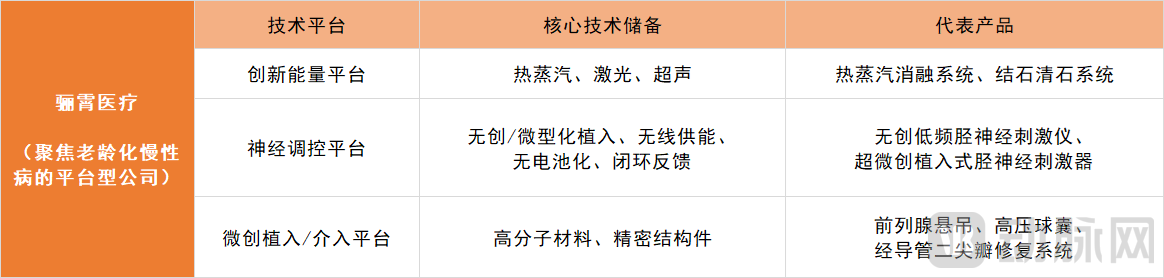
In fact, the thermal steam ablation system is just one of the product lines that has taken the lead in MedTecX's platform-based layout. Essentially, the company is an innovative technology platform enterprise focused on aging-related chronic diseases. It has established three world-leading core technology platforms, namely innovative energy ablation, miniature neuromodulation and minimally invasive implantable intervention technologies, covering multiple medical fields including urology, neuromodulation and cardiology. The approval of its first registration certificate for the thermal vapor ablation system is just a glimpse of its comprehensive innovative product portfolio.
The resume of MedTecX's founding team itself carries a strong interdisciplinary flavor. The company's founder, Dr. Cheng Lifei, graduated from Tsinghua University with dual bachelor’s degrees in chemical engineering and business management. He then obtained a Ph.D. in engineering and economics from Carnegie Mellon University (CMU) in the United States, followed by an EMBA degree (finance focus) from the Wharton School of the University of Pennsylvania, showcasing a multidisciplinary background in technology, economics, and finance.
CCTV "Credit China" Exclusive Interview with Dr. Cheng LiFei
In the early stage of his career, he was responsible for pharmaceutical R&D management at Merck's U.S. R&D laboratories. After joining Medtronic in 2012, he made a cross-industry transition from pharmaceuticals to medical devices, overseeing strategic planning, investment and acquisitions, emerging businesses, and an innovative technology fund in collaboration with Sequoia Capital for the Greater China region. During this time, he led Medtronic’s acquisition and integration of Kanghui, its investment in LifeTech Scientific, and the integration of Medtronic and Covidien. He has a deep understanding of the industrial logic in both the U.S. and China, the operational mechanisms of the pharmaceutical and medical device industries, and the operational processes from technology and R&D to commercialization. Because of this, his perspective on the industry is not limited to any single-point technology but focuses more on how innovative medical technologies can truly move from the lab to patients.
In Cheng Lifei's view, for a long time, global medical device innovation followed a relatively fixed path: original technologies were developed in the United States or Israel, then acquired by large companies, and several years later entered the Chinese market through imports. This not only caused Chinese patients to miss out on timely benefits, but also left domestic companies in a passive position of "imitation and following" for a long time.
This is precisely the situation that MedTecX hopes to break. Cheng Lifei's logic is very clear:Focusing on aging-related chronic diseases, parallelly developing cutting-edge global technologies in major chronic disease fields such as urology, neurology, and cardiology, fully leveraging China's R&D and supply chain advantages, prioritizing the Chinese market, and then expanding globally.
The company is named "LiXiao", symbolizing a dark horse soaring through the skies. Its English name, "MedTecX," signifies accelerating (X) technological innovation (Technology) with clinical value (Medical). This dark horse aims to break not only the time gap between domestic and international technologies but also the multiple boundaries between patients and cutting-edge technologies, doctors and engineers, and different disciplines.
To break these boundaries, a single technological product is clearly insufficient. Therefore, since its inception, MedTecX has established three major technological platforms: energy ablation, neuromodulation, and minimally invasive implantation and intervention, systematically addressing unmet clinical needs in chronic age-related diseases through a matrix-based development approach.
On the innovative energy technology platform, MedTecX has made strategic layouts covering three technical routes: thermal vapor, laser and ultrasound. Among them, thermovapor efficiently transfers heat through convection, featuring high energy density and a uniformly controllable ablation area. Its core application scenario is benign prostatic hyperplasia (BPH), with the potential to expand into localized prostate cancer treatment. Lasers have irreplaceable advantages in scenarios such as lithotripsy and large gland BPH. Ultrasound excels in non-thermal effects, offering unique safety benefits. The three approaches complement each other in parallel, enabling the energy platform to flexibly match different diseases and patient stratification needs.
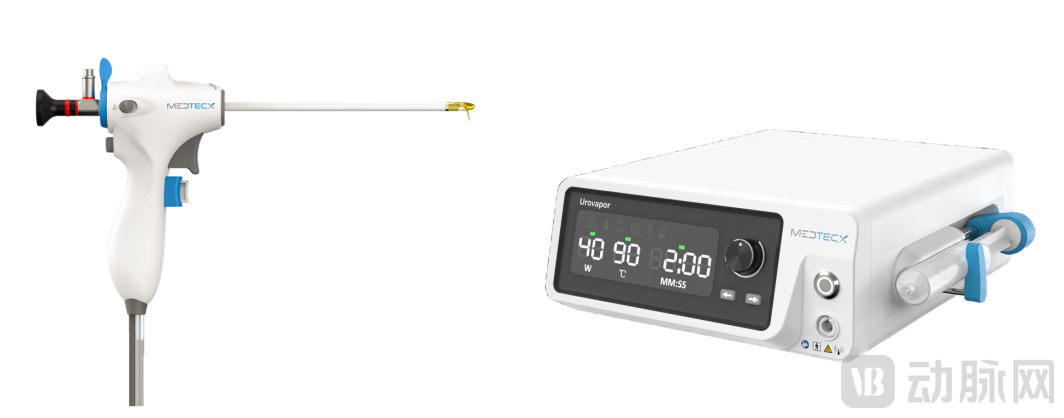
The BPH Thermal Vapor Therapy System Earns the First Chinese-Made Certification
The neuromodulation platform, on the other hand, reflects MedTecX's judgment on the evolving direction of chronic disease treatment. Traditional neuromodulation models have long relied on battery-powered implantable pulse generators (IPGs), which present issues such as significant trauma, the need for two-stage surgery, limited battery life, and high costs. Moreover, the long-term response rate is approximately 50%-70%, leaving a considerable proportion of patients unable to benefit. To address these pain points, MedTecX has clearly defined its technological evolution path. Miniaturization, Battery-Free, and Closed-Loop Control, along with Wireless Energy Transmission and Algorithm ControlContinuous breakthroughs in key areas.
Currently, the company has built a product lineup for "non-invasive management to ultra-minimally invasive implantation" targeting overactive bladder (OAB). Among these, the non-invasive low-frequency tibial nerve stimulator and stimulators have been approved for marketing and can be used in outpatient, rehabilitation centers, or home settings to help doctors and patients identify suitable treatment parameters. Ultra-Minimally Invasive Implantable Tibial Nerve Stimulator Initiates Registration Clinical Trial, it improves symptoms such as urgency, frequency, and urge incontinence by electrically stimulating the tibial nerve, regulating the sacral micturition reflex, and inhibiting bladder overactivity. It is the world's first innovative neuromodulation product that simultaneously features miniaturization, wireless power supply, and closed-loop control. In the future, this neuromodulation platform will also extend to more targets, exploring its potential applications in more chronic disease scenarios.
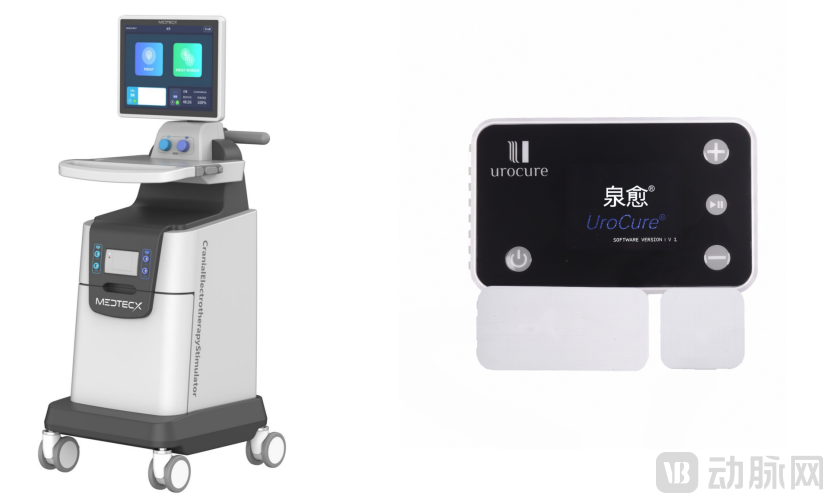
World's First Non-Invasive Low-Frequency Tibial Nerve Stimulator
The minimally invasive implantation and intervention platform focuses on new materials and precision structural design, concentrating on two major pathways — through natural orifices and through blood vessels — and is committed to replacing open surgeries with ultra-minimally invasive methods. Centered on this platform, MedTecX has established engineering capabilities covering key elements such as nickel-titanium alloy, polymer materials, catheters, and delivery systems. In terms of specific layout, the natural orifice direction focuses on urology and gastrointestinal surgery as the main battlefield, with core products already entering the registration or commercialization stage; the vascular direction is represented by mitral valve interventional repair devices, which are poised to become the next-generation disruptors in the global market.
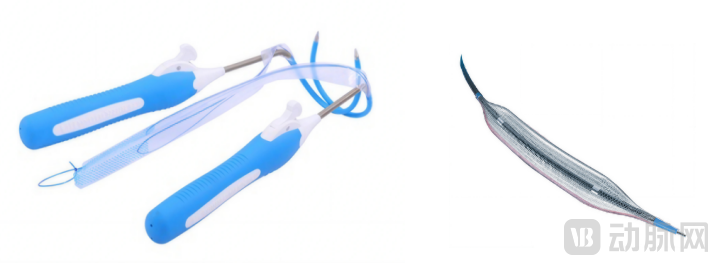
Leading Products for Urinary Incontinence and Urinary Stones in China
These three platforms, despite their different technological approaches, exhibit a high degree of synergy in the market and form a saturating competitive advantage. Take urology as an example, the core products for the three types of diseases — benign prostatic hyperplasia, overactive bladder, and stones — correspond to energy ablation, neuromodulation, and interventional consumables, respectively. The technical logic varies for each, but they target the same department system, the same group of doctors, and the same channel network. This means that after a product completes access and clinical application in a department, subsequent products in the same field can leverage existing customers and channel partnerships to quickly integrate the product portfolio into comprehensive solutions, achieving the market synergy effect of "strengthening customer relationships and loyalty, thereby becoming the preferred partner for clients."
Behind the platform-based layout and market-end collaboration lies a set of organizational and technical capabilities that can support the operation of complex systems. MedTecX's solution is to deeply share the R&D, supply chain, and commercialization teams of its three major platforms, forming an operational process and system that is "technologically transferable, market-wise collaborative, and operationally scalable."
At the R&D level, the company has established a global technology reserve from an early stage, continuously collaborating with overseas and Chinese experts. Meanwhile, it focuses on overcoming core bottlenecks across various platforms — persistently improving energy efficiency, treatment consistency, and stability for the thermal steam platform, while concentrating on wireless power supply and closed-loop adaptive systems for the neuromodulation platform. This effort gradually builds up an independent technological system. So far, MedTecX has applied for more than 200 patents, including nearly 100 overseas patents.
At the talent level, engineers with different technical backgrounds flexibly move between projects and collaborate across platforms as a norm. At the operational level, mid-platform departments such as quality, production, and supply chain provide integrated support for all product lines. Once a technical module on one platform is successfully implemented, it can be quickly migrated to other indications or device forms, amplifying R&D experience and development efficiency. Because of this, MedTecX's three major technology platforms are not isolated parallel lines but an integrated innovation system that continuously evolves and grows.
After the platform architecture is completed, how to pinpoint the optimal implementation direction among numerous chronic disease sectors? MedTecX provides a clear answer.
Cheng Lifei stated that the core of product selection is not to chase industry trends, but to accurately identify unmet core clinical needs, and then leverage platform capabilities to quickly deliver safer, more efficient, and better-fitted solutions.
Taking the newly approved next-generation thermal vapor ablation system as an example: The demand of benign prostatic hyperplasia (BPH) patients for minimally invasive treatment, safety, and therapeutic certainty continues to increase, while existing clinical methods often struggle to balance all three. The physical properties of thermal vapor energy are naturally suited to the physiological structure of the prostate, enabling efficient and precise tissue ablation while ensuring safety, directly addressing this clinical pain point.
Take the upcoming clinical trial of the ultra-minimally invasive implantable tibial nerve stimulator as another example: the patient population with overactive bladder (OAB) is vast, but existing medications primarily focus on symptomatic relief and struggle to achieve a cure; traditional sacral nerve modulation has limitations such as high invasiveness and treatment costs. MedTecX proposes a new generation of neuromodulation solutions featuring "miniaturized implants + battery-free design + closed-loop management." By utilizing wireless external power supply and relying on closed-loop feedback algorithms, it achieves personalized precision treatment and adaptive management tailored to "one solution per person."
"Our approach is to reverse-engineer product combinations from disease scenarios, rather than matching existing products to diseases and seeking applications," summarized Cheng Lifu. From BPH to OAB, these may appear to be two independent disease tracks, but their underlying logic is highly unified: first, identify the unmet core needs in the long-term management of chronic diseases, then continuously iterate through a reusable and scalable technology platform to constantly deliver better clinical solutions.
After verifying the technology platforms and product selection paths one by one, MedTecX is transitioning from "single-point innovation" to "systematic growth." Supporting this leap is a strategy that deeply integrates global R&D technology reserves, an agile supply chain, and forward-looking commercial layouts.
In the top-level design of MedTecX, globalization is not a "going overseas" choice after the product matures, but an endogenous gene embedded in the organizational structure from the very beginning. The collaborative model of "technology development in San Francisco, product development in Shanghai, scaled production in Suzhou, and linkage between the Chinese and overseas markets" gives the product a technical foundation for competing in the global market from the moment of its inception.
Driven by this, the pace of product advancement is also continuously accelerating. The company expects to launch 2-3 blockbuster products each year. At the same time, the internationalization process is speeding up, and its thermal steam ablation system is expected to achieve its first overseas market entry this year.
At the commercialization level, MedTecX has adopted a forward-looking layout. "We didn’t wait for the product to be completed before starting to build a business team; instead, we began market planning two to three years in advance, using the market to drive R&D," said Cheng Lifa. As early as 2022 to 2023, the company had already established a basic consumables product line and formed a sales team to collaborate with clinical doctors and gain access to end-user hospitals. In 2024, the company officially kicked off its commercialization phase, and by 2025, the basic consumables business is expected to generate hundreds of millions in revenue. With the approval and market launch of key products such as thermal steam, the company is entering a phase of scaled market access and rapid growth.
Looking to the future, MedTecX's strategic blueprint is clear: first, to deepen its main channel in urology and continue to maintain market leadership; second, to cultivate neuromodulation as the second growth driver and extend it to more chronic disease targets; third, to improve the global integrated supply chain and product development system, building a platform enterprise with international competitiveness.
Throughout the history of the global medical device industry, the path of starting with a single technological product, expanding through multiple pipelines, and integrating via mergers and acquisitions to eventually grow into a platform giant has been repeatedly validated.
Medtronic is the most typical reference case. In 1949, Medtronic started as a medical equipment repair company and launched the first portable pacemaker in 1957. Over the following decades, through independent research and development alongside continuous mergers and acquisitions, the company gradually expanded from a single product to multiple fields including cardiovascular, neuromodulation, diabetes, and surgical solutions. In 2015, it acquired Covidien for approximately $49.9 billion, further enhancing its capabilities in minimally invasive surgery and hospital-based services, thereby solidifying its position as the global leader in medical devices.
Boston Scientific is no exception. The company initially entered the market through interventional devices and gradually built a platform-based layout covering multiple fields such as cardiovascular, urology, endoscopy, and neuromodulation through continuous technological integration and mergers and acquisitions. Among its key products in urology, the Rezum Thermal Vapor Ablation System, which originated from the acquisition of NxThera, has enabled the company to establish a unique advantage in the field of minimally invasive treatment for benign prostatic hyperplasia.
These platform-based enterprises do not rely on explosive growth driven by single products. Instead, they integrate multiple technological platforms into a long-term growth flywheel through continuous iteration of product pipeline portfolios and channel synergy. To a certain extent, the platform-oriented development path adopted by Lyshine Medical is now taking shape in the same way.
From thermal vapor ablation to neuromodulation, from urology to cardiac interventions, and from the Chinese market to global expansion — the first approval of China-produced thermal vapor is just the beginning. As the three major technology platforms mature, multiple product lines progress in commercialization simultaneously, and domestic and international markets create synergy, MedTecX's true strength, integrating products, technology, and channels through platform capabilities and an international perspective, is only starting to emerge.