

KouTech races to obtain the first domestically produced and second globally registration certificate for general-purpose microsurgical robots

KouTech
Developer of Microsurgical Robots
Recently, the microsurgical operation control system (trade name: Kai) independently developed by KouTech has officially passed the special review for innovative medical devices by the National Medical Products Administration, entering the "green channel," becoming the first domestically produced general-purpose microsurgical robot to enter the "green channel" in China.
Kai is positioned as a universal microsurgery platform that spans multiple anatomical regions and departments. Its compact and lightweight design allows for rapid and flexible deployment in the operating room, covering all surgical areas from deep head and neck to the extremities. The system's front end is equipped with wristed instruments that are only 2mm in diameter and feature seven degrees of freedom, enabling highly precise anastomosis of blood vessels and lymphatics under 0.3mm in narrow and deep surgical fields, while maintaining sub-millimeter precision consistency during prolonged procedures. Combined with high-definition 3D stereoscopic vision, surgeons can accurately identify minute structures and tension changes, supporting integrated applications and teaching demonstrations across multiple fields such as reconstructive surgery, maxillofacial surgery, hand surgery, and repair and reconstruction surgery.
At the same time, Kai successfully completed all registration clinical trials in April 2026, conducted across multiple centers including Shanghai Ninth People's Hospital (affiliated with Shanghai Jiao Tong University School of Medicine), Ningbo No. 6 Hospital, and Beijing Shougang Hospital, making it the first domestically produced general-purpose microsurgical robot to complete registered clinical trials in China.
The dual milestones of entering the green channel and completing clinical trials have converged, not only signifying that Kai's innovation has gained national-level recognition, allowing for expedited communication and priority review in subsequent registration evaluations, but more crucially, that its core clinical trials have all been completed, with the critical data for registration fully collected. This means that KouTech is expected to obtain the first domestic general-purpose microsurgical robot registration certificate in China and become the second company globally to receive certification in this field.
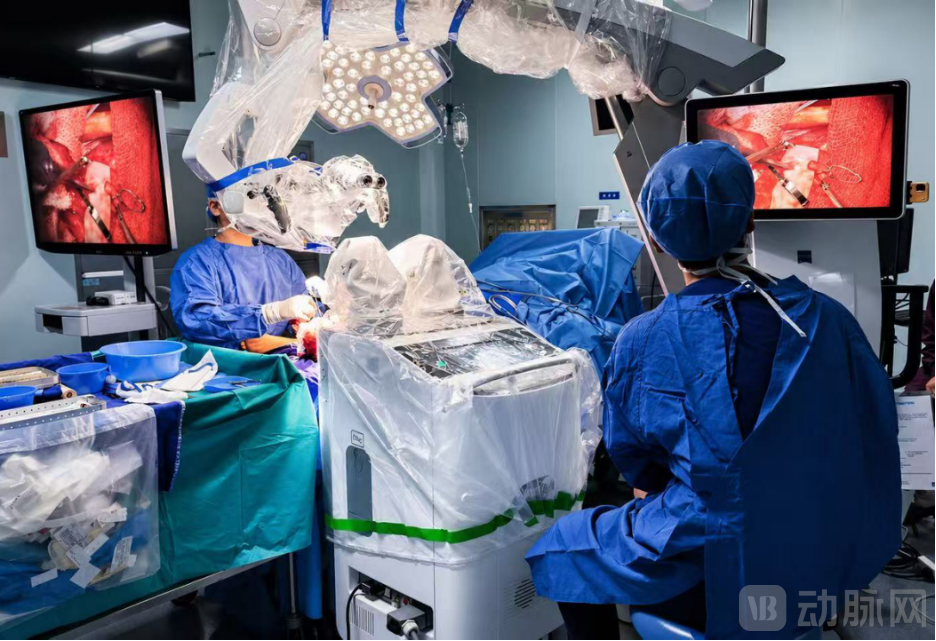
Microsurgery has long been regarded as one of the most challenging disciplines in the surgical field with the highest entry barriers and the longest training cycles. It heavily relies on the surgeon's experience and techniques, yet faces a structural contradiction of scarce high-quality medical resources. During actual surgeries, doctors must not only identify minute tissue structures that are hard to discern with the naked eye but also confront physiological tremors of 100 microns that cannot be eliminated by human hands, while maintaining a rigid, bent posture for extended periods. This high-intensity, prolonged manipulation of tiny tissues represents the ultimate test of a surgeon's experience and physical and mental endurance. More importantly, in ultra-precise fields such as lymphatic anastomosis, nerve repair, and pediatric surgery, traditional methods have already reached the limits of human capability, creating an urgent clinical need for new tools that can break through these boundaries.
KouTech systematically addresses the aforementioned pain points with Kai. Its design focuses on three dimensions—spatial accessibility, precise operation, and surgeon-friendliness—collectively enabling the robot to not only extend human capabilities but also systematically reconstruct the traditional ceiling of microsurgery.
Compact design to solve spatial and positioning limitations in the operating room. In response to the pain points of dense equipment such as ventilators, microscopes, and anesthesia machines in operating rooms with limited space, Kai achieves high compatibility with an extremely compact body design and a smaller overall size, allowing it to be smoothly integrated into existing surgical procedures and deployed quickly and flexibly. The compact size not only saves space but also overcomes the placement limitations of traditional platforms, covering all areas of the human body from the deep neck to the extremities of the limbs, meeting the versatile surgical needs across different body parts and departments.
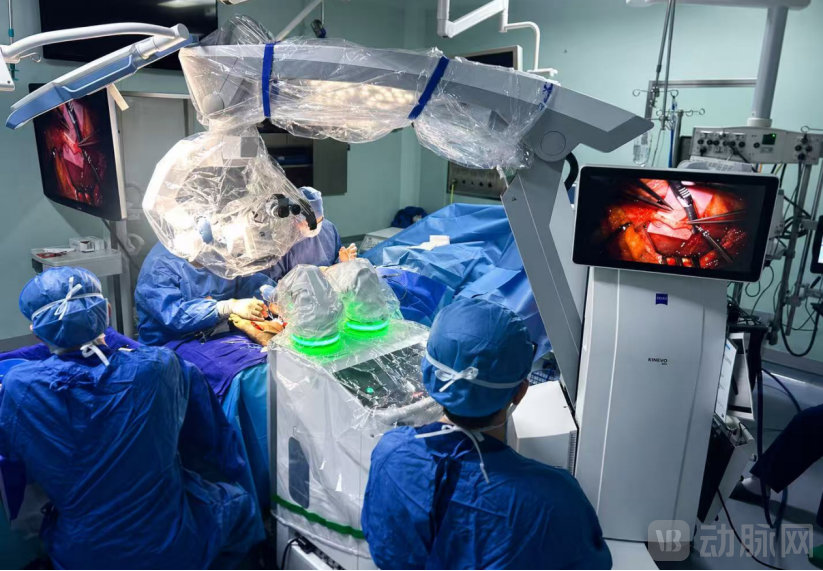
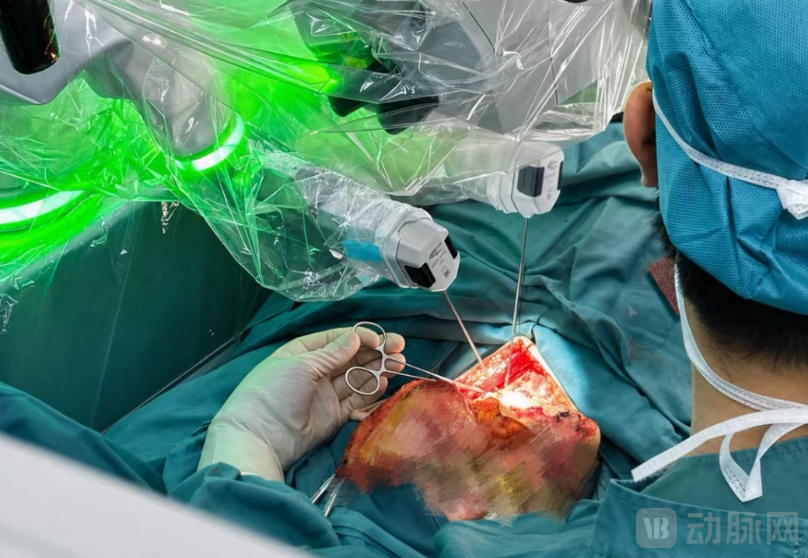
Breaking through operational limitations in deep surgical fields with highly flexible wristed instruments. Kai is equipped at its front end with wristed instruments that are only 2mm in diameter and feature seven degrees of freedom. Compared to the FDA-approved Symani system (with instrument diameter of 3.5mm), Kai's instruments are more delicate, enabling access to deeper and narrower anatomical regions with dense and intertwined nerves and blood vessels, and allowing for stable execution of precise operations such as dissection, suturing, and anastomosis on minute structures. Coupled with high-precision motion control, the system effectively suppresses hand tremor and fatigue-induced errors. Even during prolonged surgeries, stitch spacing, tension, and suture trajectories remain consistent, enabling surgeons to accurately perform highly challenging microsurgical procedures in narrow and deep surgical fields.
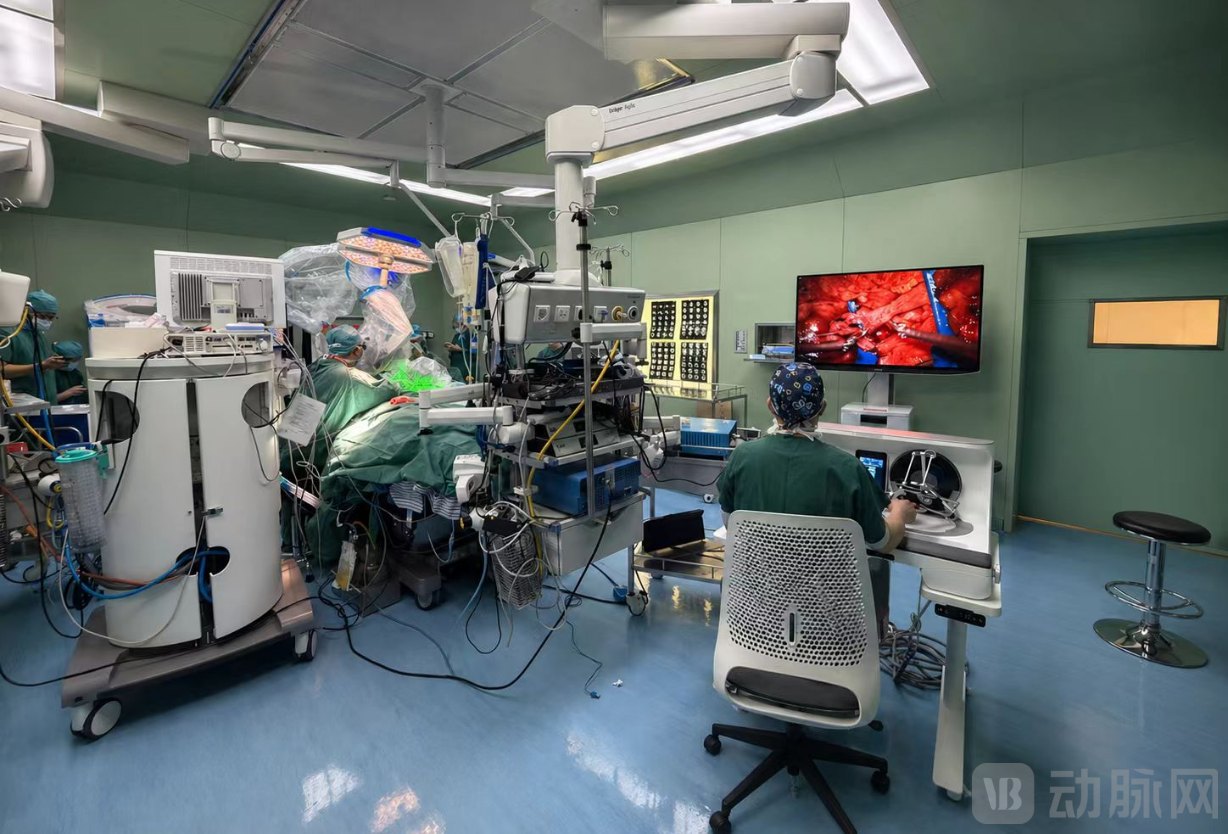
Reshaping human-machine interaction logic with detached remote control. Traditional microscopic surgery requires doctors to stand for long periods with their eyes fixed to the eyepiece. Kai adopts a detached remote control design, combined with high-definition 3D stereoscopic vision, allowing surgeons to perform operations in a natural sitting posture via a screen. It supports pausing and restarting during the procedure, enabling them to maintain precision and focus during prolonged microscopic tasks. This ergonomic design significantly reduces physical strain, helping to fundamentally improve the occupational health of surgeons and extend the "career prime" of top experts. Additionally, the system's logic is intuitive, controls are smooth, and feedback is clear, effectively lowering the learning curve and operational burden.
It should be noted that the implementation of the above advantages not only requires innovative design concepts but also heavily relies on highly challenging engineering execution. The founder of KouTech pointed out that miniaturized design is by no means a simple proportional reduction. At the design level, when the size of the instrument crosses a certain critical point of physical characteristics, conventional transmission mechanisms will no longer be applicable, and an entirely new design logic must be adopted. At the processing level, material and process behaviors at the microscopic scale exhibit significant non-linear characteristics, such as material collapse issues during micro-hole machining below 1mm. At the mass production level, it is necessary to simultaneously ensure yield rate, cost, and stability.
KouTech not only overcame the aforementioned design and processing challenges but also achieved scaled commercial mass production with high yield rates through its unique processing system and continuous optimization, solidifying its competitive barriers in terms of cost and quality control.
In terms of clinical implementation speed, KouTech has also ranked at the forefront of the industry. It is reported that KouTech's multi-center clinical trial was successfully completed in April 2026. The trial brought together top microsurgical clinical centers in China, including Shanghai Ninth People's Hospital, Ningbo No. 6 Hospital, and Beijing Shougang Hospital, and achieved cross-departmental coverage across multiple body parts in its clinical design.
Its clinical value has also been validated through several "national firsts." On May 27, 2025, a team led by Professor Zhang Yixin, Director of the Reconstructive Microsurgery Center in the Department of Plastic and Reconstructive Surgery at Shanghai Ninth People's Hospital affiliated with Shanghai Jiao Tong University School of Medicine, used Kai to complete the world's first robot-assisted radical resection of a giant dermatofibrosarcoma protuberans (20cm × 20cm), followed by microsurgical transplantation and repair using a free ALT perforator flap from the right thigh. During the procedure, Kai achieved precise anastomosis of perforator arteries and veins with diameters as small as 0.5 to 1.2mm, marking a milestone as the first clinical validation of 0.5mm-level vascular anastomosis performed by a domestically produced microsurgical robot.
Professor Zhang Yixin from Shanghai Ninth People's Hospital Shares Insights on the Use of Kai
Thereafter, Kai's indications were rapidly expanded. In July 2025, Ningbo No. 6 Hospital completed the first ultra-thin perforator flap transplantation assisted by a domestically produced microsurgical robot in Zhejiang Province, with robot-assisted ultra-microsurgical vascular anastomosis of 0.5mm vessels performed throughout the procedure. In September of the same year, the Department of Oral and Maxillofacial Surgery at Peking University School and Hospital of Stomatology completed the first domestically produced microsurgical robot-assisted vascularized free flap reconstruction surgery in maxillofacial region in China, overcoming the challenge of vascular access in the narrow and deep cervical space.
As KouTech's multi-point clinical applications blossom in China, its global layout is also accelerating. From the very beginning of product development, KouTech has adopted globalization as a parallel strategy. The confidence behind this strategy not only comes from the capabilities validated in real clinical scenarios but also stems from its fully independent intellectual property rights system.
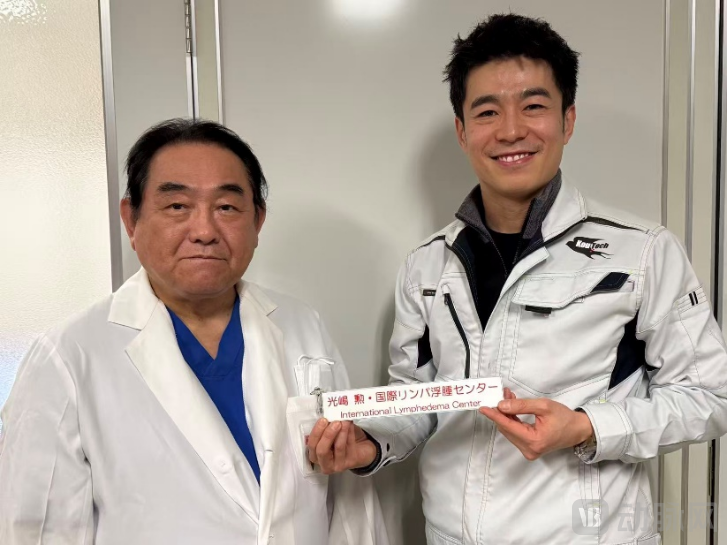
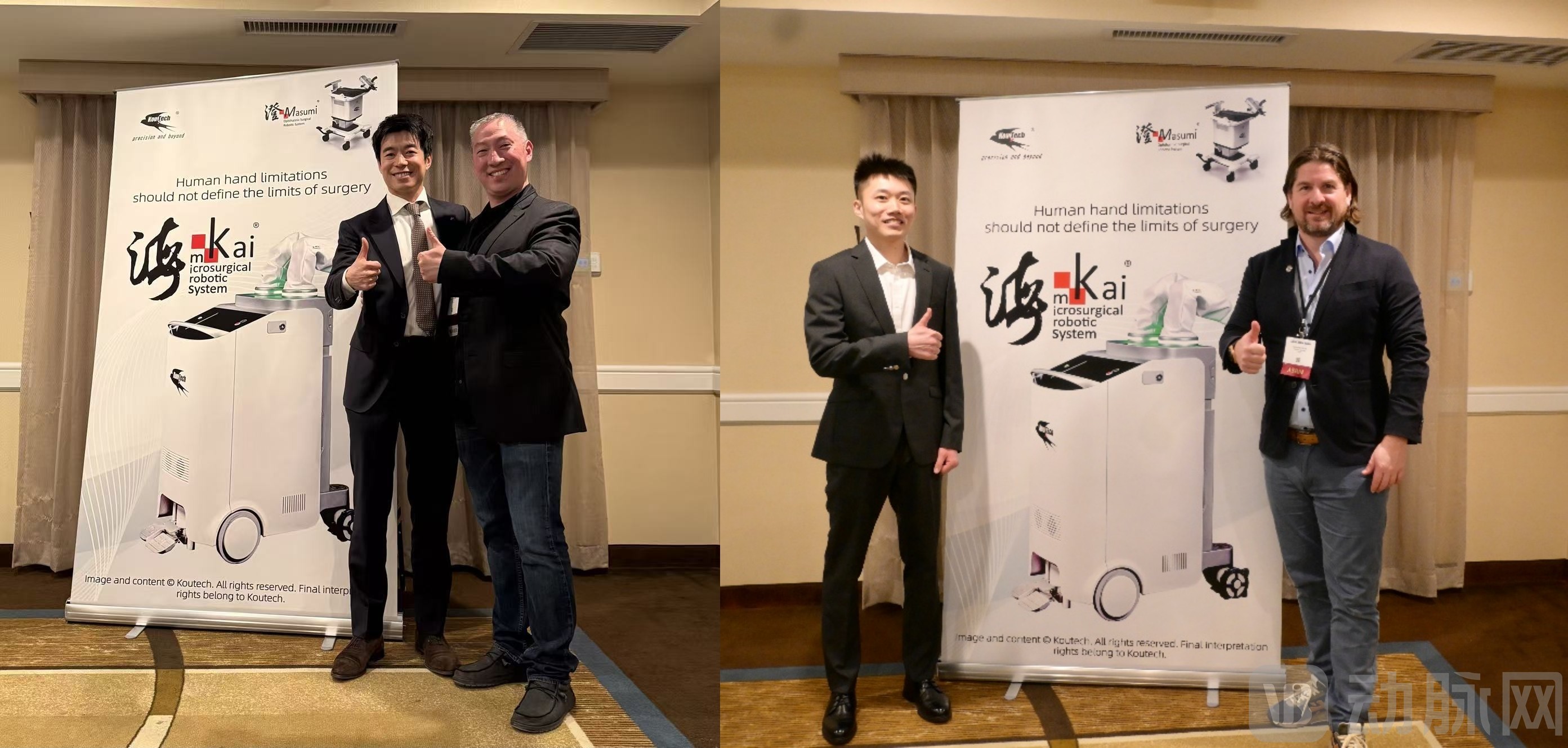
It is reported that KouTech has established deep strategic presence in the United States, Europe, Japan, and other regions. The company has not only set up overseas research and development centers, production bases, and a comprehensive patent system but has also frequently appeared at top-tier international academic annual conferences by virtue of its exceptional product capabilities, earning high recognition from directors of world-renowned hospitals and academic leaders. Furthermore, KouTech has reached in-depth collaborations with internationally leading medical institutions such as Johns Hopkins University, The University of Texas MD Anderson Cancer Center, University of Chicago Medicine, and King's College Hospital. Some of these hospitals have already initiated animal studies, module experiments, and application explorations in advance, laying a solid clinical trust foundation for future overseas registration and commercialization.
While commercializing its products, KouTech is also looking further ahead. Currently, the global market for microsurgical robots is still in its early stages, with surgical paradigms and operational procedures yet to be standardized, and industry standards yet to be established. KouTech's ultimate goal is not only to create a high-performance robot that can truly meet clinical needs but also to define an entire set of standards – from KouTech's standards, to China's standards, and eventually to global standards.
As Kai officially enters the National Medical Products Administration's innovation "green channel," this rising star in ultra-micro surgical robotics, armed with innovative products and full independent intellectual property rights, is accelerating towards this vision...