

Nearly 100 Hospitals Across 15 Provinces in China Validate Implementation; Qidian Zhibao Breaks New Ground in Refined Medical Insurance Management

ZHIBAO
Intelligent Application Developer for Medical Insurance Data
34.2 Billion, 10,357 People! These Are the Recovered Medical Insurance Funds and the Number of Suspects Arrested Mentioned in the National Healthcare Security Administration's "2025 Statistical Express on the Development of Medical Security Undertakings."
These staggering figures clearly signal to the outside world — the supervision of medical insurance funds is far from being mere talk. Moreover, the reform of the medical insurance payment methods continues to deepen, and the regulation of medical insurance funds is becoming increasingly stringent.
For example, on February 2, the National Healthcare Security Administration issued the "Notice on Doing a Good Job in the Supervision of the Medical Security Fund for 2026," continuously reinforcing the high-pressure situation of medical insurance fund supervision; the "Detailed Rules for the Implementation of the Regulations on the Supervision and Administration of the Use of Medical Security Funds," which came into effect on April 1, provided a stronger legal tool to crack down on fraudulent activities such as “picking up and dropping off patients by car, reducing or waiving fees, giving kickbacks, and giving away rice, flour, and oil” and “reselling returned drugs” ……
The sharper the supervision of medical insurance funds becomes, the higher the requirements for hospitals' operational capabilities regarding these funds. However, due to factors such as a shortage of professional talent, limited ability to build foundational systems, and data silos, hospitals find it quite challenging to implement refined management of medical insurance funds. They need to find capable and trustworthy third parties to provide effective support.
The establishment of Qidian Zhibao (Beijing) Technology Co., Ltd. (hereinafter referred to as Qidian Zhibao) is precisely to provide such support. This is a national high-tech enterprise that has been established for less than three years. Its self-developed "Medical Insurance Intelligent Hub" platform has been implemented in nearly a hundred hospitals across 15 provinces in China.
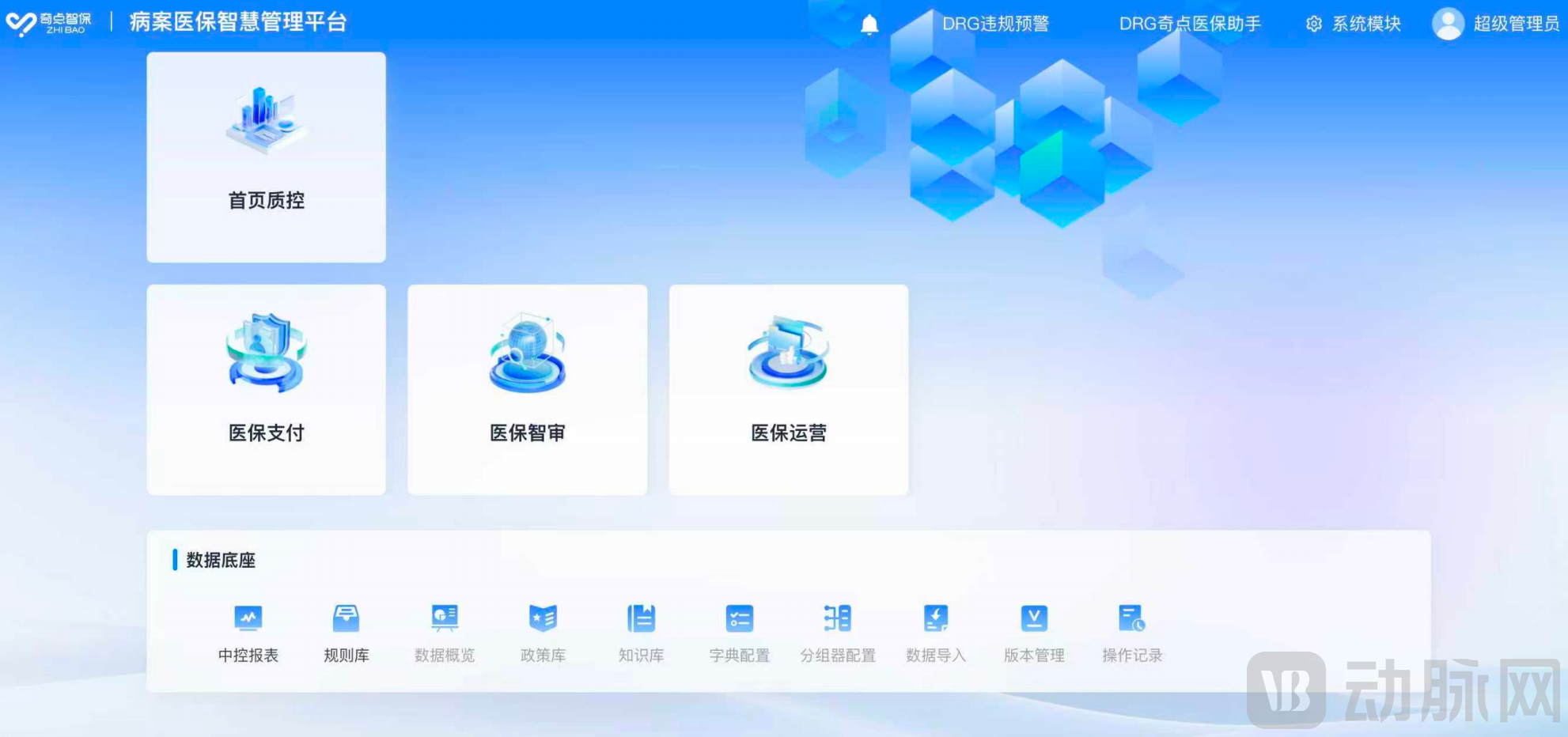
The underlying logic for achieving the aforementioned results in less than three years lies in: Qidian Zhibao's precise insight into the systemic pain points in hospitals' refined medical insurance management, based on which it has constructed effective and implementable solutions and a delivery system.
What are the pain points faced by hospitals in carrying out refined medical insurance management?
To correctly understand this issue, it is first necessary to clarify the underlying logic of medical insurance cost control. In the past, medical insurance payments were mainly based on fee-for-service — the number of examinations performed, medications prescribed, and consumables used by the hospital were reimbursed by medical insurance according to a checklist. Under this model, hospitals naturally tended to expand in scale. Nowadays, DRG/DIP converts each disease into a "package price," with payments made according to a fixed standard. If the treatment cost is lower than the "package price," the hospital retains the surplus; if it exceeds the budget, the hospital bears the loss itself. The original intention of this mechanism is to force hospitals to control costs and improve efficiency. However, in practice, most hospitals are deeply trapped in the following four dilemmas:
The First Dilemma: The Superposition of Information Gap and Cognitive Dislocation, Precise Cost Control Faces Multiple Obstacles
The update frequency of medical insurance policies is accelerating. The medical insurance drug list is adjusted once a year, and the DRG/DIP disease grouping plan is adjusted every two years in principle… Each adjustment affects changes in payment standards, indication restrictions, and reimbursement scope. However, there is always a difficult-to-eliminate time lag and information gap between policy issuance, implementation, and hospitals truly understanding and embedding it into their business processes. The acceleration of update frequency will undoubtedly widen this gap further.
More challenging is the presence of a deeper cognitive dislocation in the practice of refined medical insurance operations. The review logic of the Medical Insurance Bureau is essentially based on compliance checks involving rules, codes, and statistics; whereas the decision-making logic of clinical doctors stems from individual patient conditions, treatment experience, and medical guidelines, prioritizing effectiveness. These two logics have fundamentally different starting points—what doctors consider a reasonable treatment plan may be deemed non-compliant by medical insurance due to improper code selection, imprecise wording in medical records, or deviation from statistical pathways. The superposition of this information gap and cognitive dislocation forms an insurmountable chasm in hospital medical insurance management.
The Second Dilemma: Data "Fragmented and Uncoordinated," Precision Decision-Making Lacks Basis
In addition to the challenges of information gaps and cognitive dissonance, many hospitals also face the issue of "data silos." Clinical systems, medical record systems, billing systems, and health insurance systems operate independently. When doctors issue medical orders, they cannot access fee and grouping information in real time; when medical coders assign codes, they are unable to utilize health insurance audit rules; and when management makes decisions, they often rely solely on delayed summary reports. The lack of data connectivity and inconsistent rules lead to conflicting conclusions for the same medical record across different systems, making it difficult for managers to make precise judgments.
The Third Dilemma: Lack of Deeply Customized Products Makes It Difficult to Assess the Essence of Medical Records
Despite multiple companies having previously entered the market in an attempt to empower hospitals to solve the aforementioned pain points, most have chosen to focus on single scenarios such as homepage quality control, pursuing breakthroughs at isolated points. This approach fails to achieve true data integration, resulting in suboptimal usage outcomes. A deeper issue lies in one of the core challenges of refined medical insurance operations: determining "intrinsic compliance" — that is, whether diagnoses and medications align, whether surgeries correspond with indications, and whether the length of hospital stays matches treatment pathways. Traditional rule engines can only identify explicit violations, such as duplicate charges or excessive item quantities, but cannot comprehend the semantic logic within medical records. "Able to see costs, but not intrinsic details," remains a key bottleneck constraining the implementation of related products.
The Fourth Dilemma: Project Delivery Stalled, Trust Relationship Hard to Establish
In addition to issues with the products themselves, "unfinished projects" are also highly prominent in the healthcare IT industry. Previously, media outlets have exposed cases where some vendors absconded without completing delivery. The reasons for this are closely related to the lack of clinical background in technical teams among certain IT vendors and insufficient understanding of hospital business processes. Hospitals invested funds and manpower but were unable to obtain a usable system. This situation not only severely undermines hospitals' confidence in purchasing new systems but also leads to distrust of IT and digital systems, thereby hindering the healthy development of the entire industry.
In response to the aforementioned pain points, Qidian Zhibao has chosen a challenging yet correct solution path—instead of seeking a single breakthrough, it builds a unified data governance foundation and, based on this, constructs the "Intelligent Healthcare Insurance Core" platform of Qidian Zhibao.
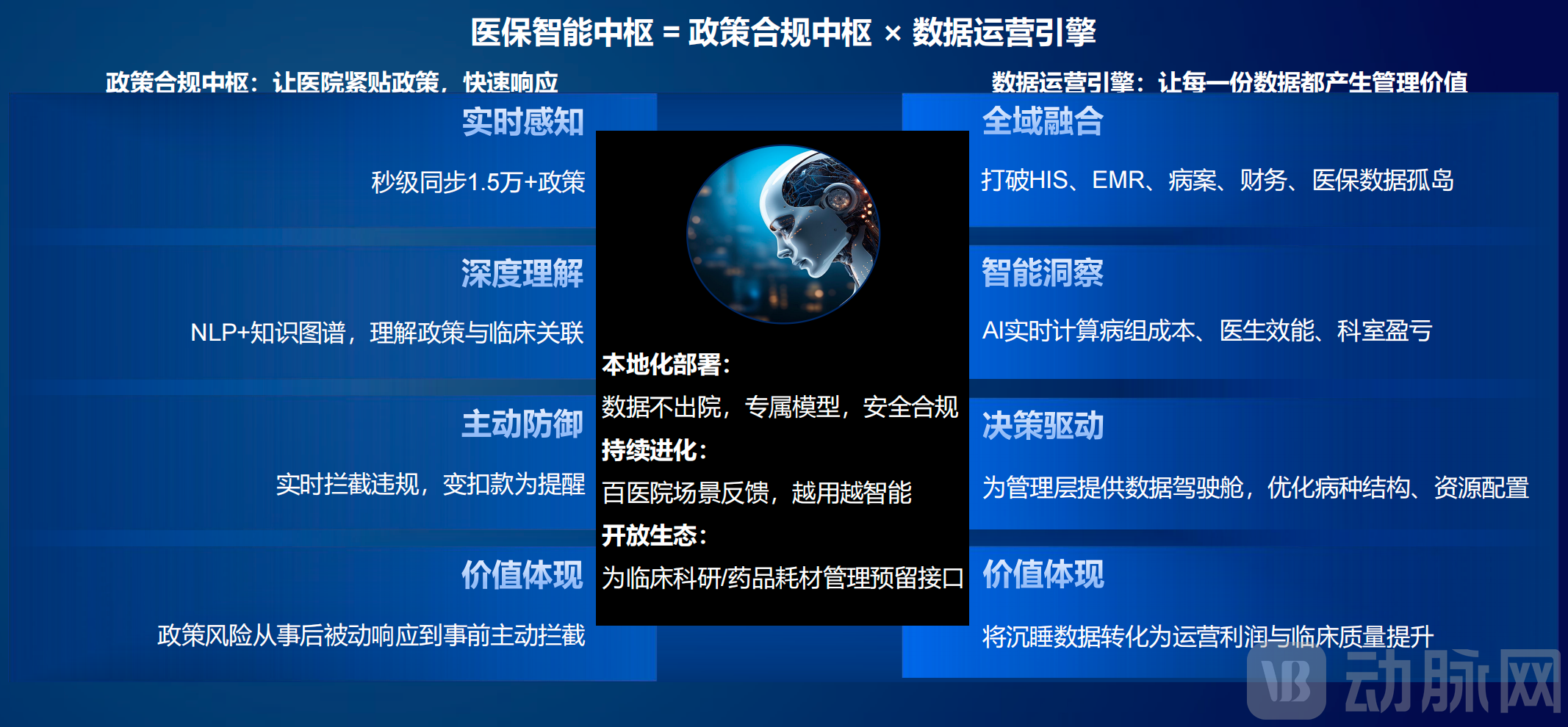
The "Intelligent Medical Insurance Hub" platform can integrate all scenarios of refined medical insurance operations: starting from the front page of medical records, the platform uses intelligent coding recommendations and logic verification for in-depth quality control, automatically identifying logical conflicts between codes and diagnoses, surgeries, and costs. For instance, it detects issues like "surgical procedures performed but no corresponding code" or "code mismatch with diagnosis," and completes error correction before data upload. Compared to the traditional manual spot-check model, this feature achieves real-time, full-coverage quality control, significantly reducing the risk of medical insurance rejections caused by coding errors.
Entering the diagnosis and treatment process, the platform provides real-time DRG/DIP pre-grouping results and cost simulations when doctors issue medical orders. Doctors can view the expected disease group for the current treatment plan, the payment standard for that group, and the difference between the costs already incurred and the payment standard. This pre-guidance mechanism allows doctors to be aware of cost and grouping information during the treatment process, rather than discovering a loss only after the patient is discharged.
At the same time, the platform has a built-in dynamically updatable medical insurance rule knowledge base, covering various audit rules issued by the national and local medical insurance bureaus. The system provides compliance warnings before expenses occur, conducts real-time interception during expense occurrence, and performs retrospective analysis after expenses are incurred. For example, when a doctor prescribes a restricted medication, the system automatically pops up the medical insurance payment conditions for that drug and prompts whether the patient meets the criteria, thereby avoiding post-treatment rejection of medical insurance claims.
All the aforementioned data and analysis results ultimately converge into a dynamic operational decision-making dashboard provided for hospital management. Hospital administrators can intuitively see which diseases are advantageous, which departments face risks of deficits, and which cost items deviate from reasonable ranges, enabling them to make precise discipline planning and cost control decisions.
It needs to be emphasized that these four major functions share the same data foundation and rule control system, achieving data from a single source, unified rules, and process linkage. The grouping alerts seen by doctors at the clinical end, the rules invoked by the medical insurance department during review, and the analysis reports viewed by the hospital director in the management dashboard all originate from the same data source and follow the same rule logic. This is not a simple stacking of functions but a reconstruction of the technical logic for hospital medical insurance management from the underlying architecture. And this is precisely one of the core competencies of Qidian Zhibao.
Another core competitiveness of Qidian Zhibao is the ability to truly implement projects.
As mentioned earlier, the issue of unfinished medical informatization projects continues to plague the industry's development. In response, Qidian Zhibao has proposed a "Zero Unfinished Projects" commitment, which is supported by a proven delivery management system.
Li Zhongbo, founder and chairman of Qidian Zhibao, elaborated on this approach in an interview: Upon entering a hospital, the first task of the delivery team is not to roll out all functions comprehensively, but to accurately identify the departments with the most urgent customer needs and prioritize solving the most challenging problems. This strategy of addressing pain points first can help establish a foundation of trust in the shortest possible time.
Throughout the project advancement, the team consistently adheres to a core principle: ensuring that clients do not need to repeatedly explain their requirements. From pre-sales to delivery, the same team follows through the entire process, ensuring an uninterrupted and comprehensive understanding of the client's pain points. The delivery manager is stationed on-site with the client, while the backend is supported by R&D and medical experts in real-time, enabling immediate responses when issues arise. This collaborative mechanism between on-site and backend significantly reduces the time for problem response and resolution.
As a result, Qidian Zhibao not only ensures that new projects are launched with high quality in a relatively short period but is also capable of taking over secondary bidding projects and completing the delivery anew. Up to now, the business scope of Qidian Zhibao has covered 15 provinces in China, including Hebei, Shanxi, Shaanxi, Anhui, Henan, Sichuan, Fujian, Guangdong, Xinjiang, Qinghai, and Jiangxi, and achieved millions in profits by 2025.
Looking to the future, Qidian Zhibao has not stopped. According to Li Zhongbo, the company is collaborating with top medical institutions such as the First Affiliated Hospital of Xi'an Jiaotong University to explore the application of large models in scenarios like medical record content quality control, aiming to further enhance the ability to identify complex medical logic.
From a broader perspective, China's healthcare system is undergoing a profound transformation from scale expansion to value-based healthcare. The reform of medical insurance payment methods is not just a temporary or localized policy adjustment but a reconstruction of the entire logic of medical resource allocation. In this transformation, data will become a new production factor, and intelligent tools will be the core competitiveness of hospitals. Technical solutions that can help medical institutions strike a balance between compliance and efficiency and build a bridge between cost control and quality will not only be commercial successes but also key forces driving the high-quality development of China’s healthcare system.
What supports Qidian Zhibao to go further is a versatile team: Founder and Chairman Li Zhongbo has thirty years of experience in the medical industry, having gone through sales, management, entrepreneurship, and investment, and personally led a company to become a listed entity; the heads of key positions such as operations, delivery, business, and sales also come from leading companies in the industry, with an average of over ten years of professional experience.
Not only that, but Qidian Zhibao has also completed a key talent layout: inviting a group of senior industry experts and core backbone who left their former companies due to the pandemic's impact to join. With their deep understanding and extensive experience in the medical insurance industry, they set off together with the company, jointly promoting the high-quality development of refined management of medical insurance in China. As Li Zhongbo said, "We start from a high ground of experience, making every penny of medical insurance funds used more wisely."