

Turing-Darwin Lab's Zhao Yu: AI's Disruption of the Pharmaceutical Industry Begins with Reunderstanding Life | 2026 Oncology Week
From April 15 to 21, 2026, World Cancer Day and Cancer Prevention and Control Awareness Week will take place as scheduled, with the theme of"Early Prevention, Early Screening, Early Treatment,"United in the Fight Against Cancer", at this important time node,VCBeatOfficial Launch"Light of Life:Tumor Prevention and Control: Breaking the Deadlock”Special Topic Planning.
Currently, China's tumor prevention and treatment is undergoing a critical transition from "treatment-focused" to a full-chain model of "prevention + early screening + precision treatment + rehabilitation management." Advanced therapies such as CAR-T, TCR-T, ADC, and mRNA vaccines continue to make breakthroughs, accelerating cancer treatment into a new era of personalization, precision, and combination therapies.
As a vertical media in healthcare, VCBeat will focus on key topics such as technological breakthroughs, clinical translation, policy implementation, and industrial collaboration, engaging in dialogues with clinical experts, corporate decision-makers, and industry specialists to document how innovative technologies bridge the gap between laboratories and markets, taking root, blossoming, and bearing fruit within the industrial landscape.
“On one side, there is a lack of medical resources and drugs for tumor clinical treatment, and on the other side, the industryOnlyFocusing on forty to fifty popular targets. The root of this contrast lies in our insufficient understanding of diseases. There are about 3,000 targets with true drug-development potential, but restricted by a lack of knowledge regarding disease mechanisms, currently FDA-approved oncology drugs only cover approximately 100 targets.IndividualTarget"The remaining targets are not unwilling to discuss, but rather misunderstood."Recently, Zhao Yu, a researcher at the Western Research Institute of Computational Technology and the deputy director of the Turing-Darwin Laboratory, told VCBeat.
On the global map of cancer prevention and treatment, waves of technological breakthroughs are surging, but the challenges in clinical practice remain heavy. The key issue may not lie in the speed of molecular discovery, but in the insufficient understanding of the disease. And AI is becoming the variable that breaks through cognitive boundaries.
In the 32nd year of 2026China Cancer Prevention and Awareness WeekOn the occasion of its arrival, VCBeat spoke with Zhao Yu, an explorer dedicated to using a computational medicine platform to reinterpret diseases and push AI from "finding molecules" towards "understanding life."
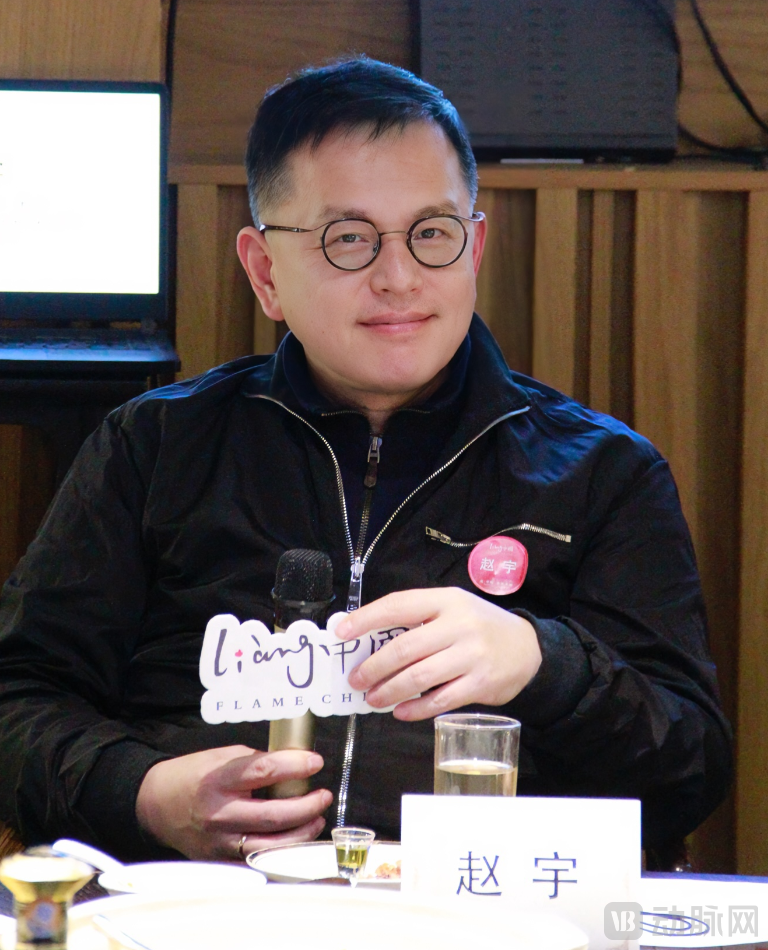
Zhao Yu, Researcher at the Western Institute of Computing Technology of the Chinese Academy of Sciences and Deputy Director of the Turing-Darwin Laboratory
In Zhao Yu's view, behind the clinical diagnostic challenges such as tumors lies the truth of the slow progress of life sciences over hundreds of years: human understanding of diseases largely depends on the accidental inspiration of scientific geniuses, and most major discoveries that changed medical history originated from "serendipitous findings."
This model, which highly relies on accidental inspiration, is not only slow and inefficient but also uncontrollable, far from meeting the unmet clinical needs.
It is worth looking forward to the fact that AI may now disrupt the logic of innovative drug development, including cancer diagnosis and treatment.
Zhaoyu stated that AI is currently becoming a "brain with an IQ of 1000" outside the human body. It is not based on traditional probability and statistics but relies on a computational medicine platform built on information theory. It does not perform simple retrieval and statistics; instead, it mines intrinsic connections in massive high-dimensional data that are imperceptible to the human eye, thereby forming an "emergent" capability that touches underlying mechanisms never before understood by humans.
This will give rise to a completely different AI pharmaceuticals pathway.If previous AI merely focused on "molecular models" with the aim of reducing costs and increasing efficiency, then the current "biological model" will reconsider diseases from the perspectives of pathogenesis and the human body as a whole, potentially disrupting the traditional paradigm of the pharmaceutical industry.
Zhaoyu compared the "biological model" to "studying human soil science" — not focusing on a single molecule or target, but examining the entire functioning of life.
"We are always in an era of change without realizing it; every day passes by like flowing water, yet it might be a significant day in the history of innovative drugs," said Zhao Yu.
01.
Not short of molecules but short of drugs, where is the problem?
Zhaoyu often mentions a point of view: The R&D system in the pharmaceuticals industry will eventually be disrupted.
New drug development has a well-known “Anti-Moore's Law", the R&D efficiency will decrease by half every nine years.
The industry has long been governed by the "Thirty Percent Rule"—a decade, a billion US dollars, and less than a ten percent success rate—an already incredibly high threshold. Nowadays, innovative drug development has entered an even harsher phase: "16 years, 2.6 billion US dollars, and a mere 3 percent success rate."
Zhaoyu believes that the root of this problem is not the speed of molecular discovery, but the insufficient understanding of the disease.
"Out of the 25,000 coding genes in humans, more than 600 have been approved by the FDA as drug targets, but in the Chinese market, there are only about forty to fifty popular targets. The rest are rarely mentioned due to a lack of deep understanding," Zhao Yu pointed out.
This has led to an "awkward" situation:On the one hand, pharmaceutical companies are fiercely competing on known targets, with "over 600 generic drugs and more than 60 allosteric molecules for certain targets in China"; on the other hand, clinical departments such as oncology face a shortage of drugs, leaving many problems unresolved.
"There is no shortage of molecules in clinical practice, but there is a shortage of drugs." In Zhao Yu's view, this is not an efficiency issue, but a directional one, as new drug development in the past largely relied on scientists' "inspiration."
"But now things are different. Zhao Yu told VCBeat that AI can significantly expand the boundaries of human intelligence. 'For example, one of the three greatest mathematicians representing the pinnacle of human intelligence, Gauss, had an IQ close to 300, while ordinary people have an IQ of around 100. Can we use AI to create an external brain with an IQ of 10,000 or even 100 million?'"
Zhaoyu admitted that although the brain with an IQ of 100 million is still on the way, the brain with an IQ of 1000 has currently been established.
The computational medicine platform built by Zhao Yu's team belongs to this kind of "brain." Its working method is not based on retrieval or statistics but rather on information theory, seeking out connections invisible to the human eye within massive high-dimensional data. Zhao Yu refers to this as "emergence."
"The concept of emergence strongly emphasizes the understanding of wholeness; that is, the phenomena presented at the nth level cannot be demonstrated by the superposition of the n-1 level. In the medical field, researchers are accustomed to dividing the human body into the stomach, intestines, liver, spleen, kidneys, or into departments such as cardiology, thoracic surgery, and orthopedics. However, no matter how detailed the division, it is still difficult to understand the entire human body. What AI aims to achieve is precisely this comprehensive understanding."
02.
Deciphering the "Code" of Cancer Through Holistic Understanding
A computational medicine team in China completed a study five years ago that clearly demonstrated the value of "holistic understanding" in the medical field.
Around 2021, the team published a paper in a subsidiary journal of *The Lancet*, with conclusions that were both groundbreaking and "fatalistic." For the first time, the paper provided a mechanistic explanation from the germline genome level for HER2-negative breast cancer, which accounts for over 80% of breast cancer patients:In the congenital germline genome of these patients, the abnormal activation state of the HER2 signaling pathway has already been encoded.
In other words, the risk of breast cancer for some women is not an acquired or random occurrence but is encoded in their genome from birth.As age increases, especially after the age of 45 when immune capacity declines, this phenomenon of being "Pre-coding"The risk began to manifest, and the incidence rate increased significantly."
"This conclusion was groundbreaking at the time, 'making it difficult for many medical experts to accept,'" Zhao Yu stated.
To explain this conclusion, Zhao Yu used a metaphor, stating that everyone has thousands of signaling pathways in their body, just like a large factory with thousands of dashboards working non-stop. If only a few dashboards light up red, it is not enough to constitute a problem.Only when a specific combination and a specific number of dashboard indicators turn completely red does it lead to problems, meaning the occurrence of diseases in the human body.
"We mapped the signaling pathways named by biologists to human genomic data, then associated the signaling pathways with disease phenotypes, and finally used a computer-based medical platform to reconstruct this process, leading to our conclusions and models."
Based on this "causal-level" cognitive breakthrough, the team further developed a personalized breast cancer risk assessment tool based on germline genomic coding, and conducted prospective validation in clinical settings.
In a clinical study led by Yang Mei, the first author of the paper and then director of Guangdong Provincial People's Hospital, conducted at the Breast Surgery Department of Guangdong Provincial People's Hospital, more than 1,500 women with breast nodules from the healthy outpatient population were enrolled. The study showed that individual risk could be assessed solely through oral swabs or blood omics analysis, among which 82 individuals were identified as being at high risk for breast cancer.
Among these 82 individuals, 67 women received clinical recommendations, underwent nodule resection, and had pathological testing performed. The results showed that as many as 54 of these 67 women were already in a precancerous state or had developed cancer.
This result clinically confirms the aforementioned theory:Breast cancer risk can be identified in advance through the germline genome before symptoms appear, offering these 54 women a critical opportunity for early detection and intervention. This has gained precious initiative for subsequent standardized treatment and safeguarding life and health.
"I often say that we are a team of fortune-tellers." In Zhao Yu's view, the disruptive nature of this technology lies in the fact that if we can see the risk of disease more than ten years in advance, then we don't have to wait until the tumor develops and metastasizes before treatment. Instead, the focus is shifted forward, possibly eliminating the need to reach the stage of confirmed diagnosis and medication. All of this is inseparable from the contributions of the computer medical platform.
This logic can be further extended, and Zhao Yu asked a bolder question:Is Lung Cancer Always Called Lung Cancer?Its onset occurs in the lungs, but does the pathogenesis at the molecular level resemble other cancers? If named based on underlying mechanisms, what would it be called?
"That is to say, for decades, humans have been naming diseases based on organs. But when we begin to understand diseases at the molecular level, at the DNA level, this naming system itself may need to be reconstructed."Zhao Yu said.
03.
Molecular Models and Biological Models: Completely Different Logic
Although AI has great potential in the exploration of disease mechanisms, the domestic AI pharmaceutical industry in China seems to be collectively focused on "how to develop faster."However, to a considerable extent, the more fundamental scientific question of "what should be developed" has been neglected.
In this regard, Zhao Yu gave a clear distinction:Artificial intelligence in the pharmaceutical field can be divided into "molecular models" and "biological models".
Molecular modeling is the most common AI pharmaceutical direction in the current market — using AI to predict protein structures, design small molecules, and optimize compounds. Its underlying logic is "AI + physics, chemistry."Essentially closer to materials science.
According to Zhao Yu's analysis, molecular modeling has improved the efficiency of molecular discovery but has not altered the industry logic, covering 15% to 20% of the time and financial costs across the entire pharmaceutical process.
Unlike biological models, the underlying logic of which is "AI + biology," addressing questions like "how diseases occur" and "whether the target is correct," covering the clinical trial phase, which accounts for approximately 80% of the cost and risk in the entire pharmaceutical process.
"Biology models are changing the logic of industries and will also transform the R&D paradigm of the pharmaceutical industry," said Zhao Yu.
Morgan Stanley also pointed out in the report "Beyond Molecules: The Year of AI-Driven Drug Discovery's Make or Break in 2026" that the more transformative "biological models" aim to address the fundamental question of "what drugs should be developed." By predicting target-disease relationships and mechanisms of action, they guide early-stage R&D decisions. Although the validation cycle is long, once successful, their value will be decisive.
Zhaoyu used a metaphor to vividly explain what biological models are doing ——"Study on the Human Soil Science."
"An orange grown in the south of the Yangtze River is an orange, but in the north, it becomes a trifoliate orange, all because of the difference in soil. A tumor is an immortal cell that grows within the body's self-consistent system and must be related to the 'soil.' Some people experience bone metastasis, while others have brain metastasis, and the situations are completely different. Therefore, only by understanding the 'soil' can the innovative drug industry accomplish a great deal—not just in new drug development, but also in personalized diagnosis and treatment, companion diagnostics,Virtual Clinical Trials"And is closely related to providing precise diagnosis and treatment 'navigation' for clinicians."
So, how far is the innovative drug industry from moving from molecular models to biological models? Zhao Yu's answer was unexpected:Although this "brain with an IQ of 1000" is still growing and is limited by computing power, data, and application feedback, the biggest bottleneck is not technology but cognition.
Zhaoyu said that there are few pharmaceutical enterprises in the world that are engaged in basic scientific discovery. Instead, they are accustomed to starting from molecules because it has become engineered, proceduralized, and highly deterministic. However, those scientific discoveries that require a lifetime of pursuit – such as understanding the pathogenesis of a disease – are neglected. After all, a major discovery may consume a scientist's entire life.
But now, a "brain with an IQ of 100 million" is emerging. The problem is that humans, with an IQ of less than 200, are gathered around this brain, examining it from all sides, unsure how to communicate with it, or simply distrustful. Therefore, changing our cognition is crucial.Beyond that, the emergence of demonstration applications is equally crucial — real change will only occur when the industry sees verifiable results with their own eyes.
Moreover, Zhao Yu mentioned a worrying phenomenon: the "generic drug mindset" seems to be widely prevalent in China's biopharmaceutical field, with an emphasis on certainty and investment security. This has resulted in a red ocean and internal competition under a single target.More seriously, this mindset can lead the industry to shy away from exploring life, and the huge gap between "industry prosperity" and "drug shortages in clinics" lies precisely in the lack of understanding of life sciences and disease mechanisms.
In Zhao Yu's view, AI still has a long way to go in the pharmaceutical field, but the outside world should not easily dismiss AI.
"Taking a historical perspective, the Fourth Industrial Revolution has only just begun, much like the dawn of the steam engine era and the internet age. There are complaints today about how large models are not user-friendly, which is akin to judging the nascent steam engine during the time of horse-drawn carriages. Looking back several years from now, today's criticisms may seem somewhat naive."
"New technology represents trends, directions, and potential capabilities, rather than immediate perfect solutions."Zhao Yu said.
Zhaoyu also pointed out an intriguing double standard: In clinical oncology medication, a significant proportion of drugs have limited efficacy, but people have become accustomed to this and are more lenient with humans. However, once it comes to artificial intelligence, the standards suddenly become much stricter— even if the model has shown good results, it is still required to achieve one hundred percent perfection.
In summary, although biological models have not yet been widely applied, in Zhao Yu's view, it is only a matter of time before biological models disrupt the pharmaceutical industry paradigm.
"Besides AI, there is no other inevitable factor. In the future, every target point may become a billion-dollar industry, and that brain with an IQ of 1000 is still growing."