

Shenzhen: Why Can a Single City Consume 10% of China's Medical Device Market?

Yuanhua Tech
Medical Robot Developer

Analogic
Medical Device Supplier
By the end of 2025, the Shenzhen Municipal Government released a set of official data:From 2020 to 2024, the output value of Shenzhen's medical device industry increased from 83.1 billion yuan to 102.8 billion yuan, ranking first in China for ten consecutive years.. It is worth mentioning that,Shenzhen's 2024 medical device output value reaches 102.8 billion yuan, accounting for one-tenth of China's total output value, making Shenzhen the first city in China to break through 100 billion yuan in output value in the medical device sector.。
In addition to the large market size, Shenzhen's medical devices have also performed remarkably in terms of exports. In 2025, the total export value of pharmaceuticals and medical devices in Shenzhen reached 44 billion yuan, ranking first in China.Among which, the total export value of medical devices reached 29.85 billion yuan, ranking first in China.. This is only the surface. Looking deeper, Shenzhen's medical device exports have completely moved away from low-end contract manufacturing and mid-to-low value consumables models, now mainly focusing on a batch of high-end equipment such as surgical robots, gene sequencers, and ECMO machines. Taking surgical robots as an example, their export value has increased by 60% year-on-year. Self-developed products from companies like Yuanhua Tech, Robomedical, and Jinfeng Medical have successfully entered the mainstream markets of Europe and America, capturing a significant market share.
This was not easy. On the one hand, China's medical device industry started developing relatively late, only truly beginning to take off in the 1990s. On the other hand, for Shenzhen, by the mid-1980s, cities like Beijing and Shanghai already had hundreds of medical device companies, whereas Shenzhen did not welcome its first local medical device company until 1986. Moreover, compared to Beijing and Shanghai, Shenzhen at that time had a weak industrial foundation and insufficient reserves of high-end talent, essentially starting from scratch under challenging conditions.
It can be said that "Shenzhen Medical Devices" is, like the city of Shenzhen itself, a "history of struggle" that has grown from nothing to something, and from extremely weak to super strong. So, how did it all begin?
Originated from "ANKE"
In 1984, Tao Dachun, then a research fellow at the Institute of Acoustics of the Chinese Academy of Sciences, received an important mission – to visit Analogic Corporation, a U.S.-based manufacturer of Magnetic Resonance Imaging (MRI) systems, to study how to operate and produce the machines.
This was actually a mandatory task, as China at the time was almost a blank slate in the field of medical equipment. Having missed the prime opportunities for developing X-ray and CT machines in the 1970s, the newly introduced MRI—only one year old—presented an excellent chance to break the monopoly of imported devices. Therefore, the State Science and Technology Commission and the State Planning Commission issued a "non-negotiable order" to the Chinese Academy of Sciences:Develop MRI, and what is needed is not just a paper, but a tangible product that can be actually sold in the market.。
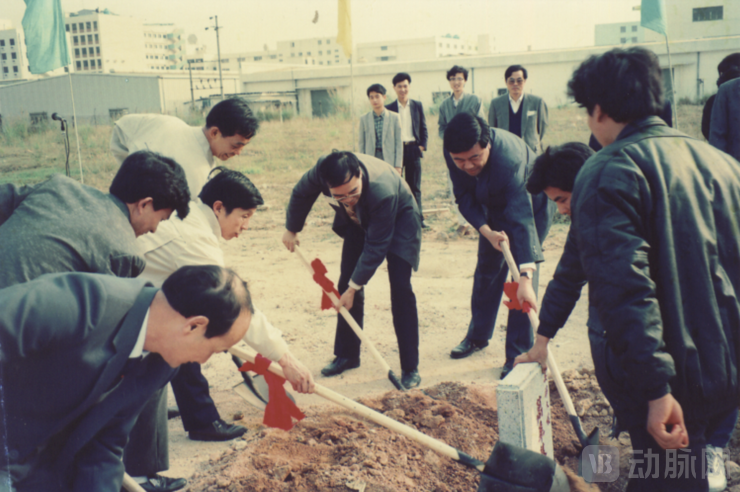
Figure 1. The Groundbreaking Ceremony of Shenzhen ANKE HIGH-TECH Co., Ltd. (Image Source: China Medical Device Journal)
A few months later, Tao Dunchun returned after completing his studies and soon established Kejian in Shenzhen. Two years later,It also promoted Kejian to jointly establish Shenzhen's first truly high-end equipment enterprise, ANKE, with the U.S.-listed company Analogic."An" is derived from Analogic, and "Ke" is derived from "Kejian". Both parties hold 50% of the shares.
In fact, ANKE's choice to settle in Shenzhen was very deliberate. On one hand, Shenzhen is adjacent to Hong Kong, making it convenient to purchase the components needed for research and development; on the other hand, Shenzhen at this time was at the forefront of reform and opening up, with both market vitality and institutional advantages being extremely superior. In this regard, Tao Dachun later particularly mentioned, ""If we hadn't chosen Shenzhen, this matter would have been delayed for a long time, and the best opportunity might have been missed."。”
Just as Fairchild single-handedly drove the rapid development of the entire Silicon Valley semiconductor industry in the 1960s, the establishment of ANKE has also ushered in a "golden age" of exponential growth for Shenzhen's medical device industry.
First, as a pioneer, Shenzhen ANKE HIGH-TECH Co., Ltd. has achieved multiple "firsts" on its own, including China's first MRI machine, China's first color ultrasound, China's first spiral CT, China's first mobile CT, and China's first dental CT—all high-end equipment developed by ANKE. In addition, ANKE was also the first medical device company in China to break through the 100 million yuan annual revenue mark, and it was the first to achieve large-scale exports of domestically produced high-end equipment. As early as the 1990s, multiple ANKE products had already successfully entered the mainstream markets of Europe and America.
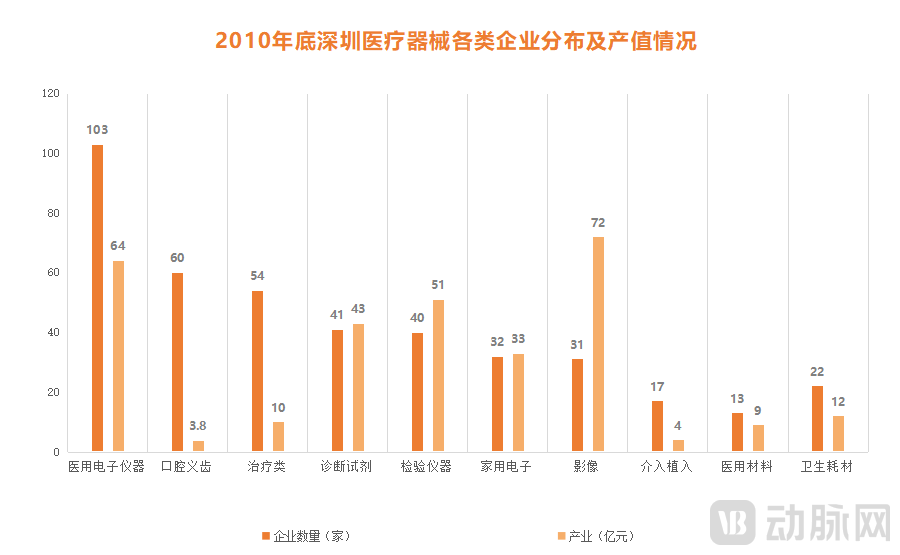 Figure 2. Distribution of Various Medical Device Enterprises in Shenzhen by the End of 2010
But ANKE's contribution goes far beyond this; more significantly, it lies in the "spillover effect." According to industry data,In 2010, among the more than 460 medical device manufacturing enterprises in Shenzhen, nearly 200 had "ANKE genes."——Either the company founder comes from ANKE, or the core technical talent comes from ANKE, or they provide component配套 services for ANKE.Among these, the most notable trend is the departure of a large number of ANKE's technical backbone who subsequently embarked on independent entrepreneurship. Typical representatives include Mindray Medical, Edan Instruments, Biolight, Anjian Technology, Medtecs Healthcare, Jianhe Medical, and Ruifutai.
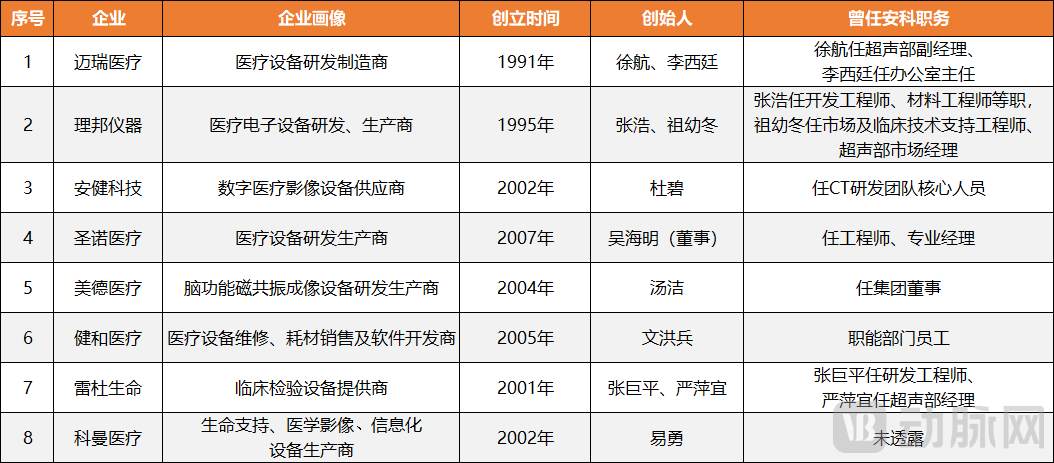 Figure 3. Representative Device Enterprises Derived from "ANKE"
Specifically taking Mindray as an example, it was co-founded in 1991 by Xu Hang, the deputy manager of the ultrasound department at Shenzhen ANKE HIGH-TECH Co., Ltd., and Li Xiting, the office director. Later, it attracted former ANKE employees like Cheng Minghe, Zhang Juping, Yan Pingyi, and Nie Tong to join. Initially, the company mainly focused on agency business but gradually shifted to independent research and development. In 2006, it reached its "highlight moment" by successfully ringing the bell at NASDAQ, becoming the first Chinese medical device company to be listed on the U.S. securities market. In 2018, two years after delisting from the U.S. stock market, Mindray returned to the ChiNext Board of the Shenzhen Stock Exchange, marking the largest IPO on the ChiNext at that time, with a market value of 85.4 billion yuan on its first day of listing.Currently, Mindray Medical's market value has exceeded 200 billion yuan, making it the absolute leader in China's medical device field.。
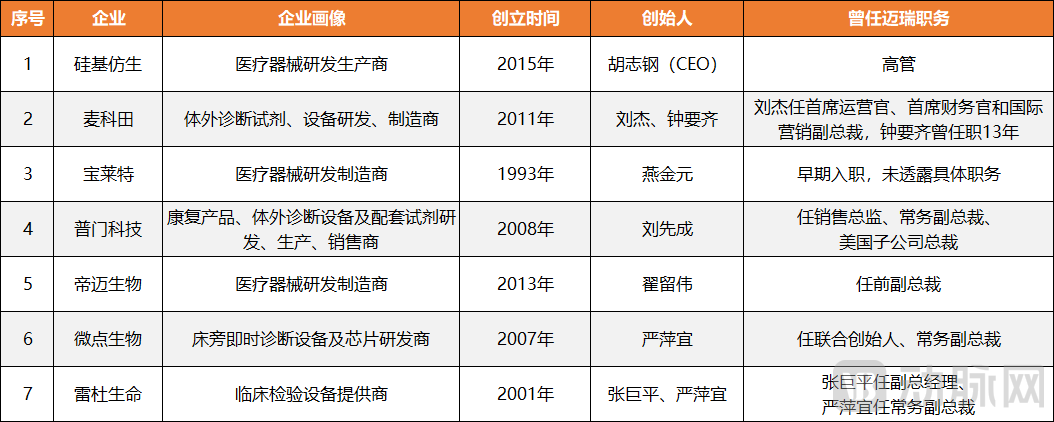 Figure 4. "Mindray" Derived Representative Device Enterprises
However, history always repeats itself. In 2006, the year Mindray was listed on the New York Stock Exchange, ANKE faced a financial crisis that brought it to the brink of collapse. Following this, Mindray, having taken the reins, began incubating a new generation of entrepreneurs in Shenzhen, includingHu Zhigang, CEO of Silicon-based Bionics; Liu Jie, founder of Micromed; Yi Yong, chairman of Cormen Medical; Yan Jinyuan, founder of Biolight; Liu Xiancheng, chairman of Pulnovo Medical; Zhai Liuwei, founder of Dymind Biotech; Zhang Yuping and Yan Pingyi, founders of Rayto LifeNow, they have become the leading players in China's medical device industry, all originating from the "Mindray system."
Take Maiketian, which has just rushed to the Hong Kong Stock Exchange for an IPO, as an example. Its chairman, Liu Jie, formerly served as the Chief Operating Officer, Chief Financial Officer, and Vice President of International Marketing at Mindray Medical. The vice chairman, Zhong Yaoqi, was previously responsible for Mindray's international marketing business. In addition,More than 80% of the members in MedCaptain's core management team also come from Mindray., and this level of team configuration has also made Mcotree highly regarded since its establishment, continuously receiving support from top-tier capital such as Hillhouse, Shenzhen Capital Group, and SoftBank China. According to industry insiders, "In Shenzhen's medical device industry, companies with 'Mai' and 'Rui' in their names mostly have executives who came from Mindray.。”
It can be said that ANKE was the "First Phase of the Huangpu," bringing a group of trailblazers to Shenzhen's medical device industry who achieved breakthroughs from 0 to 1. Meanwhile, Mindray, which emerged from ANKE, was like the "Second Phase of the Huangpu," cultivating a core force for Shenzhen’s medical device industry that advanced from 1 to 10 and even to 100. Together, they propelled Shenzhen's medical device industry to undergo an ecological transformation from "single-point breakthrough" to "industrial cluster."
The First in China, Can You Shoulder It?
From the rise of ANKE to the relay of Mindray, Shenzhen's medical device industry has achieved a historic leap from "a blank sheet of paper" to a mature industrial cluster within just 40 years. In the past decade, it has consistently ranked first in China’s medical device industry output, thus being widely recognized in the industry as the "Capital of China's Medical Devices" or the "Number One City of Medical Devices in China."
So, how about its gold content?
Firstly, from the perspective of enterprise quality. According to official data released by Shenzhen Development and Reform Commission in December 2025,Shenzhen currently has over 1,000 medical device companies above the designated size, including 35 listed companies and 143 companies with an output value exceeding 100 million yuan. The numbers rank first in China.。
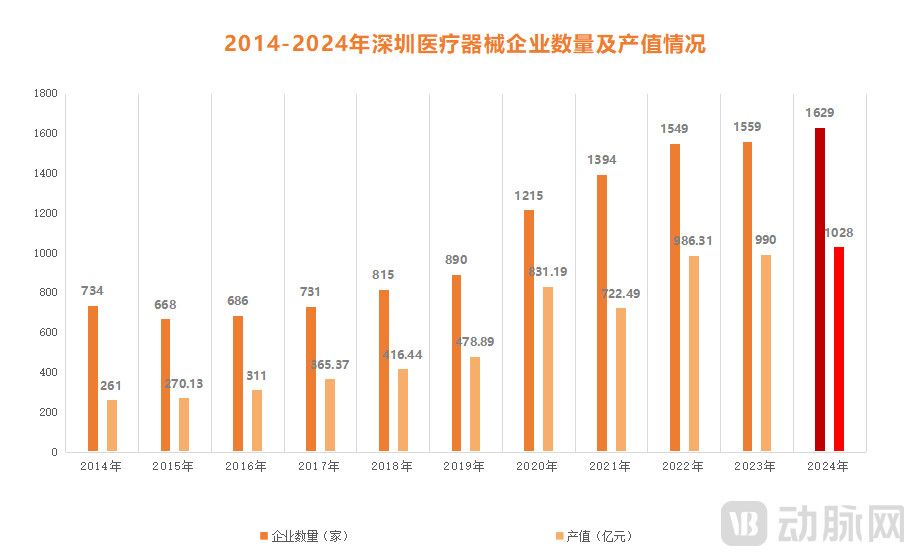 Figure 5. Status of Shenzhen Medical Device Enterprises and Output Value from 2014 to 2024 (Data Source: Shenzhen Medical Device Industry Association)
Focus on listed companies. At the beginning of 2026, Shenzhen's medical device sector gained two newly listed companies: Stryker Medical, which went public on the Hong Kong Stock Exchange, and Bixin Life, the first medical device IPO on the Sci-Tech Innovation Board after the reinstatement of the fifth set of standards. Currently, more than 10 medical device companies in Shenzhen are in the queue for listing, including Core Medical in the artificial heart field, Hannov, a developer of new ECMO emergency equipment, Maike Field, an "invisible champion" in the IVD sector, and Kintejian, a dental equipment manufacturer.
In addition to the large number, the quality of Shenzhen's listed device companies is also exceptionally strong. Taking Jingfeng Medical as an example, it is the first company in China and the second globally to obtain regulatory approval for multi-port laparoscopic, single-port laparoscopic, and natural orifice surgical robots. The company has built a complete product matrix covering three major technological routes, with its core products achieving scaled overseas expansion and breaking international monopolies. In terms of key performance indicators, according to the recently released annual report, Jingfeng Medical achieved revenue of 456 million yuan in 2025, a significant year-on-year increase of 184.8%. Of this, overseas revenue reached 272 million yuan, accounting for more than 50% of total income, demonstrating a clear overseas expansion effect.
Of course, MicroPort Surgical is just the tip of the iceberg. Listed companies such as Mindray, MGI Tech, Edan Instruments, Sonoscape Medical, iRay Technology, and New Industries Biomedical are all leaders in their respective fields, playing a pivotal role and holding significant market influence in Shenzhen's medical device industry.
Next, let's focus on the product side. It is reported that among the domestically produced Class III innovative medical devices approved by the state in 2025,Shenzhen Tops Chinese Cities with 11 Approved Projects in TotalAs of now, Shenzhen has been approved for a cumulative total of 42 domestically produced Class III innovative medical devices, second only to Beijing and Shanghai.
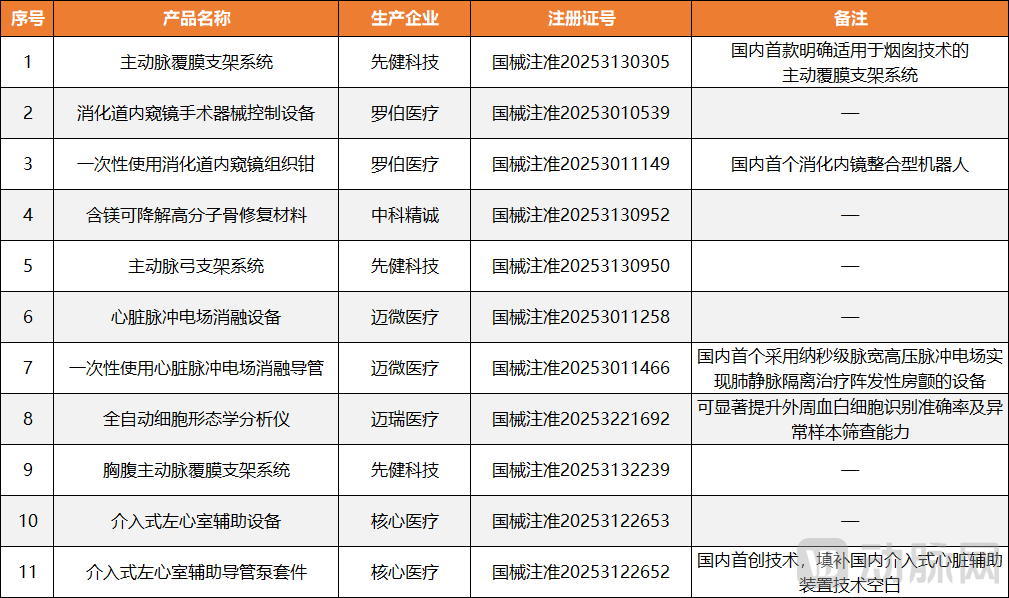 Figure 6. The 11 Class III innovative devices approved in Shenzhen by 2025 (Data source: PharmaCube)
Among these 42 Class III innovative devices, many are epoch-making products. For instance, CorHeart®6, the world's first interventional artificial heart for heart failure treatment; WONDER®, the world’s first "five-in-one" orthopedic surgery robot integrating five indications—total knee, total hip, unicompartmental knee, spine, and trauma; and the recently approved world’s first implantable brain-computer interface medical device, the "Implantable Brain-Computer Interface Hand Motor Function Compensation System," were all born in Shenzhen.
Currently, Shenzhen has taken a leading position in细分fields such as medical imaging, in vitro diagnostics, surgical robots, implantable devices, and brain-computer interfaces, forming a complete industrial chain with the largest market share in China. Taking this year’s highly popular brain-computer interface as an example, Shenzhen already hosts nearly 50 related companies, including MicroDream Medical, SoftMind Technology, Yinghe Brain Science, Neurowell Medical, Peng Brain Technology, and Aoyi Technology, with more than a hundred innovative products derived from these efforts.
Finally, the focus is on the aspect of going global, which is the core issue for domestically produced medical devices. As an important export hub in China, Shenzhen naturally stands at the forefront of this wave. According to data,In 2025, the total export value of medical devices in Shenzhen will reach 29.85 billion yuan, accounting for more than 20% of China's export share, ranking first in China.。
In addition to the large volume of exports, Shenzhen's medical device exports mainly focus on a batch of high-end device products, such as medical imaging equipment, gene sequencers, surgical robots, ventilators and anesthesia machines, and cardiovascular intervention devices. Taking surgical robots as an example, products like the series from JINGFENG Medical Technology for endoscopy and orthopedics, and the Yuanhua Tech KUNWU® Robot, have successfully entered the global mainstream market and achieved revenue exceeding 100 million yuan. Based on this,In 2025, China's surgical robot exports surged by 368.1%, becoming the most dazzling growth point for domestically produced high-end medical device exports.。
Of course, the export of equipment is not only focused on product sales but also on BD transactions. In October 2025, MGI Tech authorized its CoolMPS sequencing technology for $120 million.This is the first case of outward licensing cooperation for scientific instruments in China., achieving a key transition from "selling products" to "selling technology." According to incomplete statistics, in the past two years, a number of leading companies, including Mindray Medical, New Industries Biotech, and Edan Instruments, have completed several significant BD transactions in their respective fields, continuously exporting core technologies overseas.
Overall, Shenzhen's medical device industry has demonstrated significant competitive advantages and development resilience at multiple levels, fully deserving the title of "China's No.1 City for Medical Devices."
Pressure from Centralized Procurement and Opportunities from Globalization: How Will Shenzhen's Medical Devices Make Choices?
Currently, China's medical device industry is at a critical juncture of historical transformation: On one hand, the continuous advancement of centralized procurement policies and the intensification of homogeneous competition are significantly compressing the profit margins of domestic device companies, accelerating industry consolidation. On the other hand, driven by cutting-edge technologies such as AI, the pace of innovation in domestically produced alternatives continues to accelerate, and the overseas market window is gradually expanding, becoming a new growth curve for many device companies.
Faced with the complexity of industry cycle challenges on one side and historic development opportunities on the other, Shenzhen ANKE HIGH-TECH Co., Ltd. has made its own choice.
First and foremost, the focus remains on innovation. According to the data,Shenzhen's leading medical device companies consistently maintain R&D intensity between 10% to 15%., far exceeding the industry average. Take Mindray as an example; in recent years, its annual R&D investment has exceeded 40 billion yuan, accounting for approximately 11% of its total revenue.
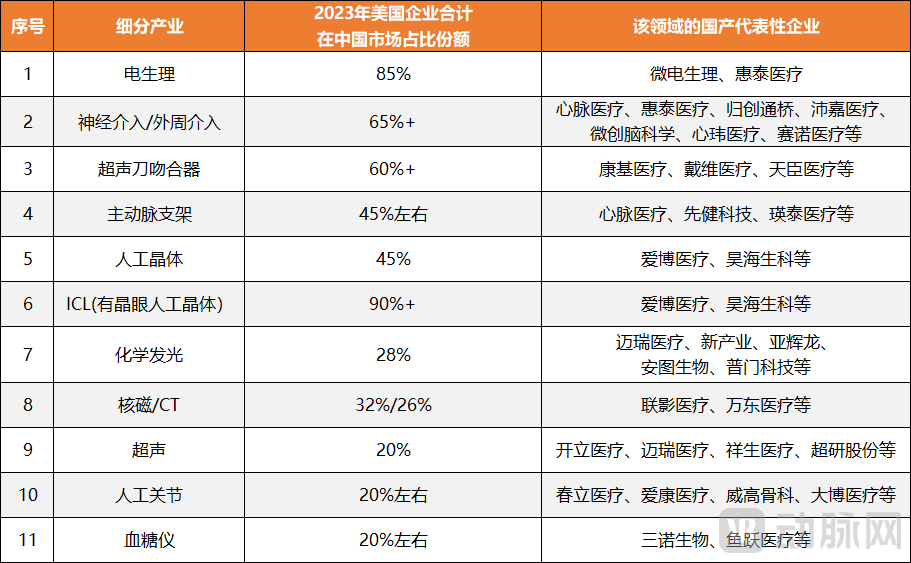 Figure 7. Market Share of U.S. Companies in China's Medical Device Segments (Data Source: 2024 Medical Device Blue Book)
In addition to heavy investment, Shenzhen is also focusing on high-end medical imaging, in vitro diagnostics, surgical robots, electrophysiology, brain-computer interfaces, AI-assisted devices, and other core technology fields with high barriers that have long been dominated by overseas players. For example, electrophysiology is a core area heavily reliant on imports, with the U.S. alone accounting for 85% of the market share in China. Faced with such a significant gap, Shenzhen's medical device sector has made it a key focus, and the city now hosts dozens of related companies, nurturing domestic electrophysiology leaders like HT Medical.
Secondly, it is to improve the industrial supporting facilities and fully advance towards the high-end and intelligent development stage. Currently, Shenzhen's high-end devices are mainly distributed in Pingshan District, Longgang District, Bao'an District, Nanshan District, and Guangming District, among other areas, and have already built an industry system covering the entire industrial chain of "upstream materials and production equipment - midstream medical device manufacturing - downstream applications." Taking Nanshan District as a key example, it spans high-tech fields such as advanced manufacturing, electronic information, biomedical engineering, artificial intelligence, and big data, forming a relatively complete closed-loop industrial chain.
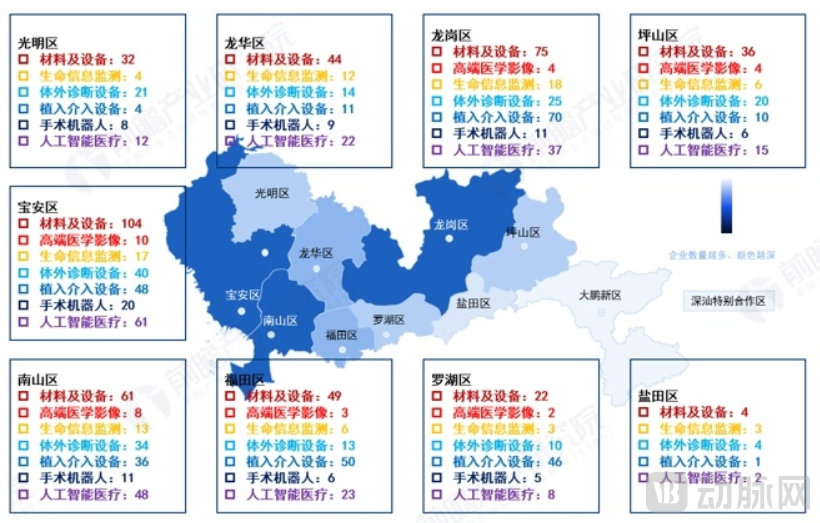
Figure 8. Shenzhen Industrial Zone Distribution (Source: Forward Industry Research Institute)
In addition to having specific carriers, policies, funds, and platforms directly related to medical devices are also quite mature. For instance, the most crucial aspect—funding—Shenzhen has promoted the establishment of a high-end medical device industry fund with a scale of 4 billion yuan, forming a full-cycle fund matrix covering angel investments to mergers and acquisitions. Thus, includingSDVC, TCW, Pine Capital, Fortune VenturesA group of Shenzhen-based investment institutions, such as Shenzhen Capital Group (SCG), have consistently focused on the high-end medical device sector as a key investment track.It has invested in more than 50 device companies in Shenzhen over the past five years., Mindray, HT Medical, YHLO Biotech, MedCaptain, CuraLife, Sibiono, and NorthX Life are its representative investment targets.
The last point focuses on going global and building international influence. In April 2025, Shenzhen officially released the 'Several Measures to Support the Entire Chain of Pharmaceutical and Medical Device Development,' which explicitly emphasized promoting the export of locally produced devices and making international development a key breakthrough for industrial upgrading. On this basis, Shenzhen actively builds cross-border service platforms, supports companies in obtaining overseas certifications, expands international market channels, and comprehensively enhances the global competitiveness and international influence of local medical device brands by hosting international medical device exhibitions, strengthening medical cooperation with countries along the 'Belt and Road,' and other methods.
Therefore, Shenzhen medical devices have exceeded 100 billion yuan in total overseas exports over the past three years, giving rise to a group of overseas benchmarks for domestically produced devices such as Mindray, MGI Tech, Edan Instruments, PumTech, and New Industries Biomedical.
A founder of a device company who has been established in Shenzhen for over 10 years mentioned in an interview, “The development of many niche industries in Shenzhen, in retrospect, seems like a miracle. Among them, the medical device sector appears to have been the slowest to gain momentum, only beginning to make significant progress in the past decade. Yet, it also seems to be the most underestimated. Through years of continuous foundational technology accumulation, industrial chain collaboration, and ecosystem construction, it has now built up extremely high competitive barriers.。”
It is foreseeable that Shenzhen will unleash greater potential in the global high-end medical device market in the future, which will also drive more domestically produced enterprises to enter the international market, completing the critical leap from "manufacturing" to "intelligent manufacturing" and "creation."
1. "Recalling the Past | Shenzhen Medical Device Group: The Birth of a Legion" — VCBeat;
2. "Invest in Shenzhen! A Comprehensive Overview of the Current Status and Investment Opportunities in Shenzhen's High-End Medical Device Industry" —— VCBeat Industry Research Institute;
3. "Shenzhen Medical Device Industry Moves Towards Intelligence and High-End" —— Shenzhen Release.