

Dialogue with Songhe Capital Founding Partner Luo Fei: Chinese Innovative Pharmaceutical Companies in 2.0 Phase, Valuation Anchor Shifts from Pipeline R&D to "Global Delivery"
The 1.0 phase of China's innovative drug development has been completed, and the 2.0 phase has just begun.
In the past decade, China has been solving the problem of "whether there are innovative drugs or not"; in the next decade, China will need to answer the question of "whether it can become an important source of global innovative drug assets."In the judgment of Luo Fei, founding partner of Pinehill Capital, the past decade has beenThe next decade will be the accumulation period for Fast-follow and single-point breakthroughs, while original innovation, engineering efficiency, and global clinical execution capabilities will become the survival threshold for China's innovative pharmaceutical enterprises.
From investing in BGI in 2008 to managing Shenzhen's 1.5 billion CGT industry fund in 2024, Songhe Capital has always adhered to aligning with cycles and investing within cycles. Luo Fei reminded that behind the market recovery, the divergence of the "triple realization" – cost, efficacy, and capital expectations – is intensifying, with none of them being dispensable.
As spring blooms, VCBeat interviewed Luo Fei, founding partner of Pinehurst Capital. This conversation is about how China's innovative drugs can move from the "Chinese market" to become "global players."
Summary of Key Points:
· China's innovative biopharmaceuticals have entered the 2.0 phase of "validation and delivery," with investment portfolios expanding from mature clinical projects to early-stage projects with original capabilities.
· The number of biopharmaceutical companies listed on the Hong Kong Stock Exchange and the Sci-Tech Innovation Board is expected to continue growing, but the market will see a clear "realization" divergence, with the core lying in the realization of clinical efficacy, new drug registration, and cost control capabilities.
· BD Focus Shifts from Single-Asset Purchases to Platform-Based Collaborations, Prioritizing Original Technology, Manufacturing Engineering Capabilities, and Clinical Translation Efficiency.
· In the 2.0 phase, China's innovative pharmaceutical companies are not only looking globally but also serving globally, truly forming a research and development relay with MNCs.
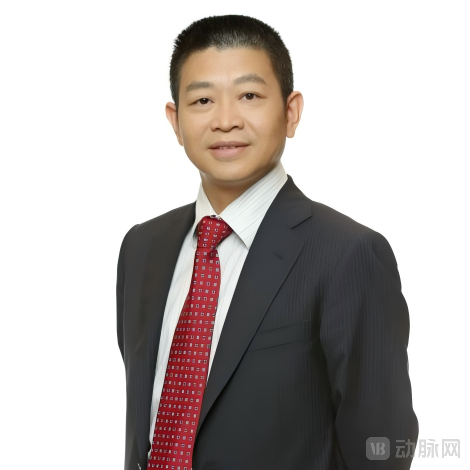
Luo Fei, Founding Partner of Pinehurst Capital
Luo Fei graduated from Peking University, is a representative of the Fifth Shenzhen Municipal People's Congress, and the former rotating chairman of China's Healthcare Industry Investment 50 Forum (H50). Luo Fei is one of the first venture capital investors in China, having led the development of China's first securities database and participated in organizing the first online stock issuance in China. Major investment projects include BGI Group (300676), Pulnovo Medical (688389), Sansure Biotech (688289), DualityBio (09606.HK), Zhonghui Yuantong (02627.HK), MGI Tech (688114), and Kangwe Century (688426).
1Chapter 1.0: The Realization and Delivery of China's Innovative Drugs
VCBeat: Please use 1 to 3 keywords to summarize your investment feelings for 2025~2026?
Luo Fei:Value Validation, Capability Demonstration, and Delivery Implementation.
Through BD achievements and overseas collaborations, the global value of China's innovative drugs has been demonstrated. This value is directly linked to the patent cliffs of overseas MNCs, as well as the clinical efficiency and cost in China. More importantly, we are not only witnessing the realization of the value of individual innovative drugs but also the global value of China's biopharmaceutical industry.China is no longer just the Chinese market for overseas innovative drugs, but a contributor to innovative assets.In recent years, an increasing number of multinational pharmaceutical companies have been acquiring innovative assets from China through BD. This indicates that China is not only a clinical trial market but also gradually becoming an important source of global innovative drug assets.
From the drug and medical device review and approval reform in 2015 to China's accession to the International Council for Harmonisation of Technical Requirements for Pharmaceuticals for Human Use (ICH), China's innovative drug sector has fully completed its first decade, namely the 1.0 phase. In terms of outcomes, the current Biotech entities listed on secondary markets such as the Hong Kong Stock Exchange and the STAR Market represent the accumulative achievements of the 1.0 phase.At the same time, we have sensed the beginning of the 2.0 phase in the past two years. This is a new growth cycle., Phase 2.0 will move towards more cutting-edge and innovative drug innovation.。
VCBeat: Entering Phase 2.0, Has Songhe Iterated Its Core Logic in Healthcare Investment?
Luo Fei: Songhe Capital's entry into the medical field began with an investment in Shenzhen Kexing in 1999. In 2016, it established its first healthcare fund, marking exactly ten years. Over the past decade, China's innovative drug industry has transitioned from the question of "whether there are innovative drugs" to a phase where "innovation capabilities are gradually forming." As we enter the 2.0 stage, we are also rethinking the fundamental logic of investing in innovative drugs.
From the practice of VCBeat, we summarize the core capabilities of innovative drug companies into three dimensions: Discovery, Clinical, and Engineering (DCE).
Discovery,It is the ability of original scientific discovery. We are paying increasing attention to seeking groundbreaking scientific research results from the source, especially early projects with original targets, original technology platforms, or new mechanisms. Meanwhile, with the development of AI technology, AI-assisted drug discovery, molecular design, and other technologies are also improving R&D efficiency, all of which have become important directions for our focus.
Clinical,It is the ability to translate and validate clinically. Innovative drugs must ultimately prove their value in clinical settings, so we highly value the team's experience in clinical translation, including hospital resources, clinical trial organization capabilities, and the ability to collaborate with regulatory systems.
Engineering,It is the engineering capability. The success or failure of many innovative drug projects depends not only on scientific discoveries but also on whether they can achieve scaled preparation, stable production, and cost control. Therefore, we have positioned multiple CROs and CDMOs within the industry chain, using engineering validation capabilities to improve project success rates.
These changes in the past two years actually reflect the transition of China's innovative drug industry from phase 1.0 to phase 2.0. In the new cycle, original scientific research, engineering efficiency, and clinical validation capabilities will jointly determine the long-term value of a Biotech company.
VCBeat: How do you view the breakthrough of biopharmaceuticals in the Hong Kong stock market? Has the sentiment transmission from the primary market to the secondary market occurred?
Luo Fei: Last year's火热 in the Hong Kong stock market was actually the阶段性兑现 of the biomedical innovation industry 1.0.
From last year to now, Pinehurst has had two portfolio companies listed on the Hong Kong Stock Exchange and one on the STAR Market. Considering them as a small sample, a common characteristic can be found—they have mostly gone through a development cycle of 6 to 10 years. Northcore Life and Zhonghui Yuantong have both gone through 10 years, while Duality Biologics has gone through 6 years. The essential reason they can stand out in the current market environment is that they already possess certain product delivery capabilities and commercialization capabilities.
In terms of performance, the innovative companies that have been listed in the past two years have significant differences compared to previous IPO companies.The market no longer focuses solely on "pipeline imagination" but pays more attention to whether companies can truly deliver products.For example, some companies have achieved growth in product approvals and sales revenue, while others have validated the global value of their assets through collaborations with international pharmaceutical enterprises.
For example, since Zhonghui Yuantong's products were approved for production in 2023-2024, it achieved 260 million yuan in revenue in 2024, with a significant year-on-year increase in revenue. Yingen Biotechnology reached licensing partnerships with international pharmaceutical companies such as BioNTech and GSK, with total transaction amounts exceeding 6 billion US dollars, of which BioNTech alone paid 1.67 billion US dollars as an upfront payment. These cases demonstrate that China's innovative drug companies are gradually moving from "R&D stories" to the validation of product delivery and global cooperation capabilities.
VCBeat: Will the smooth IPO channel and the realization of capital closed-loop continue in 2026?
Luo Fei: Yes. In 2025, there will be approximately 20 unprofitable pharmaceutical companies listed on the Hong Kong stock exchange.However, there are only a single-digit number of unprofitable biopharmaceutical companies going public on China's Main Board and STAR Market. Therefore, we expect the number of IPOs in China to increase from this basis.But as the number increases, there will be a performance divergence similar to that of listed pharmaceutical companies in 2019 and 2020.
VCBeat: What are the core dimensions of this differentiation? How will it impact the valuation logic for innovative pharmaceutical companies?
Luo Fei: The essence of differentiation is shifting from "pipeline valuation" to "capability valuation." In the past, the market priced based on long-term indicators such as asset quality and indication space. By 2026, it will enter the hard assessment phase of "triple realization."
First,Clinical efficacy and asset quality realization.Not a simple data comparison, but whether it can demonstrate Best-in-class or First-in-class efficacy advantages in head-to-head trials. For example, in the CGT field, projects with stunning early data but insufficient long-term follow-up will face a value reassessment.
Second,Commercialization cash-out,Including the efficiency of new drug registration, BD delivery capability, and even the sales capability of new drugs.
Third,The realization of cost and accessibility.Production efficiency directly determines the manufacturing cost, which in turn affects the room for medical insurance negotiations and patient accessibility, being particularly critical for CGT companies.
This differentiation will drive the industry intoThe Capability Competition in Phase 2.0 — Original Technical Ability, Engineering Efficiency, and Global Clinical Execution are All IndispensableBiotech companies that rely solely on a single pipeline licensing model or have limited commercial prospects will face greater challenges in future financing and IPO windows.
2CGT Investment Enters "Triple Realization Period"
VCBeat: What stage is the current CGT (Cell and Gene Therapy) investment in?
Luo Fei: CGT has also reached the realization stage,Including cost, efficacy, and the realization of capital market expectations.These three dimensions correspond precisely to the core challenges yet to be addressed in the current CGT field:
The primary threshold isCost Realization, engineering preparation is essential to ensure the safety and accessibility of drugs while reducing the difficulty of drug delivery and commercialization.
Efficacy RealizationThis is a verification of the long-term value of corporate assets.In recent years, new concepts, cutting-edge mechanisms, and 2nd or 3rd generation iterative products have emerged., such as some sparks or small flames, whether they can develop into a full flame or a torch still needs to be verified over time. As CGT gradually matures, the capital market will no longer..."Concept" OnlyPay the bill, and we need to see real clinical data and commercialization pathways.
Capital Expectations RealizedShow obvious cyclical fluctuations. From 2024 BDHeat Transfer to the Second Half of 2025: Hong Kong Stock Market RecoveryThis reflects the substantial improvement in the global delivery capabilities of China's innovative drugs, but the market is shifting from "whether there are deals" to "the quality of the deals" — whether global clinical execution rights are retained? Can a continuous relay be formed with MNCs rather than a simple handover? These are the valuation anchors of the 2.0 phase.
From the perspective of Songhe's past investment experience, the layout strategy in the CGT field has undergone a decade of iteration from single-point investment to ecosystem construction. The starting point lies in — collaborating with BGI Group in 2008 and participating in the primary market financing of BGI Genomics in 2012, we jointly witnessed the birth of China-produced gene sequencers. Then, in 2018, after MGI Tech prepared for independent financing, we were the first to decide on the investment and became the first investment institution to complete the payment. In 2023, BGI transitioned from being an invested company to becoming our LP, forming a two-way collaboration.
Starting from 2024, we have been awarded the management of the Cell and Gene Industry Fund under Shenzhen's "20+8" policy framework. Four listed companies—Porton Corporation, Salubris Pharmaceuticals, Hotgen Biotech, and Wanbang Medicine—have contributed as limited partners (LPs), covering segments of the CRO/CDMO industrial chain. We are not just seeking projects; instead, we are enhancing our ability to "organize" and improve the ecosystem by building a biopharmaceutical innovation ecosystem that integrates "technology validation + funding + industry collaboration."
VCBeat: How does the thinking of a full-industry-chain ecosystem reflect in the selection of investment targets for CGT industry funds?
Luo Fei: First, from the perspective of the industry landscape logic, we break down CGT into three major categories: immunotherapy, gene therapy, and stem cell therapy, seeking outstanding Biotechs that have entered the clinical stage. Secondly, we invest in the upstream and downstream of the industrial chain, focusing on innovative enterprises in production and preparation process innovation, CRO/CDMO, and AI-assisted efficiency upgrades.
VCBeat: The Full Expansion of Key Tracks, How to Balance Long-termism with Short-term DPI Pressure of Funds?
Luo Fei: The core of investment lies in how to evaluate and integrate three cycles: the technology growth and iteration cycle, the commercialization cycle of product regulation and sales, and the capitalization cycle.
3Phase 2.0 Prelude: Biotech Aims to Serve the Globe
VCBeat: How do you view the rise of improved medical care in recent years?
Luo Fei: The term "improvement-oriented healthcare" is, in my opinion, not very accurate. These unmet needs have always existed and are not newly emerged improvement-oriented demands. The热潮 of recent years is essentially...With technological innovation and industrial development, emerging innovative drugs and innovative devices can now meet the needs of improving people's quality of life.
From the perspective of the larger industrial end, medical needs can be divided into three aspects: prevention, including diagnosis and vaccines; treatment of serious diseases, such as cancer;Thirdly, aging and degenerative diseases brought about by the increase in average age will be an important opportunity on the demand side in the 2.0 phase.
Starting from this, Pinehas already invested in multiple innovative biotechnology companies, such as Rayden Bio, which develops and produces functional food ingredients, Dharma Biopharma, focusing on nucleic acid drug R&D for metabolic diseases and central nervous system degenerative diseases, and Enrui Kainuo, an innovative pharmaceutical company specializing in CAR-NK cell therapy for autoimmune and inflammatory diseases.
VCBeat: In 2026, what are the directions that PineWood Capital is optimistic about and focusing on?
Luo Fei: In 2026, the hot areas in biopharmaceuticals will emergeThe Trend of Multiple Technical Routes Running in Parallel and Further Differentiation in Niche TracksLooking at the细分赛道, last year's热门areas such as ADC, small nucleic acids, and in-vivo CAR-T may continue to expand. At the same time, breakthrough technologies and platform-based companies in antibodies and small molecule drugs will also be火热. Another trend is that we will increasingly focus on底层, platform-driven创新能力, such as AI-driven drug discovery capabilities, engineering complex drugs capabilities, and global BD capabilities.
The logic behind this isChanges in Patent Layout and Pipeline Structure of Overseas MNCs and Large Pharmaceutical Companies.For example, Qinho Pharmaceutical, in which Songhe completed its investment last year, reached a global cooperation agreement with Gilead on the synthetic lethal anti-tumor project GH31 during the Spring Festival, with an upfront payment of $80 million. Its differentiation lies in its unique innovation in the synthetic lethal field, as well as being one of the few small-molecule innovative drug assets in the highly popular oncology field.
VCBeat: Is this change indicative of China's innovative drug BD shifting from pipeline assets to platform-based collaborations?
Luo Fei: Yes. China's innovative drugs have evolved from experimental technology to platform technology, then formed platform capabilities, and further combined with clinical efficiency and indications development, constituting the underlying accumulation of innovative pharmaceutical enterprises.
We can see that it is not just one or two companies that have completed such accumulation, but an increasing number of companies are following this path, achieving breakthroughs in multiple areas. In the 2.0 phase, more biopharmaceutical innovative companies will complete the closed loop, and their global value will continue to rise.
VCBeat: How Can Startups Navigate the Iteration from Platform Technology to Platform Capability?
Luo Fei: The cornerstone must be original innovation and underlying technology, followed by the need to build engineering capabilities, and finally the ability for efficient clinical translation. In addition, entrepreneurs must foster an open, win-win, and collaborative corporate culture in order to pool resources from multiple parties, ultimately advancing drug approval and fulfilling the ultimate mission of curing diseases and saving lives.
VCBeat: In the 2.0 Phase, How Can Startups Overtake or Make a Comeback?
Luo Fei: The industrial value of China's biopharmaceutical enterprises is globally competitive and, to some extent, unique on a global scale. In the 2.0 phase, it is important to start from the beginning.Open a global perspective, position ourselves as an enterprise serving the globe, and strengthen our ability to integrate and mobilize global cooperative resources.
Still looking at the cooperation between Duality Bio and BioNTech, Duality not only validated its commercialization capabilities through business development (BD), but also secured global and Chinese clinical advancement for the pipeline. This is worth comparing: a biotech company doesn’t just break new ground in drug creation and technological innovation—it must also secure BD. On the other hand, after achieving BD or going abroad, how do we collaborate with the licensee to accelerate the clinical progress and R&D efficiency of new drugs? This signifies that a biotech company has truly acquiredServing the globe,Global capabilities.
To a certain extent, BD is not a simple handover, but a continuous and mutual relay. For startups, the first step is to have this mindset and confidence, and then build strength and expand resources. When a group of Biotechs serving the globe rise, China's innovative drugs and competitiveness in the 2.0 phase will reach a higher level.
Phase 2.0 has arrived, and changes continue to unfold. Thanks to the accumulation during Phase 1.0 of China's healthcare innovation, we have every reason to be more hopeful.