

The U.S. Gives Birth to Two IPOs + $4 Billion Unicorns, but Who Will Take the Lead in China's $100 Billion Market?

Sword Health
Digital Remote Physical Therapy Service Provider

Kaia Health
Digital Therapeutics Developer
Global Digital Healthcare Kicks Off the Year with a Major News Story.
Recently, Sword Health (hereinafter referred to as "Sword"), a digital health unicorn in the U.S. MSK (musculoskeletal pain) field, announced the acquisition of Kaia Health (hereinafter referred to as "Kaia"), a leading German digital health company, for up to $285 million. Valued at over $4 billion, Sword is expected to initiate an IPO soon. This acquisition has created a massive MSK digital health giant spanning across Europe and the U.S., which could significantly alter the competitive landscape of the global MSK field.
Sword Health, founded in Portugal in 2015, has gone through a decade-long journey. The company was established by founder Virgilio Bento to address the pain points of musculoskeletal rehabilitation: patients frequently need to visit clinics, the rehabilitation process lacks objective data support, and treatment efficacy heavily relies on therapists' experience and patient compliance.
It is also one of the earliest companies to develop MSK digital therapies. Its MSK digital therapy can continuously capture key biometrics such as range of motion, joint angles, and muscle activation patterns of patients' rehabilitation movements through smartphone cameras and wearable sensors, providing real-time correction and feedback. A clinical team composed of doctors and physical therapists further conducts remote assessments, validations, and supervision, adjusting rehabilitation plans remotely based on objective data to ensure maximum rehabilitation effectiveness.
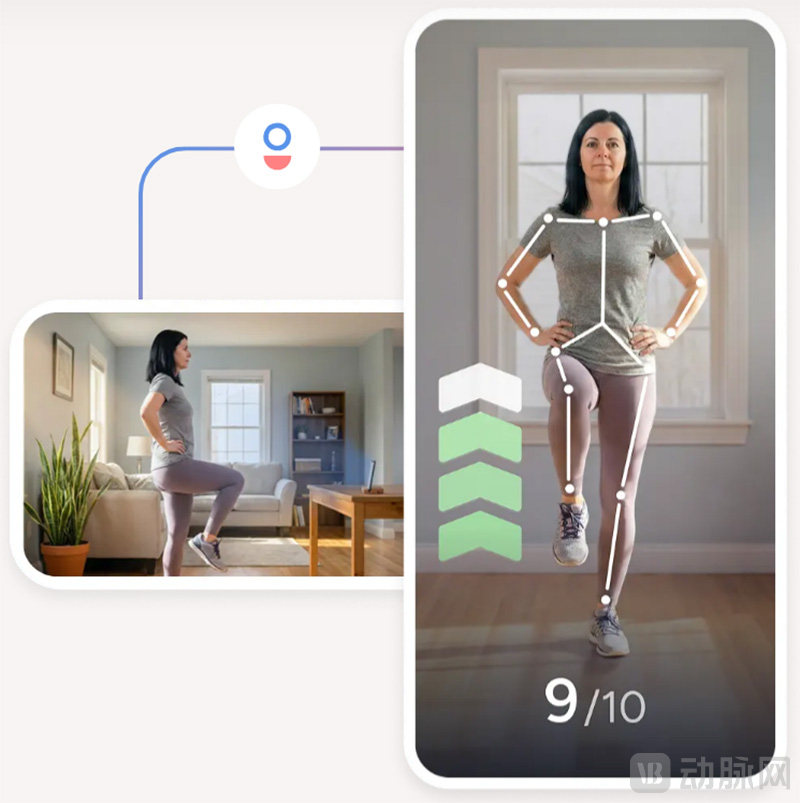
Sword Health's MSK Digital Therapy (Screenshot from Sword Health's official website)
This AI + rehabilitation therapist-guided solution was a revolutionary innovation in the MSK field at the time.
Therefore, Sword Health Technologies, Inc. received high attention upon its establishment, secured official funding from the EU, and completed a $4.6 million seed round and a total of $17 million in Series A financing between 2018 and 2020.
Around 2020, in order to seek greater development, Sword Health moved its headquarters from Portugal to the United States, achieving rapid growth with the support of American capital. In an interview, founder Bento also frankly stated that the company’s rapid development would not have been possible without the funding, connections, and professional support provided by American investors.
In 2021, Sword Health completed three rounds of financing within a year: Series B ($25 million), Series C ($85 million), and Series D ($163 million), totaling $273 million. This highlights the extent of capital's enthusiasm for digital health at the time.
In 2024, as the healthcare capital market rebounds, Sword Health has secured substantial funding rounds consecutively. Following its most recent financing of $40 million, the company’s cumulative funding has reached nearly $500 million, with a valuation of $4 billion. Its revenue in 2025 reportedly exceeded $200 million, and its revenue in 2026 is expected to double.
However, in terms of the IPO timeline, Sword Health is moving slower—or rather, more steadily—than its main competitors, Hinge Health and Omada Health. Contrary to rumors, it will not go public in 2025. In an interview, Sword's founder, Bento, stated outright that Sword’s IPO would occur much later than anyone anticipates, likely only after expanding into more areas and proving its value. This could even be as late as 2028.
In order to achieve this goal, Sword Health has been actively expanding. Leveraging its European heritage, Sword Health has been frequently establishing a presence in Europe, with even more aggressive international expansion moves compared to the two listed companies.
At the beginning of last year, Sword Health acquired the UK-based digital healthcare company Surgery Hero, successfully entering the UK market. Recently, Sword Health further acquired Kaia Health, a leading provider of digital therapies for musculoskeletal (MSK) conditions in Germany, allowing it to enter the German market. In addition, Sword Health has also partnered with health systems in Greece and Portugal to provide AI-based support capabilities.
Especially recently, as a private company, the acquisition of Kaia for up to $285 million has drawn significant attention from the industry.
Founded in 2016, Kaia Health has completed $123 million in financing over the years. Its MSK digital therapy has already received formal approval from German health insurance and can be officially reimbursed, covering more than 70 million insured users in the country. This acquisition not only allows Sword Health to gain extremely scarce compliance resources, providing direct access to Germany, which has the strictest compliance requirements in the EU, but also essentially equates to holding a ticket for direct entry into the entire EU market.
Although it has not yet been launched, Sword has achieved an international layout ahead of its competitors. The future competitive landscape of the global MSK digital healthcare market still holds considerable suspense.
As is known to all, MSK has always been a major global cause of disability, affecting over 2 billion people worldwide. Because of this, MSK rehabilitation accounts for the largest share of global rehabilitation needs. According to the WHO, approximately two-thirds of all adults in need of rehabilitation require services for musculoskeletal disorders. The resulting healthcare costs are also staggering. In the U.S., for example, medical expenses caused by MSK account for nearly 10% of the country's total healthcare spending.
Digital therapeutics have already proven to be effective in this field.
According to recent evaluations by research institutions, among several types of digital healthcare solutions for MSK rehabilitation, the AI + therapist-guided solution is considered the most balanced. It can partially replace in-person rehabilitation and improve service accessibility. Compared to in-person rehabilitation, this solution demonstrates better clinical outcomes in terms of patient pain and functionality while reducing medical costs. It is estimated that if 25% of MSK patients receiving in-person rehabilitation switch to this type of solution, at an annual cost of $995 per person, every one million commercially insured individuals could save approximately $4.4 million annually.
Data from Sword Health shows that since 2020, its MSK solutions have saved customers nearly $1 billion in unnecessary medical expenses.
Based on the enormous demand and the proven effectiveness of digital healthcare, MSK has consistently been a focal point for capital investment in Europe and America. According to statistics, since 2010, the U.S. market alone has invested over $38 billion into the MSK sector, with the majority flowing into the digital healthcare field. Frequent financing and acquisition events have occurred, giving rise to two publicly listed companies on the U.S. stock market: Hinge Health and Omada Health.
Compared with the booming MSK rehabilitation abroad, the MSK rehabilitation field in China is still in its infancy. However, with the gradual improvement of socioeconomic levels and health awareness, the demand for MSK rehabilitation is growing rapidly and starting to gain attention.
In June 2024, the Rehabilitation University was established in Qingdao, supported by multiple organizations including the Ministry of Education, the China Disabled Persons' Federation, and the National Health Commission. This public undergraduate university is the first "Rehabilitation" university in China. The establishment of this new research-oriented university demonstrates the country's emphasis on the rehabilitation industry, including MSK rehabilitation.
On the other hand, the significant development of the sports industry has directly driven the demand for MSK rehabilitation. During the "14th Five-Year Plan" period, the total scale of China's sports industry has reached 5 trillion yuan, with its added value accounting for 2% of GDP. The "15th Five-Year Plan" for sports proposes targets such as the total scale of the sports industry reaching 8 trillion yuan by 2030, the added value accounting for 3% of GDP, and the scale of residents' sports consumption reaching 3.5 trillion yuan. It is expected that by 2035, the sports industry will become a pillar industry of the national economy.
Insiders in China's MSK digital healthcare industry frankly stated that the growth of the sports industry has visibly promoted MSK rehabilitation. One clear signal is that an increasing number of public hospitals have established specialized sports rehabilitation clinics under their orthopedic outpatient departments.
Moreover, unlike in the past, an increasing number of parents today highly value their children's sports habits. They choose to enroll their children in sports interest classes and are gradually realizing the importance of MSK rehabilitation for youth athletic performance and physical development.
There is no doubt that the formation of these health awareness and habits will also drive up the demand for MSK rehabilitation in the future, especially for MSK digital healthcare, which has promising prospects.
From the personal experience of a patient, MSK rehabilitation services in China are far from satisfactory. Rehabilitation and orthopedic departments in hospitals are overcrowded, with some doctors not specialized in the field and more inclined to simply prescribe medication to solve problems. Alternatively, they may lack the time for detailed guidance and struggle to provide professional, personalized rehabilitation advice. Patients often feel no improvement after several initial visits to the hospital, or find that the required time, effort, and costs do not justify the results, leading them to give up quickly.
As mentioned earlier, the cross-temporal intervention capabilities, remote data monitoring, and feedback mechanisms of MSK digital healthcare precisely address the long-term, continuous, and poor service accessibility pain points in the rehabilitation field. It is therefore not surprising that MSK digital healthcare has gained significant popularity in Europe and America.
Good news is that in July last year, the National Medical Products Administration (NMPA) issued and began implementing the "Guiding Principles for Classification of Rehabilitation Digital Therapeutics Software Products," starting to regulate the industry from the supervisory end to lay a foundation for future industry development. This also reflects that MSK digital healthcare in China is receiving increasing attention.
Currently, several MSK digital healthcare companies in China are performing well, with VCBeat reporting on a few representative ones. Perhaps in the future, one of them may emerge as the Chinese version of Sword Health or even the Chinese version of Hinge Health.
SurgeWorks (Chengdu Shang Medical Information Technology Co., Ltd.):One of the earliest MSK digital therapies in China to receive NMPA approval, simultaneously certified by the FDA, driven by an AI-powered technology platform that integrates "cardiopulmonary-musculoskeletal, nutrition, and cognitive" domains. The dedicated development of the Shukang App and Shukang Clinic provides treatment services combining "exercise + nutrition" for patients with chronic diseases and chronic pain.
Rehab Dynamics (Shanghai Rehab Medical Management Co., Ltd.):A medical innovation enterprise focused on musculoskeletal rehabilitation and orthopedic and sports medicine. It has developed three main business lines: Yue Action Musculoskeletal Digital Therapy products, PhysioCloud Rehabilitation Cloud services, and offline musculoskeletal rehabilitation medical centers, providing an integrated comprehensive solution for musculoskeletal treatment. The Yue Action Musculoskeletal Digital Therapy product is also one of the first MSK digital therapies in China.
JiaKang ZhongZhi (Beijing JiaKang ZhongZhi Technology Co., Ltd.):Digital therapy combining wearable sensors + AI helps patients suffering from musculoskeletal pain to undergo home rehabilitation training, providing them with online guidance and supervision, and enhancing their adherence and autonomy in home rehabilitation. Its digital therapy has entered the 2025 Beijing Innovative Medical Device Product Special Approval Process.
References:
Paul Tugwell,Henrique Almeida,bloomberg.com:Sword CEO Calls IPO ‘Boring’ for Now After $4 Billion Valuation