

New Myopia Prevention and Control Product Priced at Several Thousand Yuan Unexpectedly Becomes a Bestseller

MetaVision
Provider of Vision Health Management Services for Children and Adolescents
"Distant screens and reading/writing desks are essential infrastructure for home myopia prevention." A long-time ophthalmologist specializing in cataract and refractive surgery once stated.
VCBeat searched retail platforms such as Taobao and JD.com and found that products like far-sight screens and reading/writing desks often cost thousands of yuan, with some high-end models featuring myopia prevention functions selling for over ten thousand yuan. However, sales remain extremely hot. Data shows that in 2024, the global far-sight screen market size grew by more than 200% year-on-year, with production surpassing 10,000 units, up from over 3,000 units in 2023. During the 2024 Double 11 shopping festival, BOE Health's far-sight learning screen topped the sales charts for eye-protection devices on both Tmall and JD.com, while a live-streamed sale on Douyin sold out 5,000 far-sight screens in a single session. Meanwhile, the Shiduoxing Reading/Writing Desk, endorsed by a celebrity ophthalmologist, has achieved cumulative sales exceeding 50,000 units.
Pulling the screen 8 meters away turns near-eye use into distant viewing. The logic behind myopia prevention with distant screens and reading/writing desks is simple and intuitive. For many anxious parents, this physical method of myopia control has a low cognitive barrier and almost no trust barrier. So, has the anxiety over myopia found an outlet behind these high-premium optometry products?
"Why Is the 'Distance-Pulling Wonder' So Expensive?"
Online, both the far-screen and the reading/writing desk are jokingly referred to as "distance extenders." Essentially, the core function of the far-screen and reading/writing desk is to use optical lens groups or mirror groups to alter the path of light propagation, forming a clear virtual image at an equivalent long distance in front of the eyes, creating the effect of pulling nearby images farther away.
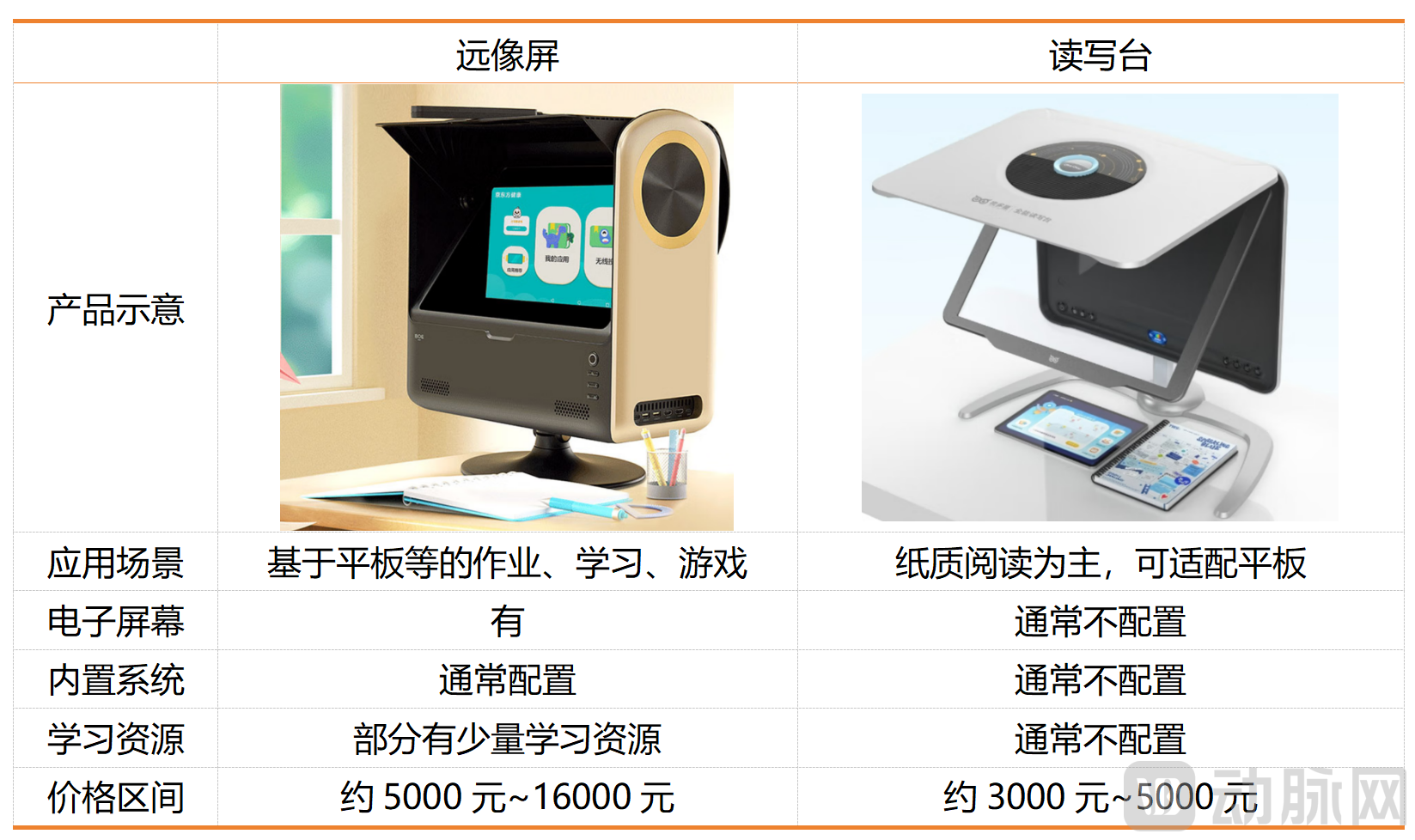
Studies show that factors such as heredity and near-eye use can cause excessive growth of the anteroposterior diameter of the eyeball (i.e., the eye axis), leading to the posterior displacement of the retina. In this case, parallel light entering the eye cannot focus accurately on the retina but instead focuses in front of the retina, ultimately forming a blurred image on the retina, which is myopia caused by an overly long eye axis. This type of myopia is the most common type of myopia and is also the type of myopia with a high incidence among teenagers. Far-screen displays and reading/writing stands artificially move close objects farther away, changing near-eye use into far-eye use, which can reduce the risk of excessive eye axis growth to a certain extent.
The far-screen and reading/writing desk may seem simple, but they are the result of advanced optical technology and manufacturing processes reaching a certain level. To truly achieve the equivalent distance extension of near images, the requirements for the optical components used are extremely high. Typically, a far-screen consists of optical components such as free-form mirrors, beam-splitting films, optical correction elements, electronic modules, and simple structural parts. The reading/writing desk is similar to the far-screen, but it usually does not have a built-in electronic screen and is mainly used for paper-based reading.
At this stage, as the most core optical component of the distant screen, large-aperture freeform mirrors have yet to achieve mass production, which has driven up the price of the final product. When using the distant function, light emitted from the electronic screen first hits the beam-splitting film of the distant screen and then reflects onto the freeform mirror for distance extension processing. The process of extending the distance is essentially the asymmetric curved surface of the freeform mirror correcting distortion and adjusting the angle of the light, converting originally divergent light from a close distance into parallel or near-parallel light, and then reflecting it back to the beam-splitting film. The corrected light captured by the human eye forms a clear virtual image located several meters away. The importance of the freeform mirror is self-evident.
A practitioner told VCBeat that the large-aperture freeform mirror used in far-screen displays belongs to the mid-to-high-end category. The requirements for distortion rate, optical uniformity, structural mechanics, and other aspects are much higher than those for small and medium-aperture freeform mirrors used in consumer electronics and automotive head-up displays. For example, the distortion rate of small-aperture freeform mirrors can be controlled at around 2%, but the large-aperture freeform mirrors have a larger angle of incidence for edge field light, with more significant aberrations, requiring the distortion rate to be controlled below 1%, or even below 0.5%. These types of freeform mirrors often need to be custom-produced, resulting in lower product yield rates and naturally higher costs.
VCBeat found that the cost of a 400mm diameter freeform mirror is around 1,000 yuan, and if a larger diameter freeform mirror is chosen, the cost will double. For example, a large field-of-view distant screen supporting 4K projection requires a 500mm diameter freeform mirror, with the corresponding cost approaching 2,000 yuan.
Moreover, the polarizing film and beam-splitting film used for distant image screens also have higher requirements for indicators such as transmittance, extinction ratio, wavelength selectivity, and angle dependency, often necessitating custom production. Data shows that a specialized polarizing beam-splitting film for a distant image screen with a diameter of 400mm can cost hundreds to thousands of yuan.
Of course, in addition to the high cost of the core components themselves, the market premium brought by myopia anxiety is also a significant reason for the high pricing of distant screens and reading/writing desks.
Myopia Anxiety Trapped in Tools
In recent years, the incidence of myopia among teenagers has continued to rise, while reliable methods for myopia prevention and control remain few and far between.
Data from the National Health Commission shows that in 2025, the overall myopia rate among children and adolescents in China will reach 52.7%. Among them, the myopia rate of junior high school students will exceed 71.1%, and that of senior high school students will be as high as 80.5%. In addition, the high incidence age range of myopia has shifted from 8-12 years old to 6-10 years old. At the same time, the vigorous digital education reform has made the prevention and control of myopia almost a paradox. Studies have shown that if teenagers use electronic screens for more than one hour every day, the risk of myopia increases significantly; if they continue to use them for more than four hours, the risk of myopia almost doubles.
As a result, many parents have turned their attention to medications and devices, such as the previously popular defocus glasses, orthokeratology lenses, and low-concentration atropine eye drops. However, the myopia control effects or experiences of these products are far from ideal.
Take orthokeratology lenses as an example. They are currently recognized as one of the optical intervention methods with better control effects. However, orthokeratology lenses are not suitable for everyone. Users are required to have a corneal curvature within a certain range, no active inflammation in the eyes, no dry eye syndrome or other eye diseases. Extremely high hygiene habits and cooperation from the wearer are also required. In addition, the cost of using orthokeratology lenses is not low. Orthokeratology lenses belong to Class III medical devices, with single fitting fees as high as several thousand yuan, and annual usage costs possibly exceeding ten thousand yuan.
For instance, low-concentration atropine eye drops, a pharmaceutical intervention that has garnered significant attention in recent years, can effectively slow the progression of myopia to a certain extent. However, as a medication, low-concentration atropine eye drops carry potential side effects, including pupil dilation, photophobia, and reduced accommodative ability. These side effects may impact teenagers' daily lives and studies. Additionally, for patients with ocular inflammation, a history of allergies, or other eye conditions, the use of atropine may exacerbate their condition or lead to other issues.
In theory, the newly emerging distant screen bypasses the complex fitting process of orthokeratology lenses, offering a more user-friendly experience and avoiding potential side effects of myopia control medications.
As more and more research data support the myopia prevention and control effects of distant image screens and reading/writing desks, there seems to be a new solution for myopia-related anxiety. Research data shows that after subjects used distant image products for reading for 30 minutes, their choroids temporarily thickened and blood flow significantly increased, whereas traditional close-range reading caused the choroid to thin on average. The reason behind this is that distant image products eliminate the accommodative burden of near vision, avoiding insufficient blood supply to the choroid caused by accommodative tension, and the thickening of the choroid can inhibit the compensatory elongation of the eye axis through mechanical blockage. Further verification of this logic was provided by research from Beijing Tongren Hospital, which showed that subjects using distant image screens did not experience a significant decrease in choroidal thickness or vascular volume during reading, effectively maintaining normal nutrient supply to the fundus.
Moreover, a study published by Professor Wang Ningli's team from Beijing Tongren Hospital in the authoritative international journal "Translational Vision Science & Technology" showed that after 35 healthy subjects read on a traditional electronic screen for 20 minutes, their spherical equivalent exhibited a significant myopic shift. In contrast, reading for the same duration on a distant image screen did not cause abnormal changes in key ocular parameters such as the spherical equivalent and anterior chamber depth, indicating that the eyes could maintain normal vision without bearing the pressure of ciliary muscle contraction.
The industry is still in its infancy.
Under the huge demand, the markets for far-screen and reading/writing desks have entered a phase of rapid and chaotic growth.
In just a few years, the number of brands in the niche track has surged from less than 10 to over a hundred. At present, mainstream long-distance screens and reading/writing desk brands fall into three categories: innovative product lines developed by leading companies such as BOE and NED+; startups like Ruishi and Shiduoxing that focus on the eye-protection track; and many homogenized products lacking core technologies.
First, leading companies such as BOE and NED+ are scrambling to make strategic moves.BOE's HealthyVision Learning Screen series is one of the best-selling myopia prevention screens in China. For BOE, the world's largest display panel supplier by shipment, developing myopia prevention screens represents an interesting attempt to expand into the consumer market. According to data provided by BOE, since its launch in September 2023, the HealthyVision Learning Screen series has been chosen by over 10,000 families. On social media platforms like Douyin and Xiaohongshu, discussions around this BOE product have remained highly popular.
The reading and writing desk developed by Ned+ (Naided Plus) also garnered significant attention. With key free-form optical technology in hand, the product iteration speed of Ned+’s reading and writing desk has been very fast. In August 2024, Ned+ launched its first defocus reading and writing desk, which quickly gained popularity.Aier Eye Hospital、Huaxia Eye、Pure Vision Eye Hospital、He's Eye HospitalLanded in mainstream ophthalmic hospitals in China. The following year, NED+ launched two high-end products, the DOT Reading & Writing Desk Pro and the DOT Reading & Writing Desk Max, enhancing performance in viewing distance, field of vision, myopia prevention and control, and interactive intelligence.
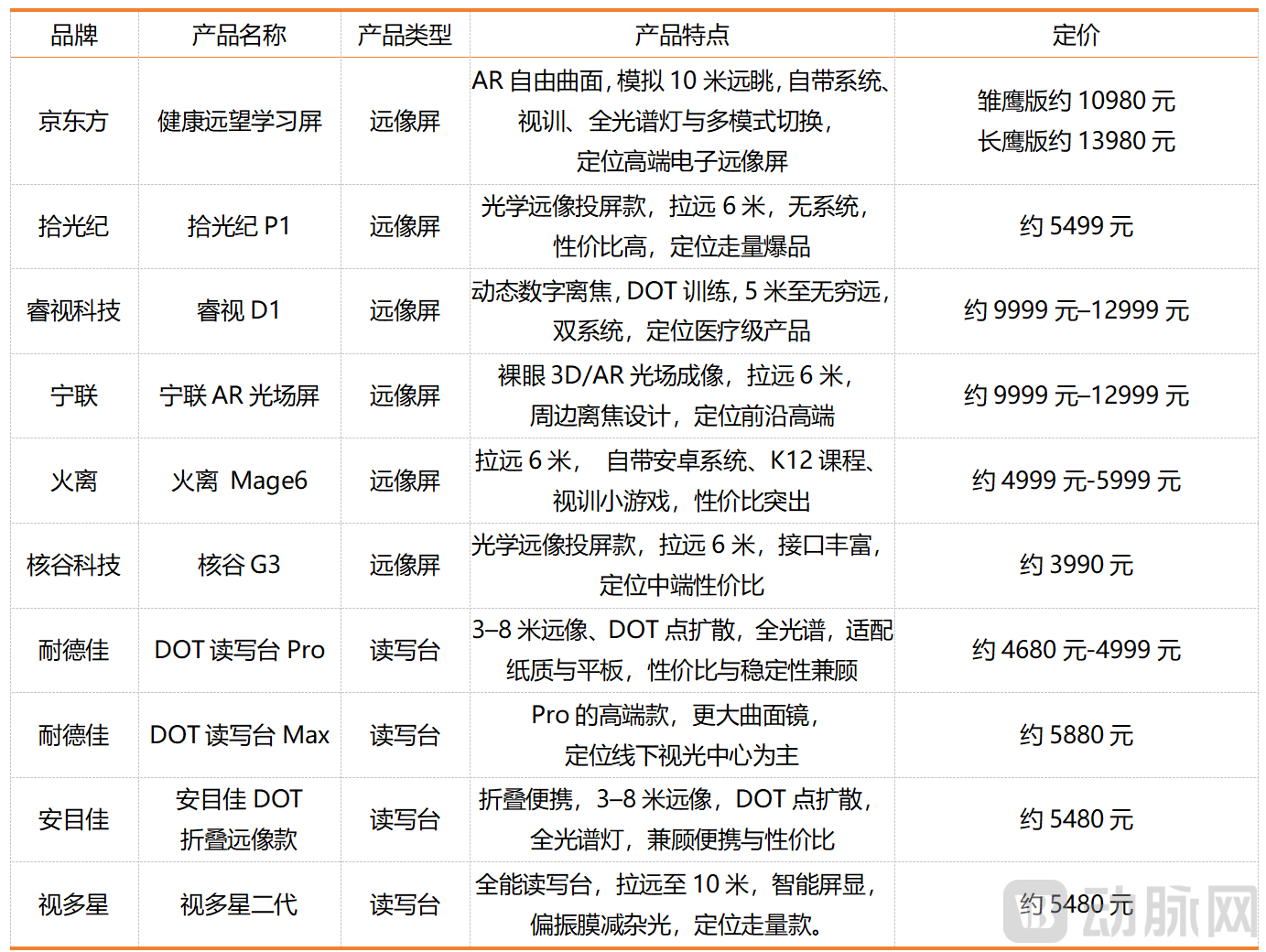
Secondly, with the support of capital, vertical field startups such as Ruishi, Shiguangji, and Shiduoxing have grown rapidly.Currently, BOE has established a subsidiary called TimePicker, which is dedicated to the development of telephoto products. NED+ has incubated prominent companies in the reading and writing desk sector, such as SightStar and EyeComfort. Unlike leading enterprises that quickly capture the market by relying on their early-mover brand advantages, these emerging myopia prevention and control brands place more emphasis on performance breakthroughs and intelligent features, with greater efforts in promoting their products on social platforms.
Shanghai Ruishi Health Technology Co., Ltd., which has received investments from Sinovation Ventures, BlueRun Ventures, and Botanix, is another rising star in the myopia prevention and control sector. The company completed two rounds of financing consecutively within 2025. Among the mother community on Xiaohongshu, the buzz around Ruishi D1 surpasses even BOE's HealthyView learning screen series. As the most expensive far-viewing screen currently available in the market, it positions itself as a third-generation far-viewing screen. Previously, Ruishi Health Technology collaborated with Beijing Tongren Hospital, Sichuan West China Hospital, and Wenzhou Medical University Eye Hospital to release a real-world study involving nearly 200 cases over six months. The study showed that the average axial elongation in the test group was only 0.038mm, significantly lower than the 0.125mm in the control group, with some cases showing refractive improvement.
In addition, Ninglian AR Light Field Screen, Huoli Mage6, and Hegu G3, among other far-field screens, are also popular models tested by Douyin influencers, performing well within their respective price ranges.
However, for the far-screen and reading/writing desk industries, a bigger reality is the homogeneous competition due to the lack of rules and standards.
On the one hand, as consumer electronics, the medical attributes of far-screen displays and reading/writing desks have left room for exaggerated claims, frequently drawing skepticism. At this stage, none of the far-screen displays and reading/writing desks on the market possess medical device qualifications. However, although many brands label their products with the disclaimer "not a medical device," they imply medical efficacy through various means. For instance, they invite ophthalmologists or popular online doctors to endorse the products, or place advertisements around hospitals.
Previously, BOE's distant screen nearly sparked controversy due to claims that the product could prevent myopia. In fact, excessive promotion has almost become the norm in the homogenized competition within the distant screen and reading/writing desk market. Some brands claim that myopia of 100 degrees can completely disappear or that their products can reduce myopia by 50 degrees, even citing unverified "clinical data" to mislead consumers. In reality, the essence of true myopia is structural axial growth of the eye, and no product has yet been able to reverse this. Distant screens and reading/writing desks can only relieve ciliary muscle tension by extending the viewing distance, thereby assisting in controlling the progression of myopia.
On the other hand, due to the lack of unified standards, some brands seriously mislabel product parameters for distant-image screens and reading/writing desks. Leading brands such as BOE and NED+ have been actively promoting the establishment of industry standards for distant-image screens and reading/writing desks. For instance, in 2023, NED+ led the Zhongguancun Standardization Association's "Technical Specifications for Desktop Distant-View Electronic Display Devices," becoming the first domestic standard for distant-view technology. The following year, BOE took the lead in drafting the "Distant-View Screen Technical Specifications," which became the first industry group standard for the distant-view screen category.
However, there is still no unified standard for the disclosure of core performance parameters of distant image screens and reading/writing desk products, such as the surface accuracy, field of view, distortion rate of free-form mirrors, or the reflectivity and extinction ratio of beam-splitting films. Many companies take advantage of this by manipulating the description of performance indicators. For instance, while both may claim to use a 400mm free-form mirror, the surface accuracy of one product might reach λ/20, while another’s could be only λ/50. Similarly, although both may label their products as having high reflectivity, one product's reflectivity might exceed 95%, whereas another's could be just 80%.
Indeed, the emergence of distant image screens and reading/writing desks has provided a new outlet for myopia anxiety. However, from scientifically validated eye protection functions to becoming indispensable eye care devices in daily life, this emerging category still has a long way to go.