

China Innovation Talk | thirty-year quest to unlock AhR: Dr. Chen Genghui decodes a new path in autoimmunity

thederma
Innovative Small Molecule Immunotherapy Developer
In the grand narrative of China's pharmaceutical innovation, the choice of target often dictates the height and scope of that innovation. While global pharmaceutical giants fiercely compete in popular fields such as JAK and IL-4Rα, one Chinese scientist turned his attention to an ancient and enigmatic "environmental sensor" within the human body—the Aryl Hydrocarbon Receptor (AhR). Once considered a "niche" or even stigmatized due to its association with environmental pollutants, this target, in his hands, has become the key to unlocking new therapeutic possibilities for dermatological and even autoimmune diseases.
From a serendipitous discovery in a Canadian laboratory in 1990 to the approval of Zelimei® (Benvitimod Cream, with Chinese brand name: 泽立美®) in major global pharmaceutical markets, including China, the US, and Japan in 2024, the potential of the AhR target is being progressively illuminated. Today, a product matrix with a market potential exceeding hundreds of billions, covering atopic dermatitis, psoriasis, alopecia areata, vitiligo, and inflammatory bowel disease (IBD), is being constructed around this "super target." Dr. Chen Genghui's vision is now being realized through the AhR pathway, extending from dermatology to potentially benefit hundreds of millions of patients worldwide suffering from chronic immune diseases.
Dr. Chen Genghui, Chairman of Thederma and the inventor of benvitimod, has, with three decades of perseverance and ingenuity, completed the "scientific rehabilitation" of the AhR target. His journey reaffirms a fundamental truth: genuine innovation stems from a dedicated exploration of scientific truth, matures through the strategic patience to translate ideals into reality, and ultimately flourishes in the vast landscape of creating value for patients globally.
The success of Benvitimod Cream, the world's first AhR-targeted treatment for eczema under his leadership, represents not merely the victory of a new drug but the establishment of an entirely novel therapeutic paradigm. It demonstrates to the world that China's innovative pharmaceutical companies now possess end-to-end innovative capabilities—from pioneering target discovery, to defining clinical value, and to participating in setting global standards.
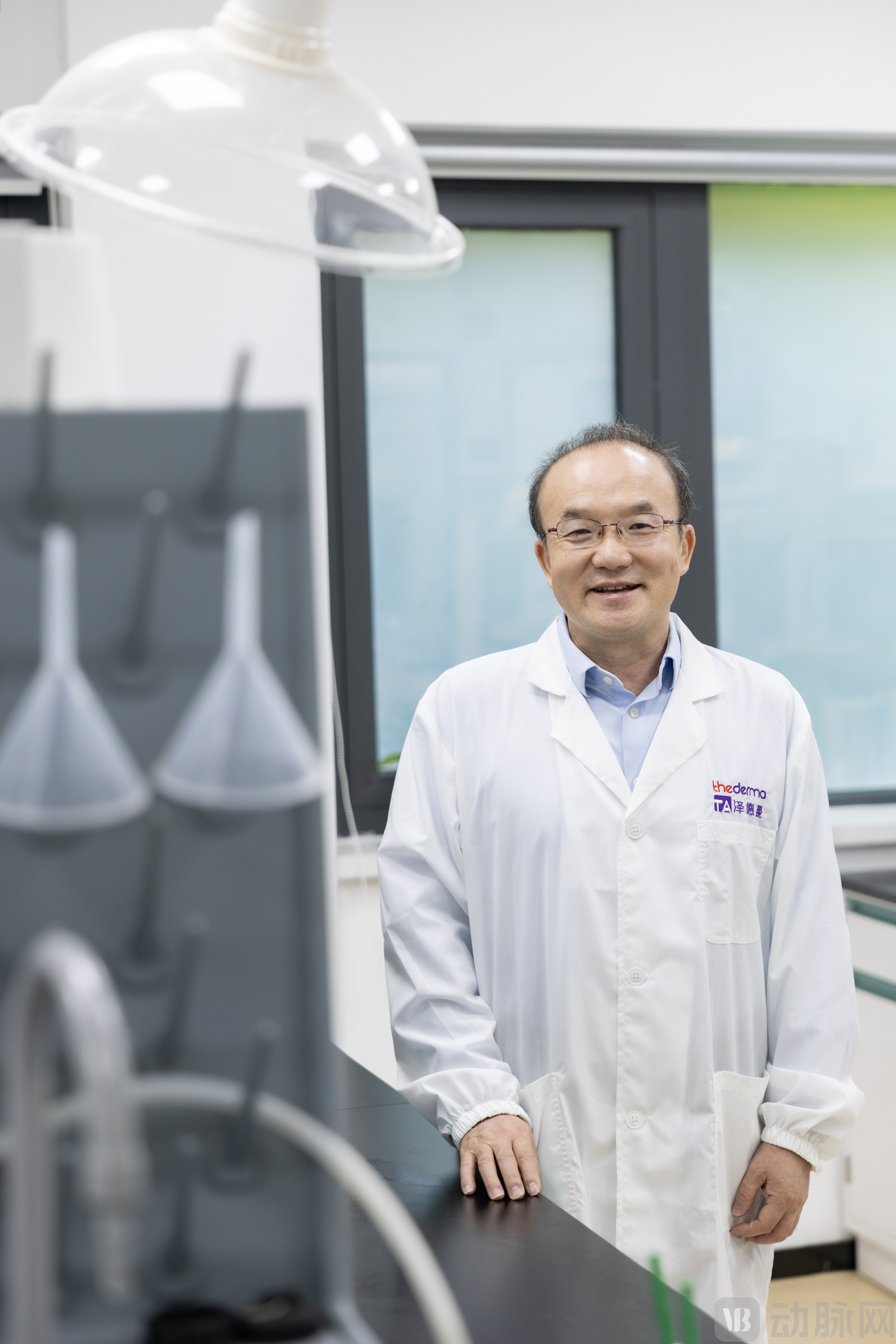
Inventor of Benvitimod , Dr. Genghui Chen
1Rare Target AhR
The Inevitability Behind Serendipity.
Dr. Chen Genghui was born in Hunan province in 1963. From 1979 to 1983, he studied at Nanjing Forestry University. In 1984, he was assigned to work at the Xi'an Lacquer Research Institute under the Ministry of Commerce. In 1988, he pursued a Master's degree in Biology at Simon Fraser University in Canada, which he successfully completed. He then commenced his Ph.D. in Biology in September 1993, earning his doctorate two years later in 1995.
It was during this period that Dr. Chen's path unexpectedly crossed with the AhR. In 1990, while researching nematode symbiotic bacteria in a Canadian laboratory, he serendipitously discovered that a bacterial metabolite exhibited significant anti-inflammatory and antibacterial activity. An intuition told him the mechanism of action of this molecule might be extraordinary. Subsequent in-depth research confirmed this: its target was precisely the Aryl Hydrocarbon Receptor (AhR)—a protein then primarily associated with binding environmental toxins like dioxins and triggering toxicity.
For a long time, the AhR was viewed in academic circles as a "toxin receptor," its physiological functions largely overlooked. However, Dr. Chen's team gradually unveiled its other facet: the AhR is, in fact, a crucial regulator of the "environment-immune" interface within the human body. "It functions like an intelligent 'environmental sensor.' Not only can it respond to exogenous chemicals, but it can also be activated by natural ligands derived from food sources or gut microbiota metabolites, thereby precisely modulating immune balance and tissue barrier function," Dr. Chen explains vividly. "Rehabilitating" the scientific understanding of AhR became a pivotal battle in his scientific journey.
Unlike traditional drugs that singularly inhibit inflammation, the appeal of AhR modulators lies in their "pleiotropic" effects. They can simultaneously inhibit key inflammatory cytokines like IL-4 and IL-13 to achieve rapid anti-inflammatory action, while also promoting the expression of critical skin barrier components such as filaggrin and loricrin, thereby addressing the root cause. This dual mechanism of "treating both symptoms and the underlying cause" breaks free from the traditional therapeutic dilemma of balancing efficacy and safety.
In reality, pursuing the AhR—a "non-mainstream" target—in the early 2000s, when mainstream pathways were already crowded, required immense courage and foresight. Dr. Chen candidly admits that this path had no precedent to follow. All aspects, from molecular optimization and formulation development to clinical evaluation standards, had to be established through the team's own exploration—a process of "defining the standards" itself.
Through optimization based on a natural small molecule structure, Dr. Chen Genghui's team successfully designed benvitimod, a "first-in-class" molecule. It efficiently activates the AhR pathway while avoiding structural similarities with toxic ligands, thereby achieving potent localized efficacy and an excellent safety profile. Their goal was to create a medication gentle enough for use on delicate areas like children's faces and necks, yet capable of rapid onset and sustained control. This design philosophy is perfectly validated by the less than 1% adverse event rate observed in pediatric patients treated with Benvitimod Cream.
Four international studies further confirm: nearly 60% of patients achieved deep itch relief (PP-NRS improvement ≥4 points) after 8 weeks of treatment, with an efficacy rate exceeding 80% in children. Notably, in the Phase III clinical trial conducted in China, 70% of patients who were cured with Benvitimod Cream remained relapse-free for 10 months after treatment cessation. This long-term remission data, pioneered by Chinese researchers and subsequently validated in US and Japanese patient populations, sets a new "Chinese benchmark" for global atopic dermatitis treatment goals.
In November 2024, the Chinese-origin drug Benvitimod Cream received marketing approvals successively in China, the United States, Japan, Canada, and Europe, among other countries. This is an innovative drug independently developed in China with a novel mechanism of action and target. It is also the world's first Aryl Hydrocarbon Receptor (AhR) modulator approved for treating eczema (atopic dermatitis) in patients aged 2 years and above, both children and adults.
Dr. Chen Genghui also revealed that efforts are underway to expand the indicated age for Benvitimod Cream in atopic dermatitis from 2 years down to 3 months. Preliminary study results show significant efficacy, and regulatory approval with an updated label is expected soon.
According to a Southwest Securities research report, the number of atopic dermatitis patients in China reached 70.7 million in 2022, including 34.7 million children/adolescents. This number is projected to increase to 81.7 million by 2030, with 36.5 million being children/adolescents.
It is understood that topical medications serve as the fundamental and most commonly used treatment for atopic dermatitis, with over 90% of patients requiring topical therapy. In traditional treatment paradigms, corticosteroids act rapidly but carry risks like skin atrophy and hyperpigmentation with long-term use. Traditional non-steroidal medications offer good safety but are slower-acting and less potent, often presenting a dilemma for doctors and patients. The launch of the next-generation innovative drug Benvitimod Cream has changed this landscape. Originating from the Chinese-pioneered AhR target, it breaks the pattern previously defined by mainstream targets established in the West. It is a veritable new member of the "Chinese Standard" in pharmaceutical innovation.
Notably, the approval of Benvitimod Cream also altered the global standards for topical dermatological drug approvals. This innovative drug was first approved for clinical trials in 2009. During the Phase I clinical discussion in January 2010, the Center for Drug Evaluation (CDE) proposed requirements for local administration clinical trials. Throughout the development and review process, referencing ICH and relevant European guidelines, the CDE provided technical guidance for the entire clinical development program based on disease characteristics and the drug's mechanism. This guidance led to China's first local pharmacokinetic study and comprehensive exploratory clinical research for such a drug.
Professor Zhang Jianzhong from the Dermatology Department of Peking University People's Hospital, as the Leading Principal Investigator (PI) for the Benvitimod Cream clinical trials, participated in the research from Phase I to Phase III. He witnessed how this innovative drug, based on the Aryl Hydrocarbon Receptor (AhR) target, emerged from a Chinese laboratory and ultimately gained FDA approval, becoming a "world name card" for Chinese dermatological innovation. He stated, "If corticosteroids represent the flag of the United States, vitamin D analogs that of Denmark, and calcineurin inhibitors that of Japan, then AhR modulators are the flag of China."
In 2022, the authoritative international journal Nature Reviews Drug Discovery published an article reviewing China's new drug development progress over the past decade. Between 2010 and 2020, China approved 1,404 new drugs, with only 3 being first-in-class. Benvitimod, approved by the FDA, was one of them.
The 2025 American Academy of Dermatology (AAD) guidelines also give Benvitimod Cream a "strong recommendation." The Expert Consensus on the Topical Treatment and Management of Atopic Dermatitis(2025 edition) in China, for the first time, listed Benvitimod Cream as an important treatment option for atopic dermatitis, highlighting the dual advantages of its AhR-targeting mechanism in "simultaneously inhibiting IL-4/IL-13 inflammatory cytokines and repairing the skin barrier."
The strategic value of the AhR target is also reflected in its potential to intervene in the "atopic march," a significant global public health challenge. Professor Zhang Jianzhong emphasizes that atopic dermatitis, allergic rhinitis, and asthma are "comorbidities and mutual risk factors" within the same disease series. As a universal target playing a key role in the skin, respiratory tract, and intestinal barriers, AhR modulators, when used in early atopic dermatitis treatment, may systemically block or delay the entire allergic progression. "We have the potential to influence a series of diseases by intervening at one target. This is the broader vision beyond dermatology that the AhR target offers us."
2AhR Platform Strategy
In Dr. Chen Genghui's blueprint, Benvitimod Cream is merely the initial breakthrough point of the AhR technology platform. The strategic core of Thederma is not a single product but an R&D platform built around the AhR target, capable of continuously generating innovative drugs.
Leveraging the AhR platform, Thederma's R&D pipeline is rapidly diversifying. Dr. Chen Genghui revealed that Thederma, focusing on the AHR target, already holds 11 clinical approvals and manages 10 product candidates under development, covering related diseases such as vitiligo, allergic rhinitis, and ulcerative colitis.
Among these, an AhR modulator for vitiligo is poised to enter pivotal clinical studies, with the potential to become the world's first non-steroidal topical drug for vitiligo targeting the AhR pathway. The rationale behind this strategy lies in the shared pathological basis of these diseases—"barrier impairment and immune dysregulation"—despite affecting different organs, with AhR serving as the key regulator of this core mechanism.
A critical execution strategy of the platform-based approach is formulation innovation centered on the same core mechanism. Dr. Chen Genghui emphasized the underlying wisdom: "The same core target, with different formulations and delivery methods, can address the common pathological basis of different diseases." For skin diseases, topical formulations such as creams and ointments are developed to achieve the safety advantage of localized efficacy without systemic exposure. For inflammatory bowel disease (IBD), specialized intestinal formulations can be designed by leveraging the characteristic that "AhR modulators are primarily exposed in the gut." This "one core, multiple applications" R&D strategy significantly enhances the platform's output efficiency and commercial value.
In Thederma's laboratory in Zhangjiang, Pudong, its bio-computational model is driving the AhR platform toward digitalization and precision. The platform has integrated over 500,000 sets of omics data, enabling a 92% accuracy rate in predicting the differential responses of vitiligo patients to AhR drugs. "This is not merely algorithmic optimization but a deep understanding of the drug-target-disease interaction network," emphasized Dr. Henry Yu, head of Thederma Bio.
This "super brain" is applied throughout the entire process, from early compound screening and formulation optimization to clinical trial subject stratification. It not only increases R&D success rates but also builds an insurmountable technological moat through data accumulation.
As the product pipeline expands and the platform's value becomes evident, Thederma is transitioning from a past recipient of licensed-in patents to a significant licensor of its own patents. When asked by VCBeat about the possibility of licensing out (License-out), Dr. Chen Genghui affirmed: "It's a natural progression, definitely," adding that "several discussions are currently underway."
This marks a critical step where the assets of Chinese innovative biopharma companies are beginning to be recognized and pursued by global industry leaders, signifying the global validation of the "Chinese approach."
In terms of capital valuation for the technology platform, during the A+ funding round completed in 2024, Thederma's valuation tripled compared to its pre-A round. The capital market now values not just a single product but the comprehensive technological matrix built around the AhR target and the capability to sustainably produce innovative drugs.
This shift fundamentally reflects a profound transformation in the market's valuation logic for Chinese innovative biopharma companies—from "product pipeline" to "technology platform."
3Thederma in the Global Competitive Arena
With the approval of Benvitimod in major pharmaceutical markets such as the United States, Japan, and Europe, the stage for Dr. Chen Genghui and Thederma has expanded from China to the world. They now face not only the challenges of reimbursement negotiations and physician education in the Chinese market but also a comprehensive competition with multinational pharmaceutical giants in the "golden therapeutic area" of autoimmune diseases—a contest spanning scientific value, commercial strategy, and market influence.
The global market for autoimmune disease drugs is vast, valued at hundreds of billions of USD and continuously growing. This field has long been dominated by several major drug classes from multinational corporations such as Novartis, Sanofi, AbbVie, Johnson & Johnson, and Pfizer: TNF-α inhibitors (e.g., Humira), IL-class inhibitors (e.g., Dupilumab), and JAK inhibitors (e.g., Upadacitinib). Among these, Sanofi's Dupilumab has become a blockbuster drug with annual sales exceeding $10 billion, thanks to its outstanding performance in Th2-mediated inflammatory diseases such as atopic dermatitis and asthma.
Amid the presence of these giants, how does a company with a world-class product find its breakthrough point in the global market?
Dr. Chen Genghui's answer is highly pragmatic: he has adopted an exceptionally flexible commercialization strategy tailored to markets at different stages of development, with its core being "leveraging global partnerships" and "achieving mutual success," rather than engaging in resource-draining head-on competition with the giants.
"We are not yet a particularly large company. If we are to go global, the laws, regulations, and distribution rules differ across countries and regions," Dr. Chen admits. At this stage of the company's development, blind expansion is not an option. Instead, a "light-asset" globalization model is chosen—one that prioritizes the company's own interests while integrating global resources.
This "rooted in China, expanding globally" approach ensures that the company can leverage the global market most efficiently with limited resources. It does not pursue formal independence in expansion but instead focuses on the company's core strengths, integrates global resources, and delivers China's innovative achievements worldwide through mutually beneficial partnerships. This model effectively avoids the high risks and costs that small and medium-sized enterprises face when directly confronting complex international regulatory and market environments.
Regarding specific partnership models, Dr. Chen emphasizes significant flexibility. Thederma refuses to apply a one-size-fits-all approach globally. Instead, it respects the unique characteristics of each local market, adapts flexibly, identifies the most suitable and efficient market entry paths, and maximizes partners' benefits to achieve win-win outcomes. "Partnership models vary across regions," he explains. "In some regions, it's purely about distribution, while in others, it involves collaborative R&D. In some markets, additional clinical studies may be required to meet local regulatory requirements, so a 'country-specific strategy' can be adopted."
When asked about the blueprint for global market expansion, Dr. Chen's response breaks away from the conventional thinking of "starting with the easy, then the difficult" or "prioritizing Asia, Africa, and Latin America before Europe and the United States." Instead, his approach is "entering whichever market is ready."
Dr. Chen reveals that discussions are currently underway with companies in multiple regions worldwide, including Brazil and Southeast Asian countries.
Dr. Chen's efforts are attempting to solve a long-standing challenge for China's innovative drug industry: how to ensure patient accessibility to medications while enabling companies to sustain R&D efforts (sustainability). His answer is a two-pronged strategy: internally, through technological and management innovations, production costs are minimized to create room for price reductions; externally, through flexible global commercialization, optimal value is sought in different markets, with global revenues supporting accessibility in the Chinese market. This pathway also offers a highly valuable reference model for those who follow.