

Built for the clinic: Yingsheng Bio's mass spectrometer wins approval—breaking key barrier to widespread adoption

YINGSHENGBIOLOGY
Developer of Genetic Testing Reagents, Systems, and Software
Mass spectrometry technology, as a core tool for precision diagnosis, has always had its large-scale and routine clinical application as a central industry imperative. However, in recent years, the widespread adoption of clinical mass spectrometry has been stuck at the "last mile." This "mile" is not due to shortcomings of the technology itself, but rather stems from a disconnect between research-grade equipment and the clinical environment.
Bridging this "last mile" hinges on the ability to successfully develop a mass spectrometry system truly designed for clinical use. The recent market approval of Yingsheng Bio's independently developed liquid chromatography-tandem mass spectrometry system, the YS Micro 480MD, has brought this issue into focus. Whether the system's characteristics of "compact footprint, user-friendly operation, and minimal maintenance" can become the key variable in driving the scalable application of mass spectrometry technology has become a major point of industry attention.
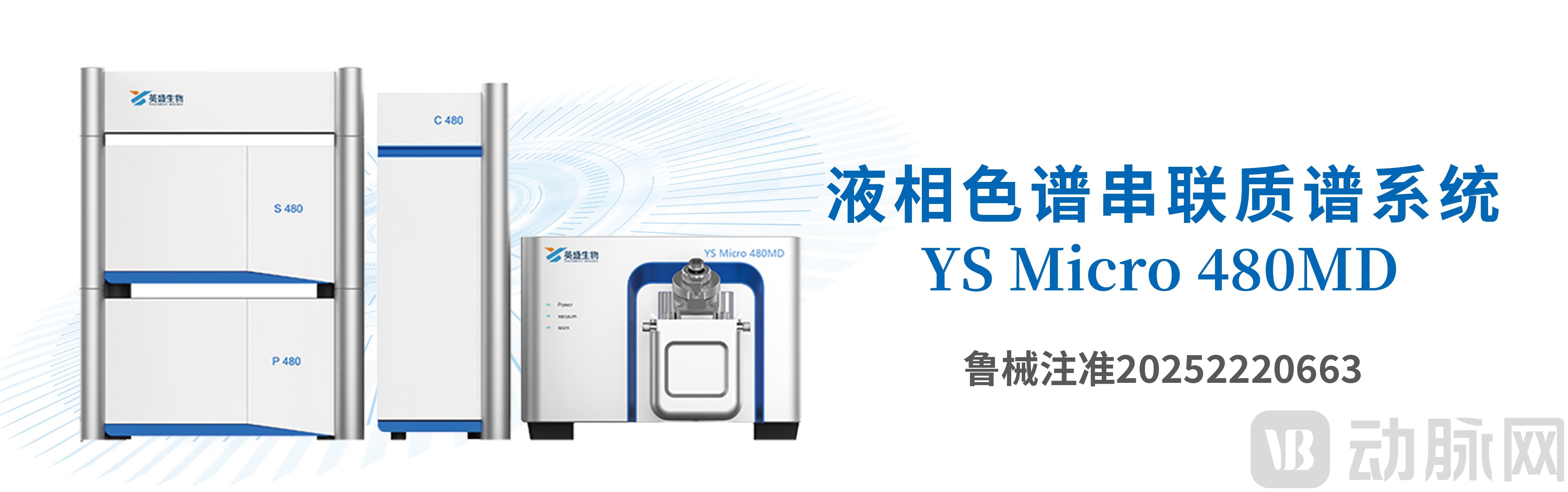
YS Micro 480MD by YingSheng Bio
Mass spectrometry detects samples by ionizing them into a mixture of gaseous ions and utilizes electromagnetic principles to separate these ions based on their mass-to-charge ratio. By measuring the intensity of the ion stream, it achieves high sensitivity, high specificity, and the advantage of multi-analyte detection, making it an indispensable technology for precision diagnosis.
Currently, the application of mass spectrometry has permeated various clinical scenarios, including newborn genetic metabolic disease screening, endocrine hormone testing, therapeutic drug monitoring, and nutritional status monitoring for specific populations. A consensus has been formed within the industry: mass spectrometry technology should not remain merely as a niche, high-end specialized test. Its technical characteristics determine that it has the potential to become a standardized and routinely deployed diagnostic platform in hospitals.
In recent years, China's policies have established an increasingly robust support system for the development of clinical mass spectrometry. Driven by clear policy guidance, industry enthusiasm for clinical mass spectrometry continues to rise, and the competitive landscape is undergoing profound changes. From the perspective of regulatory approvals, the sector is currently in an explosive period for mass spectrometry device registrations. According to statistics, as of July 1, 2025, a cumulative total of 142 mass spectrometers have been approved by the National Medical Products Administration (NMPA). A significant shift is that a growing number of Chinese companies are engaging in mass spectrometry instrument R&D. The YS Micro 480MD from Yingsheng Bio, recently approved by the NMPA, stands as a typical achievement of China-developed innovation in mass spectrometers.
Furthermore, a cumulative total of 199 mass spectrometry reagent kits have received approval. Among these, 186 are based on Liquid Chromatography-Tandem Mass Spectrometry (LC-MS/MS), with therapeutic drug monitoring (TDM) and vitamin assays being the predominant application areas. Yingsheng Bio holds a leading position in the number of registration certificates obtained. This trend indicates that leading enterprises, exemplified by Yingsheng Bio, are not only expanding their advantages horizontally across application scenarios but are also accelerating vertical integration by securing upstream instrument supply chains and establishing in-house production capabilities. This strategic move is aimed at building comprehensive, end-to-end technological competencies spanning from reagents to instrumentation.
Thus, clinical mass spectrometry is currently positioned at a pivotal juncture, buoyed by favorable policies and the accelerating translation of innovative achievements, signaling broad prospects for future growth. Enterprises that possess original instrument R&D capabilities and can introduce systemic solutions that closely align with clinical needs will secure a decisive initiative in the increasingly competitive landscape.
In the field of Liquid Chromatography-Tandem Mass Spectrometry (LC-MS/MS), which features higher technical barriers and broader clinical applications, the progress of domestic development in China has significantly lagged behind. According to NMPA data, among the 70 approved LC-MS/MS instruments, the proportion independently developed by local Chinese companies is extremely low, with only a few firms like Yingsheng Bio having achieved technological breakthroughs.
This low localization rate stems from dual constraints in technology and the market. Technically, the primary barrier in LC-MS/MS systems lies in the weak capacity for self-developing core components. On the market side, there has been a long-term lack of intrinsic motivation for companies to invest in proprietary instrument development. Since Chinese in vitro diagnostics (IVD) companies primarily generate profits from reagents, they have shown limited enthusiasm for investing heavily in self-developing instruments. This "reagent-heavy, equipment-light" business model has led to an imbalance: fierce competition in application development coexists with scarce interest in proprietary instrument R&D.
It must be emphasized that in-house instrument development is by no means an optional extra but a critical element for building long-term competitiveness. In recent years, the industry has gradually recognized the importance of developing China-made mass spectrometers, and the number of enterprises engaged in independent LC-MS/MS system R&D is steadily increasing. According to observations by VCBeat, current participants in independent R&D fall into two categories: mass spectrometry companies focused on life science applications and those dedicated to clinical mass spectrometry. The latter, with their deep understanding of clinical scenarios, reporting requirements, and laboratory operating habits and pain points, possess inherent advantages in ensuring the "clinical usability" of instruments. In the future, it is expected that more clinical mass spectrometry companies will extend their efforts to the instrument side, promoting better alignment of domestically produced clinical mass spectrometers with actual medical needs.
As one of the few clinical mass spectrometry firms currently involved in proprietary instrument development, Yingsheng Bio has established a comprehensive pathway for the development and commercialization of China-developed instruments. In its early stage, the company collaborated with international manufacturers, leveraging high-performance mass spectrometers to launch a wide range of reagent applications and establish complete clinical mass spectrometry solutions, thereby building its industry reputation. In the medium term, it established a complete supply chain system and a production quality management system for mass spectrometers. Long-term, based on the self-manufacturing foundation solidified in the medium term, the company aims to achieve fully independent R&D and stable mass production of mass spectrometers, as well as the industrialization of next-generation products like fully automated integrated systems.
The launch of the YS Micro 480MD represents one of the first achievements of Yingsheng Bio's instrument self-development strategy. Moving forward, Yingsheng Bio plans to sequentially introduce multiple clinically applied mass spectrometers, such as ICP-MS, developed in-house.
As a versatile analytical technology, Liquid Chromatography-Tandem Mass Spectrometry (LC-MS/MS) systems are widely applied across numerous fields, including clinical diagnostics, scientific research, environmental monitoring, and food safety. However, the requirements for instrument performance, operational workflows, and functional configuration vary significantly between these fields. This makes it difficult for general-purpose instruments to achieve an optimal fit in every application scenario, often resulting in some functional modules being underutilized while key performance aspects fail to fully meet actual needs. This mismatch impacts work efficiency and the reliability of test results, highlighting the necessity of developing application-specific instruments.
Taking the clinical setting as an example, according to previous research by VCBeat, the LC-MS/MS systems currently used in clinical practice were not originally designed for clinical use. Despite hospitals' strong interest in adopting mass spectrometry testing, the objective conditions for widespread, accessible application are not yet mature. Most clinical settings face limitations in space, technical staff expertise, and equipment maintenance costs, which hinder the broader application of mass spectrometry technology in clinical environments.
Regarding space, the "Consensus on the Construction of Clinical Mass Spectrometry Laboratories in Medical Institutions" recommends a total laboratory area of no less than 50 m². However, surveys indicate that the mass spectrometry labs in most Chinese tertiary hospitals are actually below 50 m². When introducing mass spectrometers, hospitals need equipment that can be compactly integrated into existing laboratory layouts. In terms of personnel operation, hospitals require that laboratory technicians without specialized backgrounds can perform tests independently after short-term training. For operation and maintenance, they expect maintenance costs to be kept within a reasonable range.
These needs collectively point towards a dedicated mass spectrometry system truly designed for clinical use. Developing a streamlined, efficient, and highly compatible dedicated system for clinical settings has become an essential path to promoting the widespread application of mass spectrometry technology in clinical practice. Yingsheng Bio's YS Micro 480MD is developed specifically for clinical scenarios, transforming a high-end, sophisticated instrument into an appliance-like system. The equipment not only adopts a highly integrated design that significantly saves laboratory space but also simplifies complex quantitative analysis through minimalist hardware and software design. It streamlines operational workflows, optimizes the human-machine interface, and delivers stable performance with low-noise operation.
Furthermore, the YS Micro 480MD employs a dedicated, task-specific deployment model. This not only avoids cross-contamination between testing systems but also allows laboratories to build backup systems by deploying multiple units. If one device fails or requires maintenance, others can promptly take over the testing tasks, ensuring clinical work continues uninterrupted.
These features of the YS Micro 480MD enable medical institutions previously constrained by space, personnel, and budget to reliably implement mass spectrometry testing, making it an ideal platform for expanding access to high-quality medical resources.
The market approval of the YS Micro 480MD demonstrates that Chinese companies can not only master the core technologies of mass spectrometers but also precisely grasp clinical needs to drive product innovation. It is believed that the YS Micro 480MD will help mass spectrometry technology move beyond the confines of large hospital central laboratories, extending into broader clinical departments and secondary-level hospitals, bringing positive change towards the accessible and widespread adoption of clinical mass spectrometry in China.
Against the backdrop of growing demand for precision medicine and the push for more balanced allocation of medical resources, China's clinical mass spectrometry industry is charting a clearer development path. In response to the urgent clinical needs for improved testing efficiency, optimized space utilization, cost control, and simplified operations, the industry is poised to advance across three key dimensions: instrument innovation, process optimization, and application expansion.
Instrument and Technology: The domestic production of high-end mass spectrometry equipment in China has become an irreversible trend. With a maturing supply chain and deepening technological expertise, Chinese companies are establishing comprehensive R&D and manufacturing systems for mass spectrometers, driving a wave of high-end instruments with stable performance and high precision into the market.
Testing Process: Automation is a critical lever for enhancing clinical efficiency. As hospital sample volumes continue to grow, demand for fully automated, integrated mass spectrometry systems is expected to rise rapidly.
Application Scenarios: Multi-omics research will continually broaden the application scope of clinical mass spectrometry, accelerating the translation of discoveries into clinical practice in oncology, cardiovascular and cerebrovascular diseases, maternal and child health, and other fields.
Notably, competition within the industry is evolving towards the integration of ecosystems and platforms. Leading enterprises will need to establish a presence across multiple technology platforms—such as liquid chromatography-tandem mass spectrometry (LC-MS/MS), nucleic acid mass spectrometry, and high-resolution mass spectrometry—and build integrated solutions encompassing reagents, instruments, automation, standard systems, and technical services.
In light of these industry trends, numerous companies are actively deploying strategies, including expanding technology platforms, developing automated mass spectrometry products, and firmly committing to the In Vitro Diagnostics (IVD) business model. As a benchmark enterprise, Yingsheng Bio's distinctive strength lies in its early and systematic strategic layout addressing key challenges such as domestic production, automation in China, and making technology more accessible, positioning the company as a navigator in the industry's broader consolidation and platform integration efforts.
Specifically, Yingsheng Bio now covers four major mass spectrometry technology platforms: LC-MS/MS, Inductively Coupled Plasma Mass Spectrometry (ICP-MS), nucleic acid mass spectrometry, and high-resolution mass spectrometry. Its product portfolio includes calibrators and quality controls, application-specific reagents, mass spectrometers, automated equipment, and chromatographic columns/consumables. The company has secured over 50 Class II/III NMPA registrations for its mass spectrometry products and 39 CE marks in the EU. It has also commercialized several China-developed mass spectrometers and is advancing fully automated integrated systems for both LC-MS/MS and ICP-MS.
Yingsheng Bio has achieved several "first-in-China" milestones. It was the first in China to launch an LC-MS/MS-based 14-Vitamin Panel assay kit, and secured the first NMPA approvals for kits such as a Six-Steroid Hormone Panel, Vancomycin assay, and Methotrexate assay. According to a report by CIC, Yingsheng Bio ranks first among Chinese brands in cumulative installations for both LC-MS/MS and ICP-MS systems. Based on 2023 revenue from clinical mass spectrometry reagent kits (NMPA-approved products) in China, Yingsheng Bio held the leading market share and has maintained this leadership position through 2024 and 2025.
In summary, the Chinese clinical mass spectrometry market holds immense potential and is at a critical inflection point towards large-scale application. Companies must pursue comprehensive strategies in both instrument innovation and application expansion to establish a competitive edge in this increasingly intense market. Yingsheng Bio's multi-technology platform strategy and its development of a complete ecosystem offer a viable and demonstrated path forward for the industry.