

A conversation with Professor Dinggang Shen: a pioneer honored with MICCAI’s 2025 Enduring Impact Award

UNITED IMAGING
Artificial Intelligence Medical Product Developer
Recently, Dinggang Shen, Founding Dean of the School of Biomedical Engineering at ShanghaiTech University and Co-CEO of United Imaging Intelligence Co., Ltd., was honored with the 2025 Enduring Impact Award (EIA) by the Medical Image Computing and Computer Assisted Intervention (MICCAI), a leading global academic society in its field, becoming the first Chinese recipient since the award's establishment 17 years ago.
In 2020, Professor Shen was selected as a MICCAI Fellow, the first Chinese scientist to receive this distinction. Now, he has once again made history by earning the society's highest honor. Over the past two decades of his academic career, Professor Shen has consistently focused on exploring the application of artificial intelligence in medical imaging.
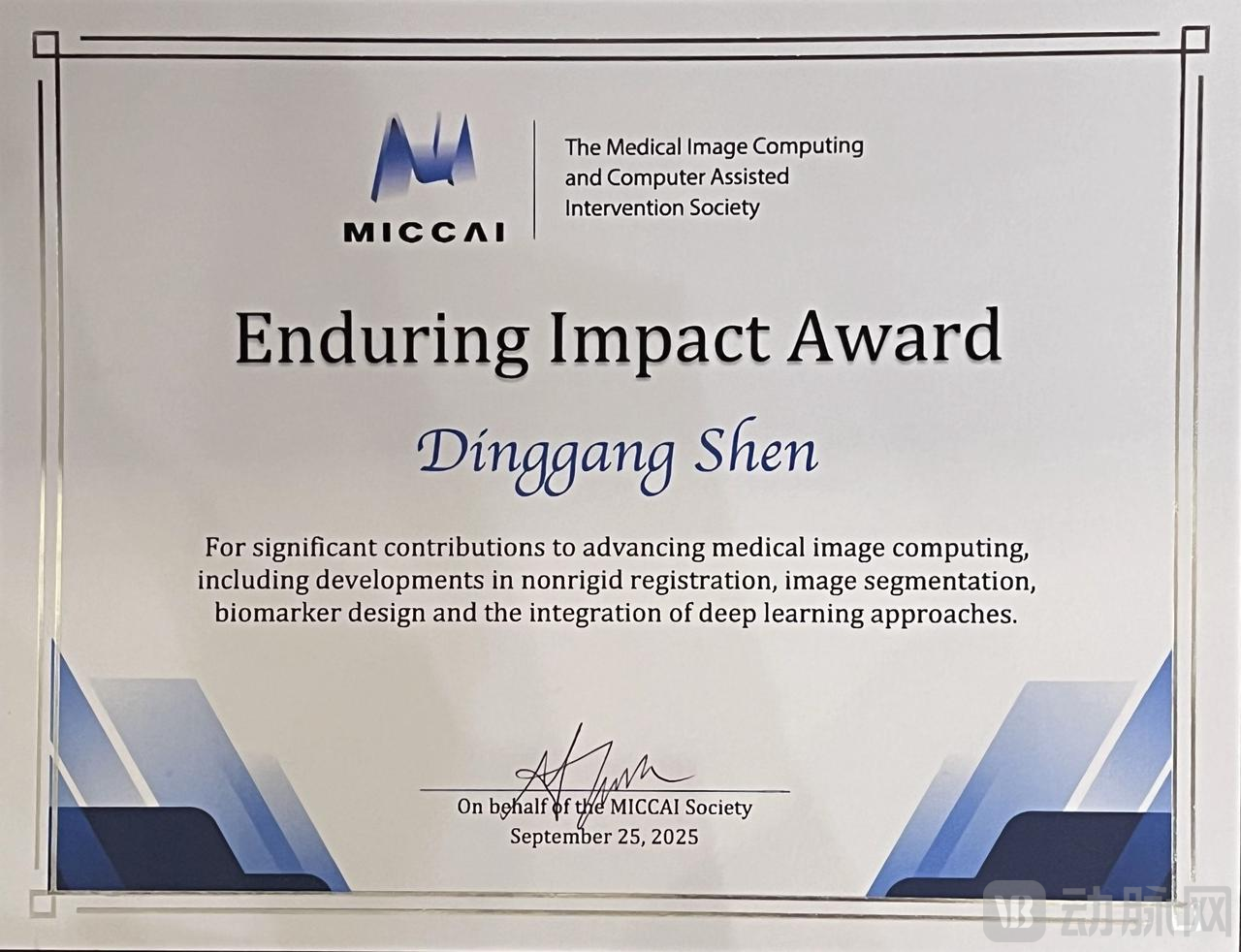
Certificate of 2025 Enduring Impact Award for Dinggang Shen
At MICCAI 2025, VCBeat engaged in an in-depth conversation with Professor Dinggang Shen. The discussion extended beyond clinical research to cover Professor Shen's journey in AI, and his views on nurturing Chinese medical AI talent and fostering deeper collaboration between industry, academia, research, and medicine.
Similar to most pioneers who explore the unknown alone, Professor Dinggang Shen was once among the "minority." While the majority followed established paths, he chose to stand apart from the prevailing trends, ultimately using his vision and perseverance to forge a path that proved to be "correct."
Professor Shen is one of the world's earliest scientists to conduct research on artificial intelligence in medical imaging and was among the very first to apply deep learning to the field. As early as over two decades ago, he published the seminal paper HAMMER: Hierarchical Attribute Matching Mechanism for Elastic Registration, which utilized machine learning methods to analyze magnetic resonance imaging (MRI) data and achieved predictions for the risk of Alzheimer's disease. This work represents the first paper to apply machine learning methods for studying brain imaging. The HAMMER elastic registration algorithm introduced in this paper remains a classic method for standardized brain image analysis to this day.
However, in the field of medical image computing at that time, "machine learning" was not a widely accepted mainstream approach; the industry generally considered it both "niche" and "impractical." Yet, guided by his keen academic intuition, Professor Shen persistently made it the core methodology of his daily research. With the gradual evolution of artificial intelligence technology, he again pioneered the application of deep learning techniques to medical image analysis as early as 2013.
To build a solid foundation for his research, Professor Shen diligently focused on two key tasks: on one hand, he continuously deepened his research efforts, publishing a series of high-quality papers; on the other hand, he meticulously refined his research proposals, often spending weeks polishing a single-page research statement. He candidly shared that the experience in proposal writing he accumulated through practice has since been unreservedly passed on to his students and peers.
If adopting machine learning was a bold academic experiment, then transitioning from the laboratory to the industry represented a cross-boundary choice for Professor Dinggang Shen. From his very first day working in medical AI, he held a firm belief that the most cutting-edge scientific achievements must ultimately be translated into real-world applications to benefit the public. By 2010, breakthroughs in computing power, the exponential growth of clinical data, and advancements in overcoming challenges in neural network training made it feasible for medical artificial intelligence to move from the lab to the industry.
Furthermore, extensive research often fosters a desire to solve practical problems. Professor Shen observed that academia tends to abstract complex clinical issues into idealized research models, whereas real-world medical problems are far from being so idealistic or singular. This gap renders many research methods and findings difficult to directly apply in clinical settings to assist doctors and patients. He believes that only by bridging the gap with industry can a closed loop from technology to product be achieved, thereby genuinely addressing clinical challenges.
In 2017, convinced that medical artificial intelligence had reached a "technological tipping point" and required a technology company to lead its productization, Professor Dinggang Shen co-founded United Imaging Intelligence Co., Ltd. (UII) after multiple invitations from Shanghai United Imaging Healthcare Co., Ltd., thereby officially embarking on his journey to industrialize medical AI.
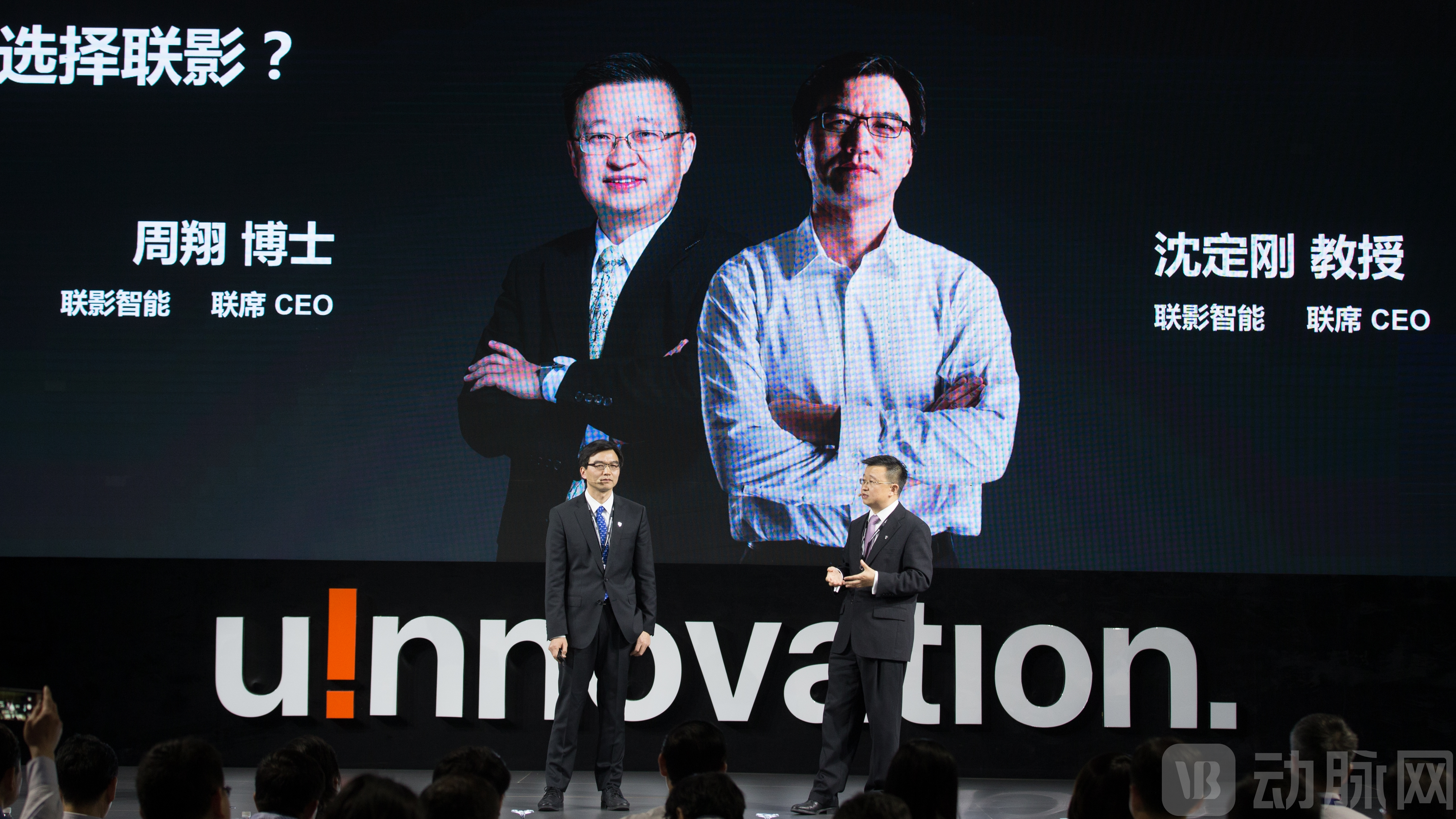 United Imaging Intelligence Co-CEOs Dinggang Shen (left) and Xiang Zhou (right) at the 2018 United Imaging Innovation Conference
After eight years of development, United Imaging Intelligence (UII) has become one of China's largest medical AI companies, with a valuation exceeding RMB 10 billion. Under Professor Shen's leadership, UII has established an innovative full-stack, full-spectrum technological roadmap. The company has developed over 100 AI applications, launched the uAI NEXUS medical large model , and introduced more than ten medical AI agents. To date, UII's AI products have been implemented in over 4,000 hospitals worldwide, benefiting numerous patients.
Beyond promoting AI to address clinical pain points, Professor Dinggang Shen has undertaken another far-reaching initiative: establishing the School of Biomedical Engineering at ShanghaiTech University and serving as its Founding Dean to tackle challenges such as the shortage of talent in China's medical AI industry and the disconnects in the industry-academia-research-medicine pipeline.
He pointed out that the scarcity of interdisciplinary talent proficient in healthcare, artificial intelligence, and medical devices is a critical issue. Many individuals with computer science backgrounds who work on medical imaging lack a deep understanding of medical imaging equipment principles or clinical diagnostic logic, which ultimately leads to a disconnect between the products developed and real-world clinical needs.
Faced with these challenges, Professor Shen's solution is to foster deep collaboration between universities and enterprises. Universities often lack real-world scenarios, data, and clear clinical demands, while companies can provide engineering capabilities, access to clinical needs from partner hospitals, and vast amounts of data.
Integrating these three elements with the theoretical teaching of universities enables students to not only learn AI knowledge but also gain early exposure to clinical environments. This approach ensures that graduates can quickly adapt to roles in either corporate or hospital settings, thereby addressing the shortage of skilled professionals in China's medical sector.
At a practical level, Professor Shen's talent development philosophy adheres to the principle of "Problem-Driven Approach + Global Perspective."
He systematically translates industrial challenges into scientific research questions. For instance, the inherent conflict between "fast scanning and low dose" can be assigned as an algorithmic research topic to laboratories at ShanghaiTech. Outstanding students from the lab can then be assigned to work within companies, where they iteratively refine the algorithms based on real-world medical imaging data and clinical feedback.
The results demonstrate that many students are capable of solving complex problems that companies find difficult to handle. Throughout this process, they gain a profound sense of achievement, which in turn motivates them to participate more actively in the research, development, and real-world application of medical artificial intelligence.
As early as 2012, Professor Shen, together with Professor Tianming Liu, a tenured professor at the University of Georgia, voluntarily initiated the "Dragon Star Committee." This program invited leading international experts to return to China to teach undergraduate courses. In 2014, Professor Shen spearheaded the launch of the Medical Imaging and Computing Summer School (MICS) in China. Starting with only 100 participants at its first session, MICS had grown to nearly 3,000 attendees by 2025, establishing itself as the largest and most influential academic conference in the field of medical imaging within China. In 2019, Professor Shen served as the Conference Chair of the MICCAI annual meeting, providing a global platform for young Chinese scholars and showcasing the achievements of China's medical imaging AI community on the world stage.
Driven by these initiatives, the proportion of papers published at MICCAI by Chinese scholars has experienced a leapfrog growth: from a mere 2-3% two decades ago to 48.7% this year, ranking first in the world (with the United States and Germany following at 11.5% and 6.4%, respectively). This represents an approximately twenty-fold increase over the past twenty-plus years.
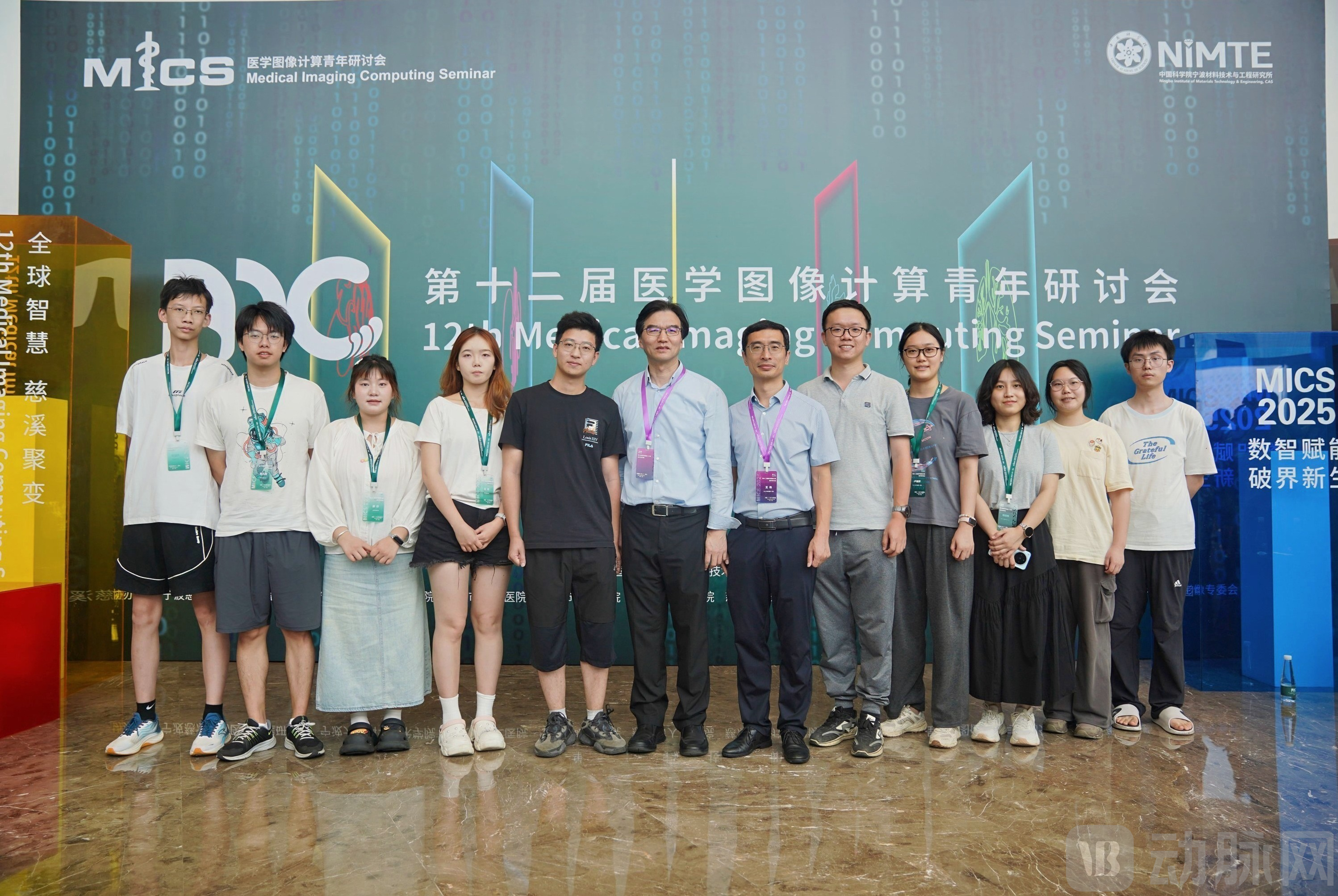
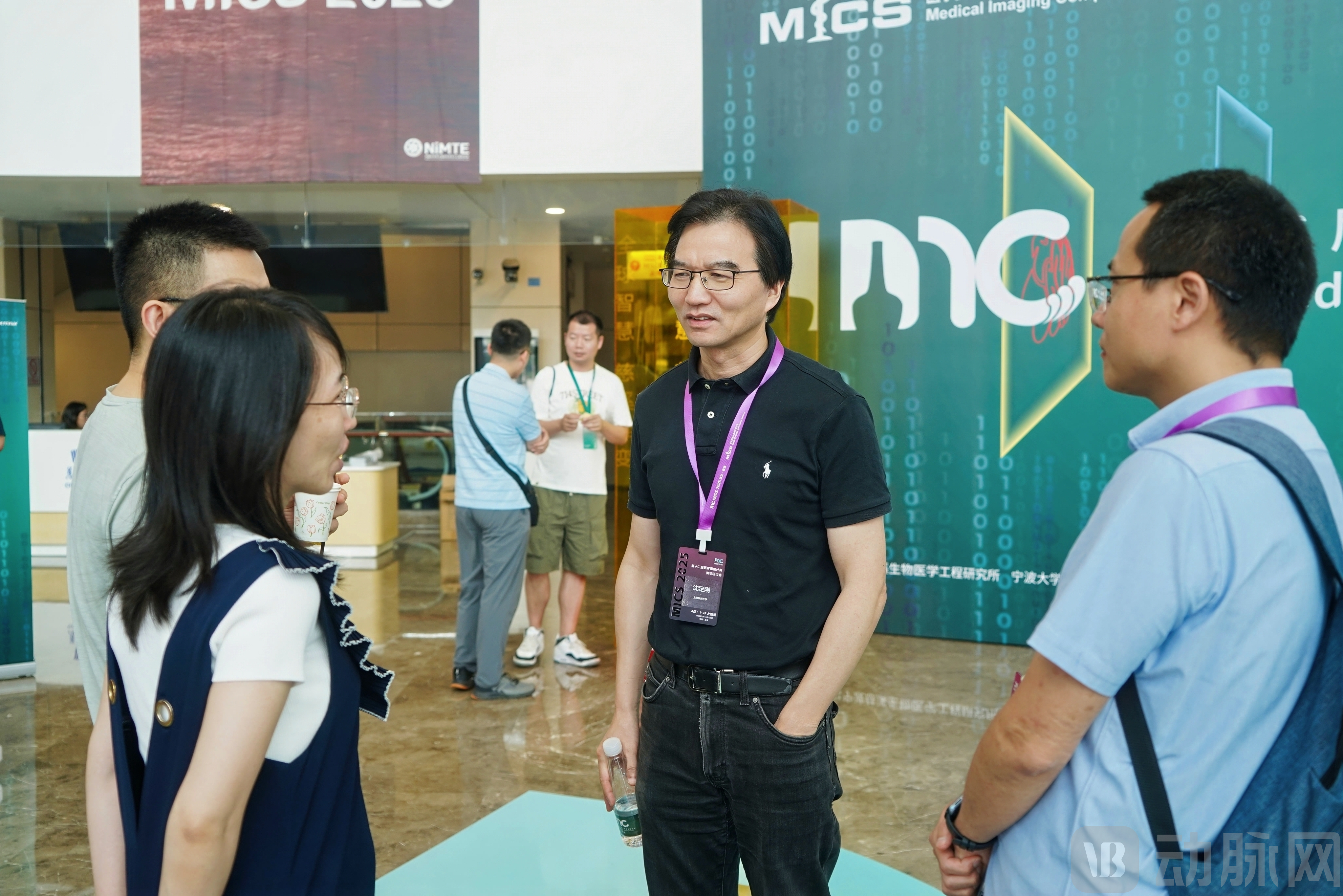 Professer Shen Exchanges with Young Scholars at MICS
Having identified a path to address the talent shortage, the next step is to attract more physicians to participate in medical artificial intelligence innovation, thereby completing the industry-academia-research-clinical practice ecosystem. Currently, the core obstacles physicians face when participating in AI R&D lie in the difficulty of accessing clinical data and meeting clinical needs—in other words, it is necessary to answer the question: Why would physicians be willing to collaborate with enterprises?
In response to this, Professor Shen believes that the key to solving the problem lies in engaging physicians in the innovation process.
"Currently, United Imaging Intelligence (UII) undertakes over 80 major national and provincial-level projects. Through in-depth industry-clinical collaboration, we obtain relevant medical data to address the challenge of data inaccessibility. All this data has undergone professional annotation and verification, enabling rational utilization within the scope of compliance requirements. Additionally, physicians are deeply involved in the product R&D process—this allows our engineers to promptly respond to physicians' clinical needs and continuously optimize products to better align with their usage habits," Professor Shen told VCBeat.
"We have collaborated with physicians from top-tier hospitals such as West China Hospital of Sichuan University and Zhongshan Hospital in Shanghai to publish a series of high-quality academic papers. This has successfully established a complete closed loop from cutting-edge scientific research to clinical translation and application, enabling medical AI to serve in clinical diagnosis and treatment practices and benefit more people."
About Professor Dinggang Shen
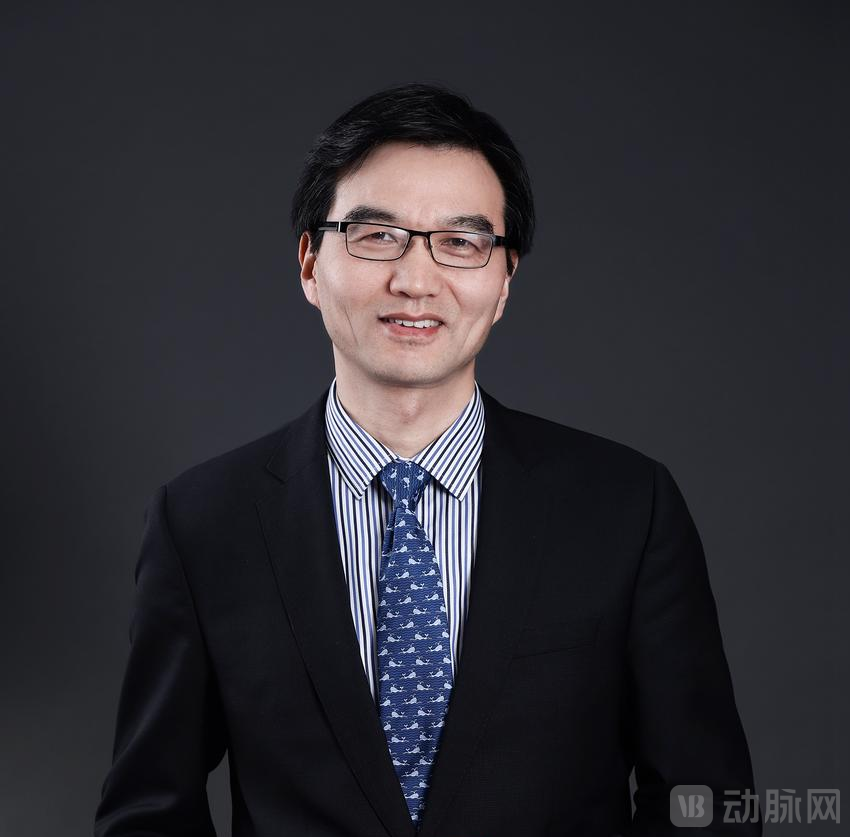
Professor Dinggang Shen is among the world's earliest scientists to conduct research on artificial intelligence (AI) in medical imaging, and one of the first to apply deep learning to this field. Currently, he serves as Co-Founder and Co-CEO of United Imaging Intelligence (UII), and Founding Dean of the School of Biomedical Engineering at ShanghaiTech University. Previously, he held the positions of Tenured Professor and Endowed Distinguished Professor at the University of North Carolina at Chapel Hill (UNC-Chapel Hill) in the United States. He is also a Fellow of the Chinese Society of Biomedical Engineering, as well as a Fellow of IEEE, AIMBE, IAPR, MICCAI, ISMRM, and IAMBE.
Professor Shen has published over 760 SCI-indexed papers, with an H-index of 162 and more than 100,000 citations. He ranks first among Chinese scholars in the field of medical imaging. Additionally, he serves as Editor-in-Chief of Frontiers in Radiology, Senior Editor of three major international journals, and was the General Chair of MICCAI 2019.