

Qitan Tech unveils Its high-throughput nanopore gene sequencer QPinnacle2

QitanTech
Gene Sequencing Technology R&D Provider
On September 23, 2025, Qitan Tech hosted its 2025 New Product Launch. The company officially unveiled the high-throughput nanopore gene sequencer QPinnacle2 and detailed the all-new O2 sequencing biochemical system, marking a significant milestone in China's gene sequencing field.
More than 100 representatives from research institutions, medical institutions, industrial partners, and media attended the launch event in person. Experts from institutions including Peking University People's Hospital, China University of Geosciences (Wuhan), Darui Biotech, and GrandOmics delivered keynote speeches. They shared their latest research results based on Qitan’s O2 system, and conducted in-depth discussions on the ecological development and future prospects of domestic nanopore sequencing from multiple dimensions such as technological breakthroughs, clinical practice, and scientific research applications.

Dr. Xie Dan, Co-Founder of Qitan Tech, delivered the opening speech. He stated that from the launch of QNome, China’s first domestic nanopore sequencing platform, in 2021, to the release of the medium-throughput sequencing platform in 2023, and now to the launch of the high-throughput sequencing platform today, Qitan Tech has always maintained its own pace. Only by maintaining awe for the complexity and systematic nature of the technology itself and taking steady steps can the company go further and more steadily.
In-depth Interpretation of the O2 Biochemical System

At the launch event, Bai Jingwei, Co-Founder of Qitan Tech, provided a comprehensive and systematic introduction to the technical architecture and performance of the all-new generation O2 sequencing biochemical system.
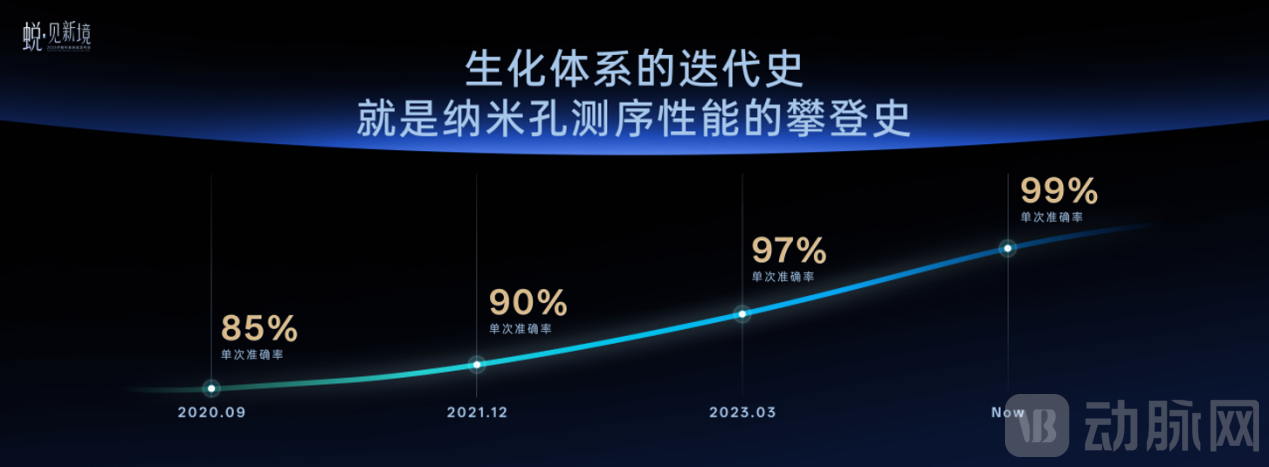
In July this year, Qitan Tech announced for the first time through a series of articles that its O2 system had achieved a single-read accuracy of 99%. This made Qitan Tech the first domestic nanopore sequencer enterprise to meet the Q20 standard, attracting widespread attention in the industry. At this launch event, Bai Jingwei further provided in-depth interpretations from multiple perspectives, including protein engineering, new membrane materials, and sequencing chemistry systems.
He stated that the O2 system has achieved breakthroughs in three core technical aspects: First, the design of the new nanopore protein enables clearer current jump steps and better signal-to-noise ratio; second, the new speed-controlling protein provides important guarantees for the speed and stability of DNA translocation through the pore protein, which can effectively reduce the pore blockage rate and further improve the stability of long-read sequencing; third, the adoption of new polymer membrane materials and membrane-forming processes not only reduces noise by 20%, but also achieves a high-quality membrane formation rate of over 90%. In addition, optimizations and updates have been made in sequencing adapters, sequencing reagents, and core algorithms.
Equipped with the fully upgraded O2 system, Qitan Tech's two major sequencing platforms—QNome and QPursue—have both demonstrated "faster, more accurate, and more stable" sequencing performance.
In terms of accuracy: the single-read accuracy has exceeded 99%, the consensus accuracy (≥20x) has reached as high as Q50, and the consensus accuracy for multi-species samples has been significantly improved.
In terms of throughput enhancement: taking the 16-hour sequencing of human genome samples (>2kb) as an example, compared with the O1 system, the data output of a single QCell-384 chip has increased by 90.5%, while the throughput of a single QCell-6K chip has risen by 81.7%. Furthermore, the maximum throughput of QCell-6K achieved in laboratory settings has reached 147Gb, far exceeding its designed throughput.
In terms of chip stability: long-term storage verification data shows that the chips exhibit excellent environmental adaptability and long-term storage performance. After being stored at different temperatures for 1–8 weeks, the average pore loss rate is less than 5%; moreover, the sequencing throughput variation is less than 10% within a 6-month storage period. These results fully validate the stability of the chip's pore structure and the effective sustainability of its biochemical activity.

In addition, Bai Jingwei presented a series of real-world testing cases of the O2 system. These tests involved 103 cooperative partners, 364 chips, and nearly 1,500 samples, covering application fields such as bacterial genome assembly, full-length 16S microbial diversity analysis, plasmid assembly, HLA typing, and animal pathogen detection—all of which have received high praise from users.
Discussions by Experts from Multiple Fields
At the launch event, four experts from different fields shared the practice and prospects of domestic nanopore sequencing technology from perspectives including clinical research, genetic disease screening, marine ecology, and "AI + sequencing".
Guo Yifan from the Clinical Laboratory of Peking University People's Hospital shared that his team had completed the entire targeted sequencing process in 3.5 hours using Qitan Tech's nanopore sequencing platform and the 10-minute rapid library preparation method, effectively addressing the clinical pain point of rapid pathogen detection. He also pointed out that, with the advantages of "speed, accuracy, and cost-effectiveness", this technology can efficiently identify pathogens in critical and emergency cases, and is expected to provide key support for rapid in-hospital diagnosis.
Dr. Yang Xu from Darui Biotech shared the application experience of nanopore sequencing in thalassemia screening. Based on Qitan Tech's platform, his team has successfully achieved one-time detection of all types of deletion and mutation in α/β-thalassemia, which simplifies the traditional detection process and improves the efficiency of screening and diagnosis.
Professor Yan Wei from China University of Geosciences (Wuhan) introduced his team's first application of nanopore sequencing technology in the research on the genome of marine picocyanobacteria. The long-read data generated by Qitan Tech's sequencing platform has effectively solved the assembly challenge of complex repetitive sequence regions, greatly facilitating the analysis of microbial community structure and the mining of functional genes, and providing a new tool for ecological research such as marine carbon cycle.
From an industry perspective, Wang Depeng, CEO of GrandOmics, pointed out that "AI + nanopore" will completely transform the logic of data generation and interpretation. Combined with AI-based base calling and structural variation detection algorithms, nanopore sequencing is expected to unlock greater value in fields such as large genome assembly, genetic diseases, and tumor detection.
High-Throughput Nanopore Gene Sequencer QPinnacle2

The grand finale of the launch event was hosted by Dr. Hu Geng, Co-Founder of Qitan Tech, who officially released the high-throughput nanopore gene sequencer QPinnacle2. This marks Qitan Tech’s completion of its full-matrix product lineup, spanning from the low-throughput QNome, medium-throughput QPursue to the high-throughput QPinnacle, enabling comprehensive coverage of diverse application scenarios.
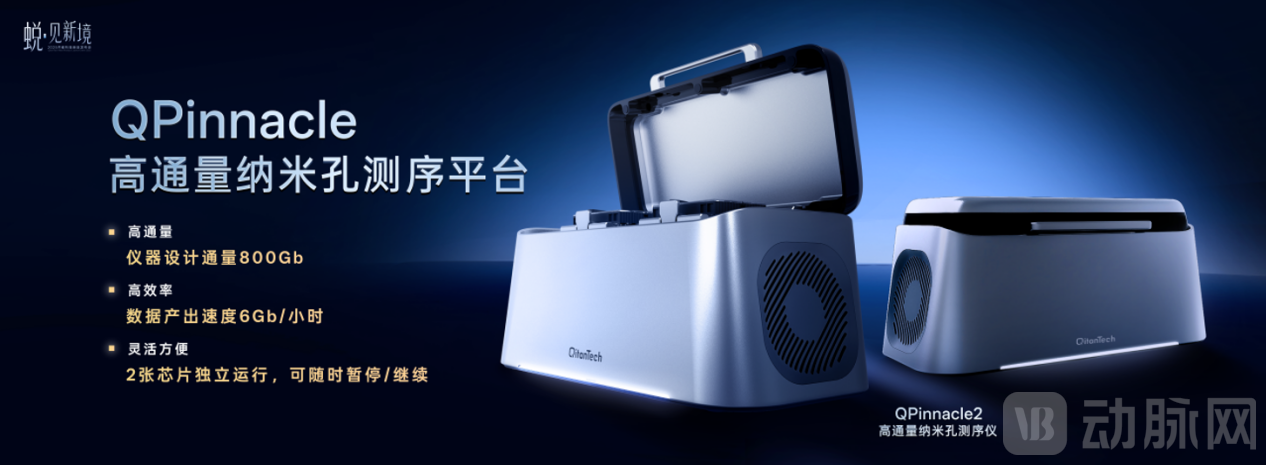
QPinnacle2 boasts three core advantages: First, high throughput—with a designed throughput of 400Gb per chip and 800Gb for the entire instrument, it can efficiently support application scenarios requiring large data volumes such as large-scale genome research and human cohort studies. Second, high efficiency—it can generate 6Gb of data per hour. Third, high flexibility—it supports independent operation of two chips and allows sequencing to be paused or resumed at any time, making it flexible and convenient.
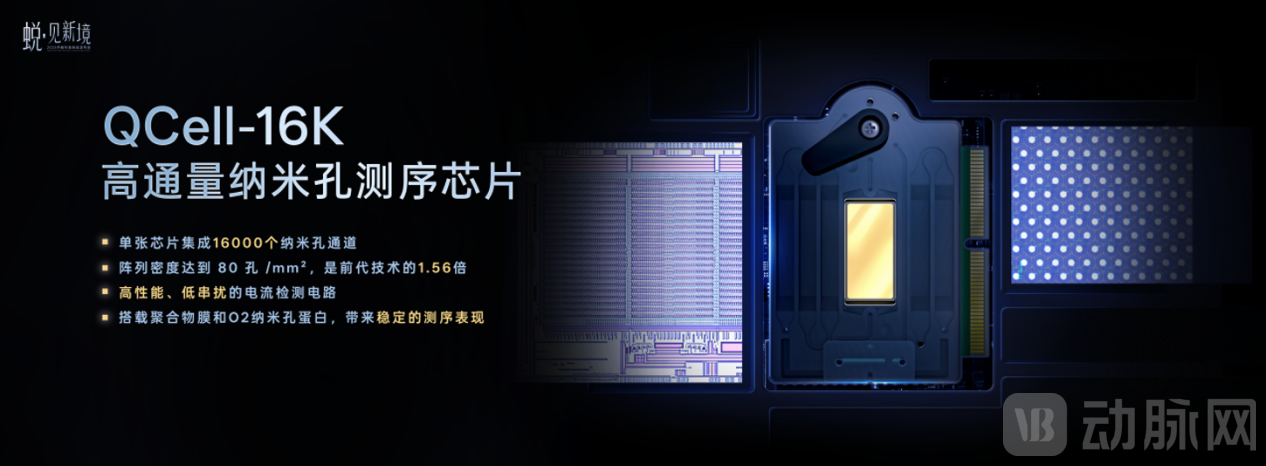
The performance of the QCell-16K chip has been significantly enhanced. A single chip integrates 16,000 nanopore channels, with an array density of 80 pores/mm²—1.56 times higher than that of previous-generation products. Combined with a high-performance current detection circuit and a polymer membrane structure, it exhibits stronger signal stability and anti-crosstalk capability. The chip performs excellently in various temperature environments: after 6 months of storage, the throughput variation is less than 10%, and it supports cleaning and reuse, further reducing users' sequencing costs.
Alpha testing data shows that QPinnacle2 performs stably across human, animal, plant, and microbial samples. When sequencing human genomic DNA (HG002) samples for 192 hours, a single QCell-16K chip accumulated 376Gb of data output, approaching its designed throughput. Combined with Qitan Tech’s independently developed Ultralong library preparation kit, it enables efficient library preparation and sequencing of ultra-long fragments over 100Kb. The proportions of bases in fragments longer than 100Kb reached 60.09% in human cell lines and 36.34% in wheat samples, respectively, with the longest read length exceeding 1Mb.
In addition, Beta testing further verified the practicality of QPinnacle2 in clinical and complex environmental samples. In the context of preimplantation genetic testing (PGT), the sequencing of samples achieved an N50 read length of 22kb and an average Q-value of 17.7, successfully detecting pathogenic variants and enabling haplotype phasing. In metagenomic research, barcode-based library preparation was performed on 3 soil samples, which were then pooled for sequencing. A single chip generated 87Gb of data within 48 hours and assembled/annotated 172 microbial species, demonstrating its strong capability in complex microbial community analysis.
Dr. Hu Geng pointed out: "Throughput improvement is not just a numbers game; the key lies in whether it can truly support more challenging scientific research, industrial, and clinical applications. The goal of QPinnacle2 is to fully meet users' needs for long read lengths, high accuracy, and high throughput in nanopore gene sequencing."
Qitan Tech's Differentiated Development Path
Since Qitan Tech launched China’s first nanopore gene sequencer in 2021, it has consistently advanced technological breakthroughs and product upgrades at a steady pace of "one iteration every two years". From achieving a "zero breakthrough" in domestic nanopore gene sequencers, to complementing its product lineup with a medium-throughput platform, and now to achieving Q20-level accuracy and launching a high-throughput platform, Qitan Tech has gradually built a development path centered on underlying technologies and supported by an application ecosystem.
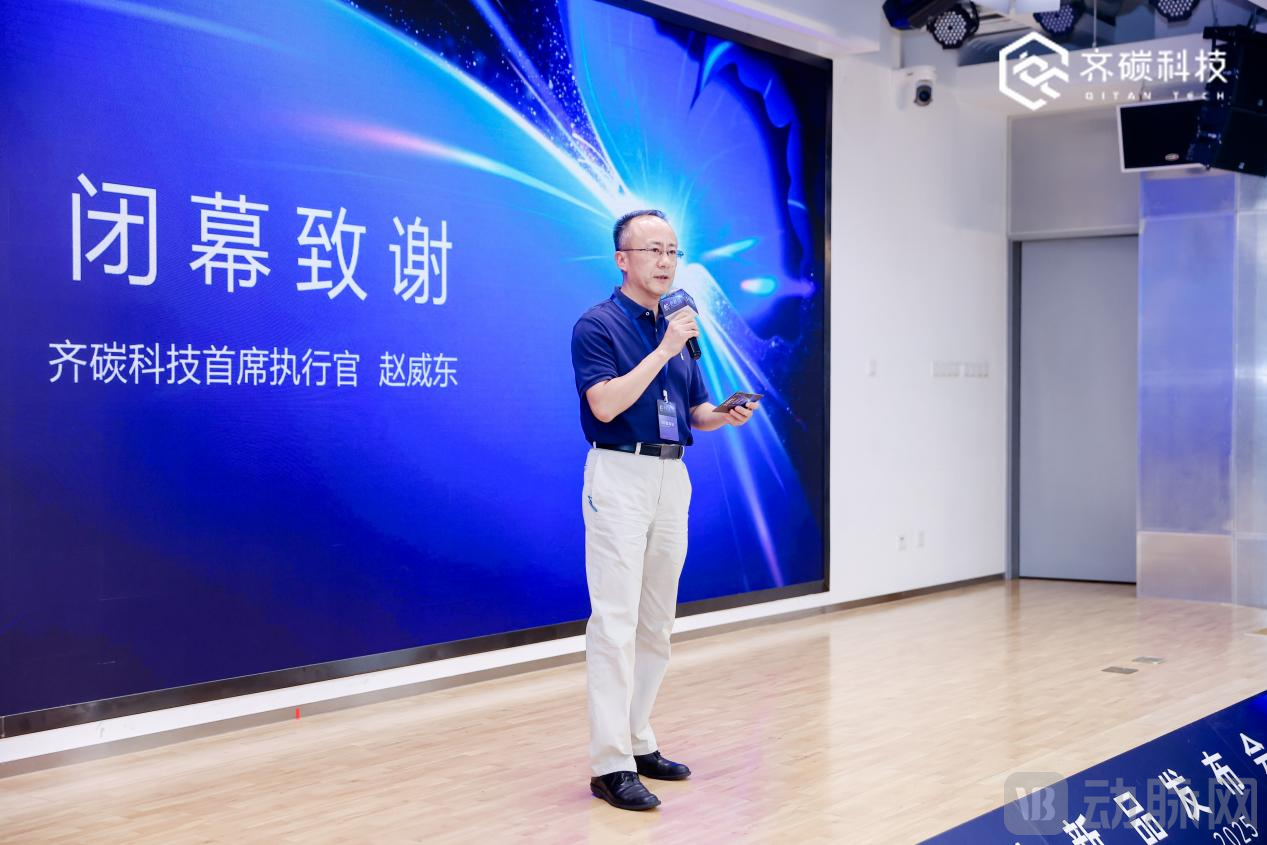
Mr. Weidong Zhao, CEO of Qitan Tech, stated in his address that although the journey from zero to one was challenging and industry competition is intensifying, Qitan has remained steadfastly committed to advancing foundational technological innovation. More importantly, Qitan has never walked alone but has worked closely with numerous industry partners to jointly develop multiple end-to-end solutions for specific scenarios, seamlessly bridging cutting-edge technology with practical application. To date, Qitan's QNome platform has served over 300 users, and the QPursue platform has served over 200 users, garnering invaluable feedback and suggestions.
only completed the construction of a full-throughput product matrix, but also achieved significant improvements in core performance indicators such as accuracy and stability, further consolidating its technical strength to match the international leading level.