

From OEM to brand: how Chinese endoscopy companies deepen global expansion

Vathin
Sterile Endoscope Developer and Manufacturer
Driven by the dual impetus of global medical device upgrading and domestic innovation policies, Chinese endoscopic enterprises have undergone a transformation—evolving from early-stage technological following to gradually becoming important participants in the global market. Today, these enterprises are accelerating their entry into the global market, and "going global" has become a consensus across the industry.
According to VCBeat's observations, the internationalization process of domestic disposable endoscopic enterprises presents a clear "phased" evolutionary path: starting with original equipment manufacturing (OEM)/small-scale overseas agency, gradually advancing to establishing agency partnerships with multinational medical device companies (MNCs), and ultimately achieving the development of self-owned brand channels. This development journey also represents a maturation process for endoscopic enterprises—moving from relying on external resources to gradually realizing independent operations and brand outreach.
As one of the few Chinese representatives following the "global first, domestic later" model, Vathin Medical has achieved a full industrial chain layout integrating "rigid and flexible endoscopes" by collaborating with giants such as Olympus, Medi-Globe, and TKB, as well as acquiring MGB—a century-old German rigid endoscope enterprise. It has thus provided new ideas and practical models for the globalization of Chinese medical device enterprises.
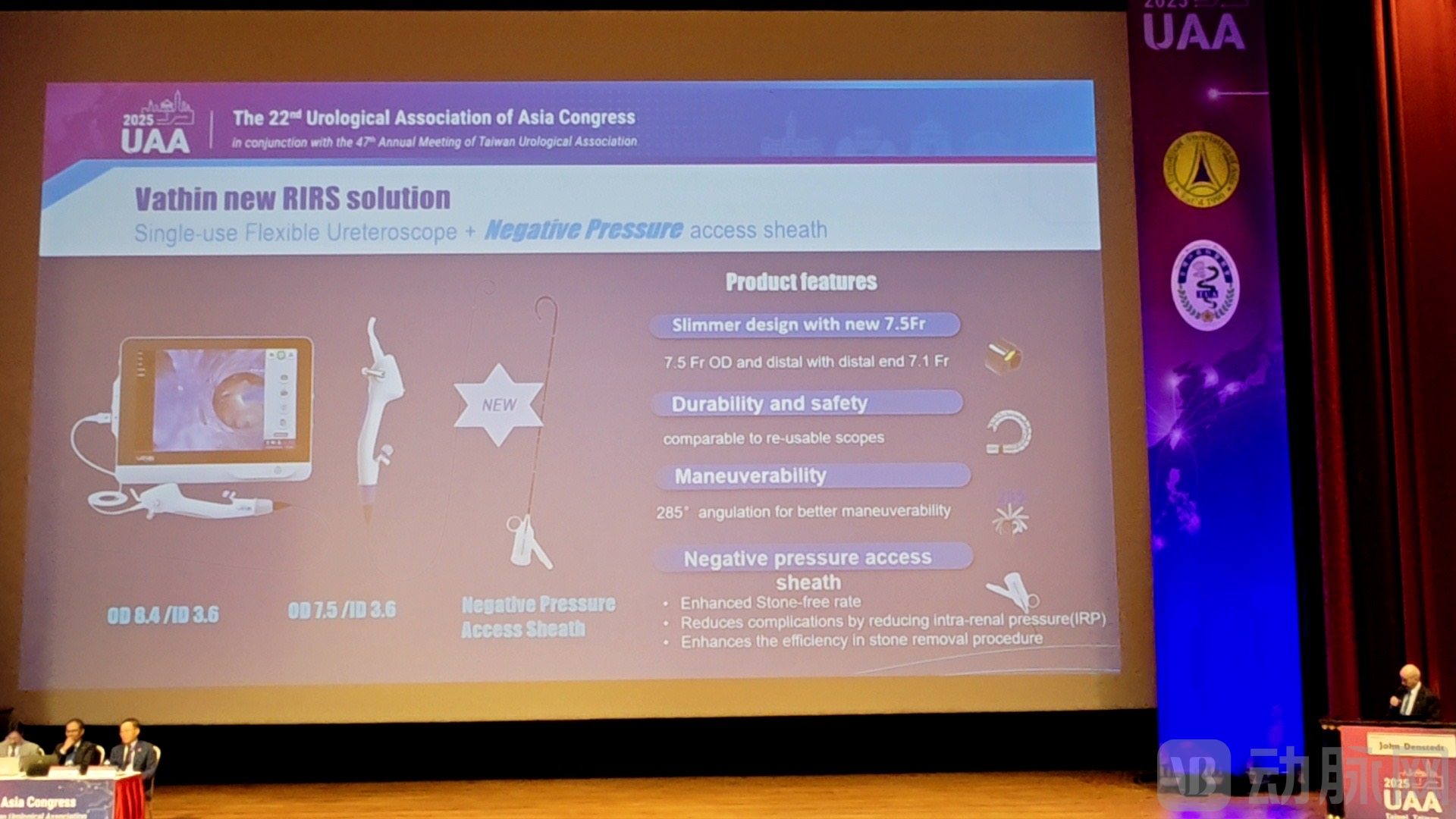 Vathin Medical Products Debut at the UAA 2025
Starting with OEM/Small-Scale Overseas Agency
The internationalization journey of Chinese endoscopic enterprises often starts with OEM business or cooperation with small overseas agents. At this stage, most enterprises mainly engage in small-scale exports and initially explore the international market by relying on the channel networks of small overseas agents or distributors. Some enterprises, by undertaking OEM production of basic products for international brands, gradually gain an understanding of overseas customers' needs and market operation rules. This strategy enables enterprises to initially reach overseas customers at a relatively low cost, sense the pulse of market demand, and adapt to the complex environment of international trade.
Even so, some enterprises still stand out at this stage, and NovelBeam Technology is a typical example. Starting from the OEM business of optical components in 2003, the company has gradually accumulated industry experience and technological capabilities. In 2008, it began to supply LED endoscopic light source modules to Stryker. Through this cooperation, NovelBeam not only mastered key processes and quality standards but also gradually developed its independent brand capabilities, eventually growing into a representative enterprise in China's domestic rigid endoscope sector.
Even so, some companies have performed outstandingly during this phase, with NovelBeam Technology (Stock Code: 688677) as a typical representative. Starting from optical component OEM services in 2003, the company has gradually accumulated industry experience and technical expertise. In 2008, it began providing LED endoscopic light source modules to Stryker. Through this collaboration, NovelBeam Technology not only mastered key processes and quality standards but also gradually developed its own brand capabilities, eventually growing into a leading enterprise representing China-produced rigid endoscopes.
This case shows that although the OEM and small overseas agency models have many limitations, they can still serve as an important starting point for Chinese endoscopic enterprises to integrate into the global supply chain and step onto the international stage—provided that enterprises can make good use of them.
Collaborating with MNCs as Agents
After initially testing international markets, some Chinese endoscopic enterprises have entered the "borrowing a ship to sail overseas" phase, establishing in-depth cooperation with multinational medical device companies (MNCs). During this phase, enterprises can leverage the mature global channels and brand influence of MNCs to quickly access developed markets, reducing the costs and risks of independent expansion. Meanwhile, they can absorb internationally advanced technologies and management experience, accumulating strength for the future development of their own brands.
Vathin Medical is a representative enterprise at this stage. Since its establishment, the company has established a differentiated strategy of "global first, domestic later", focusing on the mid-to-high-end market with a high-profile approach and conducting in-depth cooperation with MNCs such as Olympus, Medi-Globe, TKB, and Cleveland Clinic.
Dr. Zhou Zhenhua, founder of Vathin Medical, stated that when selecting international strategic partners in the early stage, Vathin mainly considered three factors: first, adhering to maintaining Vathin's strategic autonomy and right to speak, especially in terms of product development direction; second, ensuring the safety and sustainability of Vathin's global industrial layout; third, targeting the product advantages of different MNCs in various regional markets and selecting the most advantageous agency partners in the corresponding regions.
What is particularly remarkable is that Vathin Medical has successfully broken through the common "three-year run-in period" dilemma in MNC collaborations—specifically, over 80% of such partnerships typically terminate within three years due to differences in culture, quality standards, or compliance requirements. Vathin Medical's strategic cooperation with Olympus, which began in 2019, has now lasted for more than five years. The two companies have not only established profound strategic mutual trust, but Vathin Medical has also been elevated to the status of Olympus' strategic collaborative innovation partner, jointly promoting the application and development of disposable endoscopes in the global market.
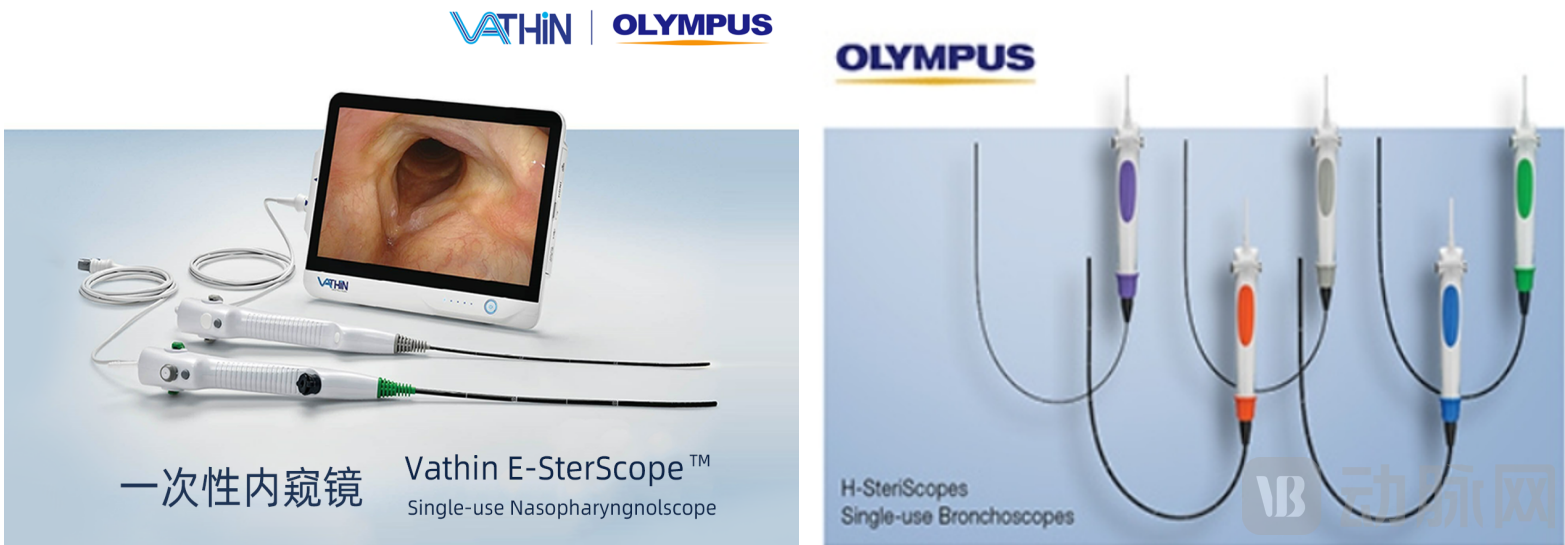 Disposable Electronic Bronchoscope H-SterisSope and Disposable Electronic Nasopharyngolaryngoscope Vathin E-SteriScope
Dr. Zhou Zhenhua further pointed out that MNCs have clear requirements for the comprehensive capabilities of their partners, and the establishment of cooperative relationships relies on the matching of capabilities between the two parties. Relying on over a decade of industry accumulation and engineering capabilities to quickly respond to clinical needs, Vathin Medical has launched a number of competitive products whose key technical indicators are benchmarked against international reusable endoscopes. For instance, it has applied the riveted snake bone design—originally used in high-end reusable endoscopes—to disposable endoscopes.
In 2019, Vathin Medical secured a cooperation opportunity in Olympus' respiratory product pipeline, exclusively undertaking the R&D and production of disposable electronic bronchoscopes (H-SterisScope) and disposable electronic nasopharyngoscopes (Vathin E-SteriScope) for Olympus. Currently, such products have been sold to over ten countries worldwide and hold a leading market share in the industry.
Throughout the entire cooperation process, Vathin Medical has maintained stable cooperation with Olympus in the respiratory product line, while accelerating the expansion of emerging product lines such as urology based on its own brand and channels. This dual-pronged strategy of "cooperation + independence" not only provides the enterprise with short-term revenue support but also lays a foundation for its long-term brand building and sustainable development.
Building Own Brands and Channels to Achieve True Globalization
Unlike the early models relying on OEM or agency, enterprises in the stage of building their own brands and channels are no longer limited to single-product output. Instead, they are actively transforming toward integrated total solutions of "equipment + consumables + services," gradually achieving full-chain independence, brand ownership, and channel autonomy.
The core of successfully achieving this transformation lies in the fact that enterprises must fundamentally move beyond the "product-selling" mindset and truly establish a global "operation" mindset. Vathin Medical has demonstrated clear strategic execution capabilities in this process. Leveraging the international standards and clinical experience accumulated during the agency phase, the company fully acquired MGB—a century-old German rigid endoscope enterprise—in 2021. This move not only completed its rigid endoscope product line, forming a full industrial chain layout integrating rigid and flexible endoscopes, but also quickly opened up the European market, propelling Vathin toward becoming a provider of "full-surgical-solution" offerings.
In terms of channel strategy, Vathin Medical adheres to the principle of "synergy between localization and globalization". The company has established a European R&D center in Berlin, Germany, set up a manufacturing plant and trade platform in the United States, and plans to build a transit center in Southeast Asia—all to construct a supply chain network that responds efficiently to the global market. Today, Vathin's products cover more than 160 countries and regions worldwide, with 76% of sales coming through its own channels.
 By acquiring MGB, Vathin Medical has accelerated its localized layout and brand penetration in the European market
With the continuous upgrading of technologies and channels, Vathin Medical’s product line covers dozens of products, including disposable electronic ureterorenoscope catheters, disposable electronic cystopyeloscope catheters, disposable ureteral access sheaths, and medical endoscopic image processors. The company has obtained authoritative certifications from multiple countries and regions, such as FDA, CE MDR, NMPA, and PMDA. Its products are widely used in fields including respiratory medicine, urology, otorhinolaryngology (ENT), gastroenterology, orthopedics, animal experiments, and industrial testing.
Vathin Medical implements a dual-line parallel strategy of "cooperation + independence." Through clear market segmentation and product pipeline management, it achieves efficient synergy between its agency business and own brand, ensuring the balanced development of its two major product lines—respiratory and urology. In addition, the company continues to increase investment in R&D, actively lays out forward-looking directions such as department-specific robots and multimodal fusion, and strives to build a next-generation technology platform centered on "disposable endoscopic consumables + specialty robots."
By virtue of the aforementioned strategic layout and solid operations, Vathin Medical has gained wide recognition in the international market. Its disposable endoscope products are not only sold to more than 160 countries and regions worldwide, with a cumulative shipment volume exceeding 500,000 units, but also successfully entered world-renowned top-tier medical institutions such as the Cleveland Clinic (U.S.) and the University Children's Hospital Zurich (Switzerland).
As recently as this March, St. Joseph's Health Care London in Canada, introduced the ureteral access sheath developed by Vathin Medical and published an article titled New Kidney Stone Treatment Clears Fragments In One Go.
"The ureteral access sheath is a unique material and lined with overlapping scales that make it very flexible, allowing us to access difficult-to-reach caves and pockets of the kidney, even in patients with complex kidney anatomy," explains St. Joseph's urologist Dr. John Denstedt, a renown surgical innovator in the treatment of kidney stones. "Together with enhanced suction, the sheath dramatically increases the likelihood of patients being completely free of stones without having to pass the fragments after treatment."
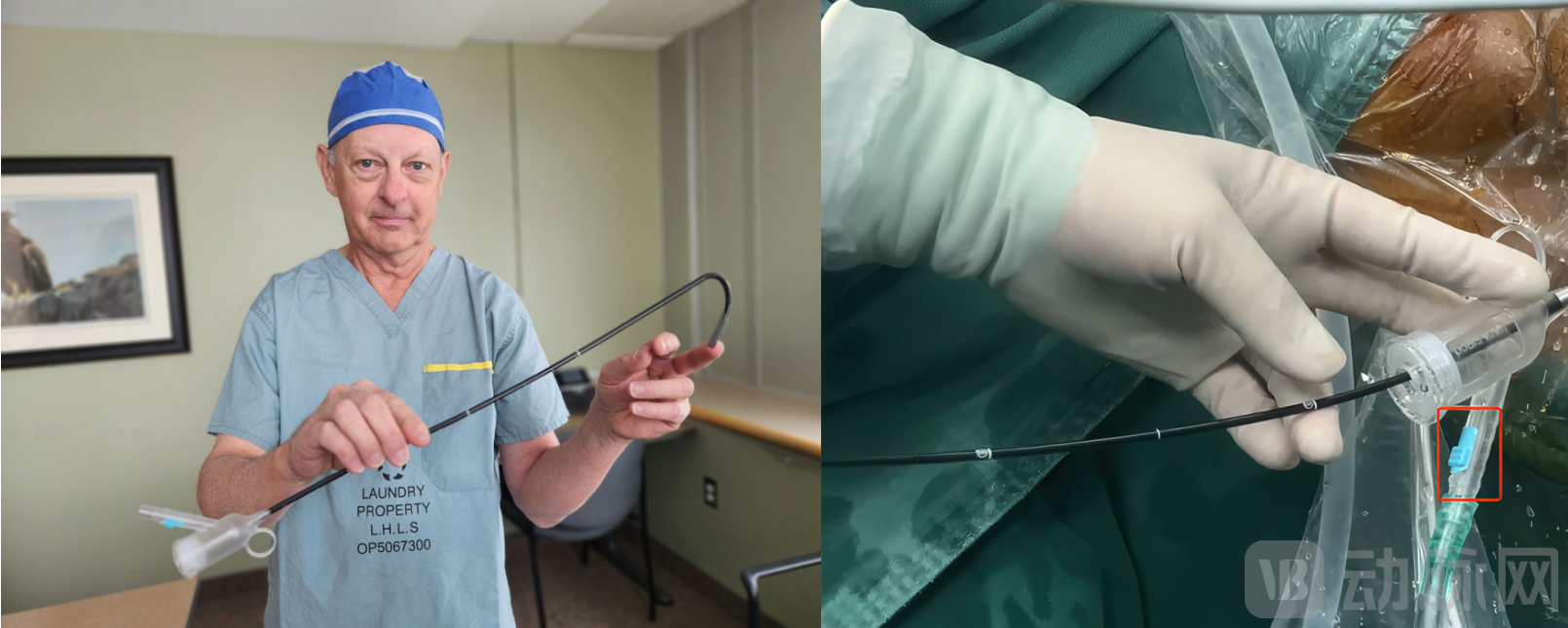 Dr. John Denstedt showcases the ureteral access sheath developed by Vathin Medical, image sourced: St. Joseph’s Health Care London website
Through technological independence, channel independence, and model upgrading, Vathin Medical has grown from "a key link in the global supply chain" to "an active shaper of the international market." Its exploration path provides a solid and replicable development model for the internationalization of Chinese medical device enterprises, and also demonstrates a crucial turning point for Chinese brands—moving from the background to the forefront, and from playing a supporting role to co-creating value on the global stage.
Independent Brands and Channels: The Ultimate Proposition for Chinese Medical Device Enterprises Going Global
The three phases of Chinese endoscopic enterprises going global are not isolated from each other, but rather a gradual and continuous process: small and medium-sized enterprises accumulate experience through OEM or small-scale agency; growing enterprises quickly enter the market with the support of MNCs; and mature enterprises achieve global layout through their own brands and channels.
It is worth noting that in the process of internationalization, breaking the stereotype of "low quality and low price" of domestic medical devices in developed markets is particularly crucial, and product strength, clinical verification, and reputation building are all indispensable. Vathin Medical’s exploration path may serve as a reference: first, align product performance with international top standards, and gain trust through clinical verification and rapid iteration; second, strategically select international partners, and gradually upgrade from regional and product line cooperation to in-depth integration; third, adhere to long-termism and continuously improve product and service quality.
Cooperation with MNCs is not the end of an enterprise's internationalization journey, but rather a crucial accelerator that propels enterprises onto the international stage. To achieve true globalization, enterprises must maintain strategic autonomy in cooperation, adopt flexible models such as multi-partner collaboration and product line-specific cooperation, avoid over-reliance on a single channel, and while mitigating risks, create more possibilities for their own development.
Ultimately, agency cooperation can achieve short-term market monetization and resource accumulation. However, to truly establish Chinese brands on the global medical device stage, Chinese enterprises must build their own independent brands, channels, and trust systems that truly belong to them. As the strength of domestic medical devices continues to improve, more enterprises will undoubtedly adopt the "step-by-step global expansion" strategy, gradually developing into international medical device platform enterprises with a comprehensive product portfolio, global operation capabilities, and absolute say in niche segments.