

Chinese CGM enterprises and Abbott engaged in a protracted patent battle

Sinocare
Rapid Detection of Chronic Disease: Product R&D, Production, and Sales

Abbott
Diagnostic and pharmaceutical product manufacturers
On September 3rd, China's Continuous Glucose Monitoring (CGM) industry was experiencing a historic turning point in its development. On this day, the Hague Local Division of the Unified Patent Court (UPC) formally opened a hearing on two Provisional Injunction (PI) applications filed by Abbott against China's Sinocare and its European distributor partners. This litigation focuses on patent infringement related to Continuous Glucose Monitoring (CGM) devices and represents the third round of key technical lawsuits initiated by Abbott in this field under the framework of the Unified Patent Court.
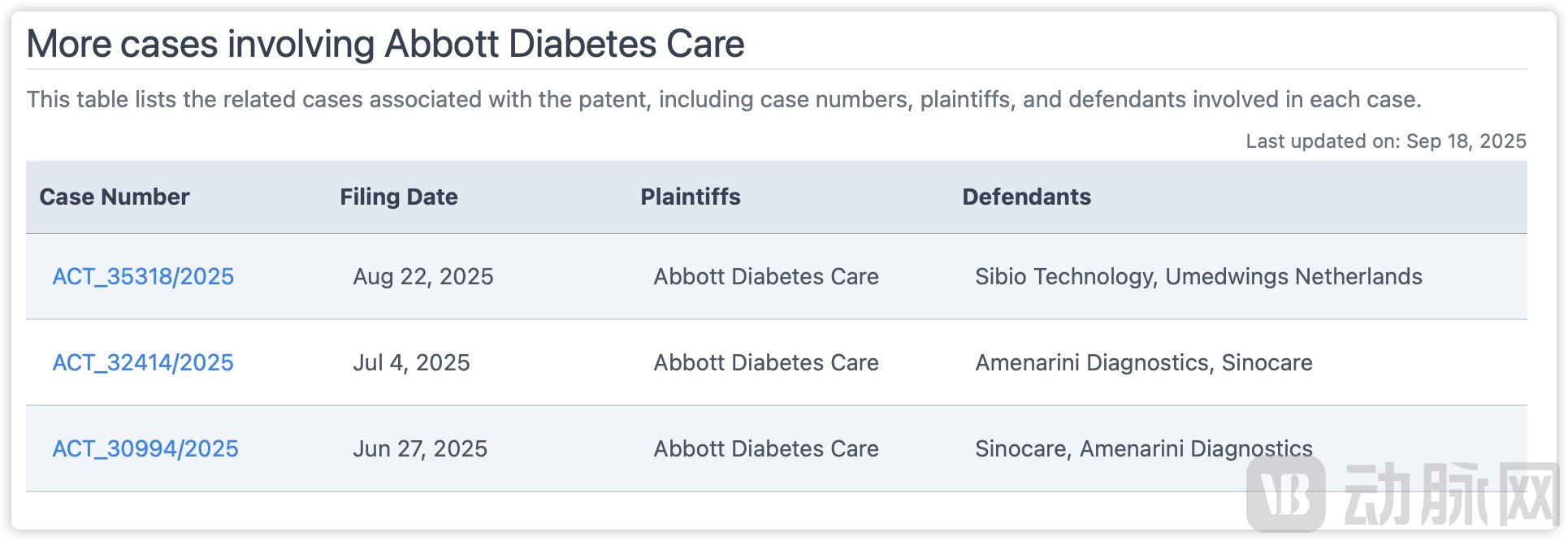
Multiple lawsuits initiated by Abbott, image source: IP Verse
The two patents claimed by Abbott are EP 3 988 471 (covering medical device display technology) and EP 4 344 633 (protecting analyte sensor components). Prior to this, Dexcom and Abbott had already engaged in a prolonged lawsuit over the EP 3 988 471 patent. The core of this hearing lies in determining whether Sinocare's "GlucoMen iCan CGM System" falls within the protection scope of Abbott's two patents.
If Abbott wins the case, the promotion plan of Sinocare's CGM products in the European market will be severely hindered, and the pace of its European market expansion may be forced to slow down; if Abbott loses the case, it may pave a bright path for Chinese enterprises to break through Abbott's patent barriers and expand their market share.
CGM, as a high-growth niche in the medical device field, has patent disputes that essentially stem from the competition for technological innovation and market dominance. Abbott hopes to wield its patent power to delay the market penetration of other emerging companies in the CGM sector. For Chinese enterprises to truly establish a foothold in the global market, they must learn and apply the rules of the intellectual property game.
Patent competition is an issue that Chinese enterprises must face when going global.
Recently, the patent dispute between Abbott and Sinocare has become a focal event in the global CGM industry. Leveraging its first-mover advantage, Abbott has already sold millions of CGM products in the European market. After emerging and growing rapidly in recent years, Chinese CGM enterprises are no longer satisfied with competing solely in the domestic market; instead, they aim to participate in the global market competition and are striving to gain a firm foothold in the European market.
The main battlefield of this litigation lies in Europe, with two key strands: first, the lawsuit concerning trademarks; second, the patent litigation at the Unified Patent Court (UPC).
In 2024, Abbott filed lawsuits alleging trademark infringement and passing off against Sinocare's CGM products in five countries, including the United Kingdom, Germany, Austria, Belgium, and Italy. According to the disclosure in Sinocare's mid-year report, the trademark battle in the UK has already seen a preliminary outcome. In February 2025, the High Court of England and Wales rejected Abbott's claims and upheld Sinocare's counterclaim, ruling that Abbott's trademark was invalid. Subsequently, Abbott filed an appeal; in August 2025, the court of second instance dismissed Abbott's appeal application, and the case has reached a final conclusion.
At present, the litigation in Germany has also commenced, and Sinocare has filed an application for the invalidation of Abbott's trademark with the German Patent and Trademark Office. Meanwhile, in Austria and Belgium, as well as Italy, the relevant courts have either rejected or revoked Abbott's applications for provisional injunctions against Sinocare's CGM products. Furthermore, Sinocare has filed applications for the invalidation of Abbott's trademarks in countries and regions including the United Kingdom, Germany, Austria, and Belgium. Abbott has already abandoned its corresponding trademark rights at the EU level in November 2024.
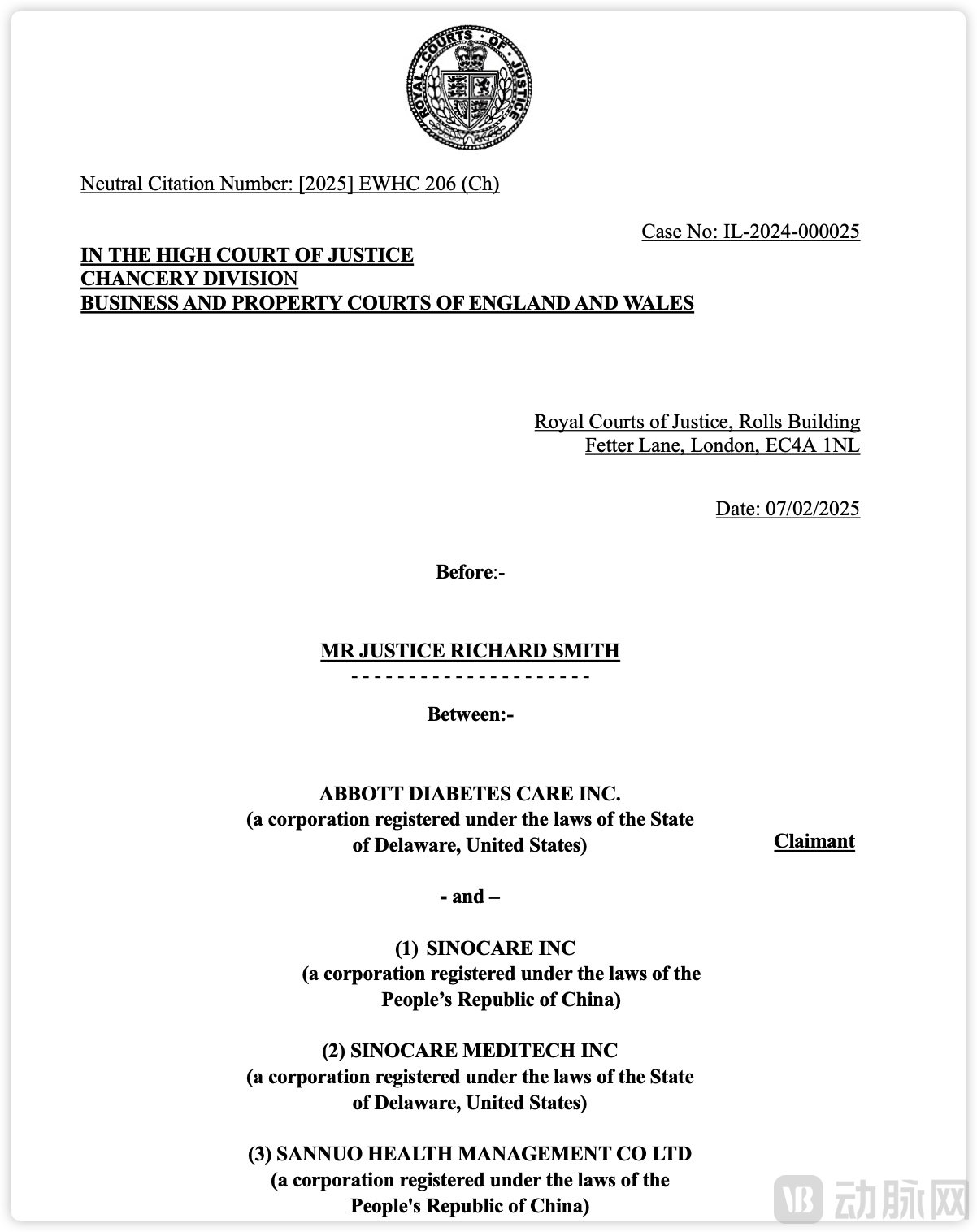
Court verdict, image source: caselaw
In the judgment of the High Court of England and Wales, we can see that Sinocare put forward a detailed defense regarding the trademark issue, which was recognized by the court. To summarize, the defense consists of three points: first, the three-dimensional trademark of the OBU device (i.e., the white circular disc) lacks distinctiveness; second, the current design of CGM is determined based on technical functional characteristics; third, neither healthcare professionals nor patients will confuse the two (products) when prescribing or using them in practice.
For Sinocare, this is undoubtedly a significant victory. On its overseas official website, Sinocare stated: "These decisions all mark a major victory for innovation and fair competition in the medical technology industry, confirming that product designs based on technical functions cannot be monopolized through trademark protection." "These judgments also emphasize the importance of consumer choice in diabetes care, ensuring that users in the UK and other regions can still access advanced CGM solutions."
However, the real tough battle lies in the subsequent core patent litigation.
At the Hague Division of the UPC, Abbott has filed a patent infringement lawsuit against Sinocare and is seeking a preliminary injunction, with the relevant hearing held on September 3, 2025. The process will undoubtedly be protracted, and the direction of this litigation will profoundly affect the future of both parties in the European and even global markets. Meanwhile, Abbott has also sued Sinocare’s European partner, Menarini Diagnostics—an Italian company responsible for selling Sinocare’s CGM products in the European market.
Notably, since the Unified Patent Court (UPC) officially commenced operations in 2023, CGM systems have become one of the medical products most frequently involved in litigation. In particular, with the accelerated global expansion of Chinese medical enterprises, similar incidents will undoubtedly emerge one after another.
The best way to suppress a competitor is to eliminate them from the market.
Abbott's targets are not limited to Chinese enterprises; in the face of Dexcom, another major CGM giant, the two parties have been engaged in patent disputes and lawsuits worldwide for more than a decade. In particular, with the establishment of the UPC, their patent litigation in the European market has entered a white-hot stage.
Finally, by the end of 2024, Abbott and Dexcom reached a global settlement agreement, concluding all pending patent litigations worldwide. The core term of this settlement is a "10-year truce," meaning that for the next decade, neither party will file further lawsuits regarding patents, trade dress, or design. The agreement does not involve any financial compensation and even includes cross-licensing for certain patents.
Some media outlets have interpreted this by noting that as the two major giants in the CGM industry, both parties had spent a great deal of time and energy on patent disputes. The essence of their ability to reach a settlement quickly lies in the fact that Chinese enterprises are rapidly penetrating the European market. Therefore, the two sides chose to free up their hands to deal with emerging competitors and consolidate their respective "territories".
Before filing patent lawsuits against Sinocare, Abbott first focused its efforts on another Chinese manufacturer, SiBionics, initiating a series of patent lawsuits against it in multiple locations across Europe and even applying for sales injunctions in some regions. Eventually, the two parties reached a settlement for the specific cases before the hearing at the Düsseldorf Division of the UPC in July 2024. This outcome was interpreted by the industry as a compromise by SiBionics, which resulted in SiBionics signing an agreement to cease sales in some regions and assuming responsibility for part of the compensation.
A direct outcome of this litigation was that SiBionics had to slow down the pace of its European market expansion, and this case has become a classic example of Abbott's efforts to fend off Chinese domestic CGM manufacturers in the European market. Precisely because of its "successful experience" in patent litigation against Chinese brands, Abbott hopes to replicate this outcome with Sinocare.
After all, as a leading enterprise in China's blood glucose monitoring sector, Sinocare has not only achieved impressive results in the domestic market with its related products in recent years but also begun to gain ground in overseas markets, particularly in Europe. If Abbott can take down such a highly promising competitor before Sinocare firmly establishes its brand, it will undoubtedly be a major strategic victory.
After all, as a leading company in China's blood glucose monitoring field, Sinocare’s related products have not only achieved excellent results in the domestic market in recent years but have also started to make significant inroads in overseas markets, especially in Europe. Eliminating such a promising competitor before the Sinocare brand becomes firmly established would undoubtedly be a major strategic victory.
Following this logic, we can infer that Abbott's patent campaign against Chinese CGM manufacturers in overseas markets will not cease.
Abbott has shown through its actions that true innovation must stand the test of patents.
If we can answer the question of why Abbott is able to initiate patent wars, we may then gain clarity on what Chinese enterprises still lack to catch up with global giants. According to data from PatentVest, in the ranking of the global comprehensive database of CGM patent assignees, Abbott, Roche, Medtronic, and Dexcom are in a leading position by a wide margin, leaving other enterprises or institutions far behind.
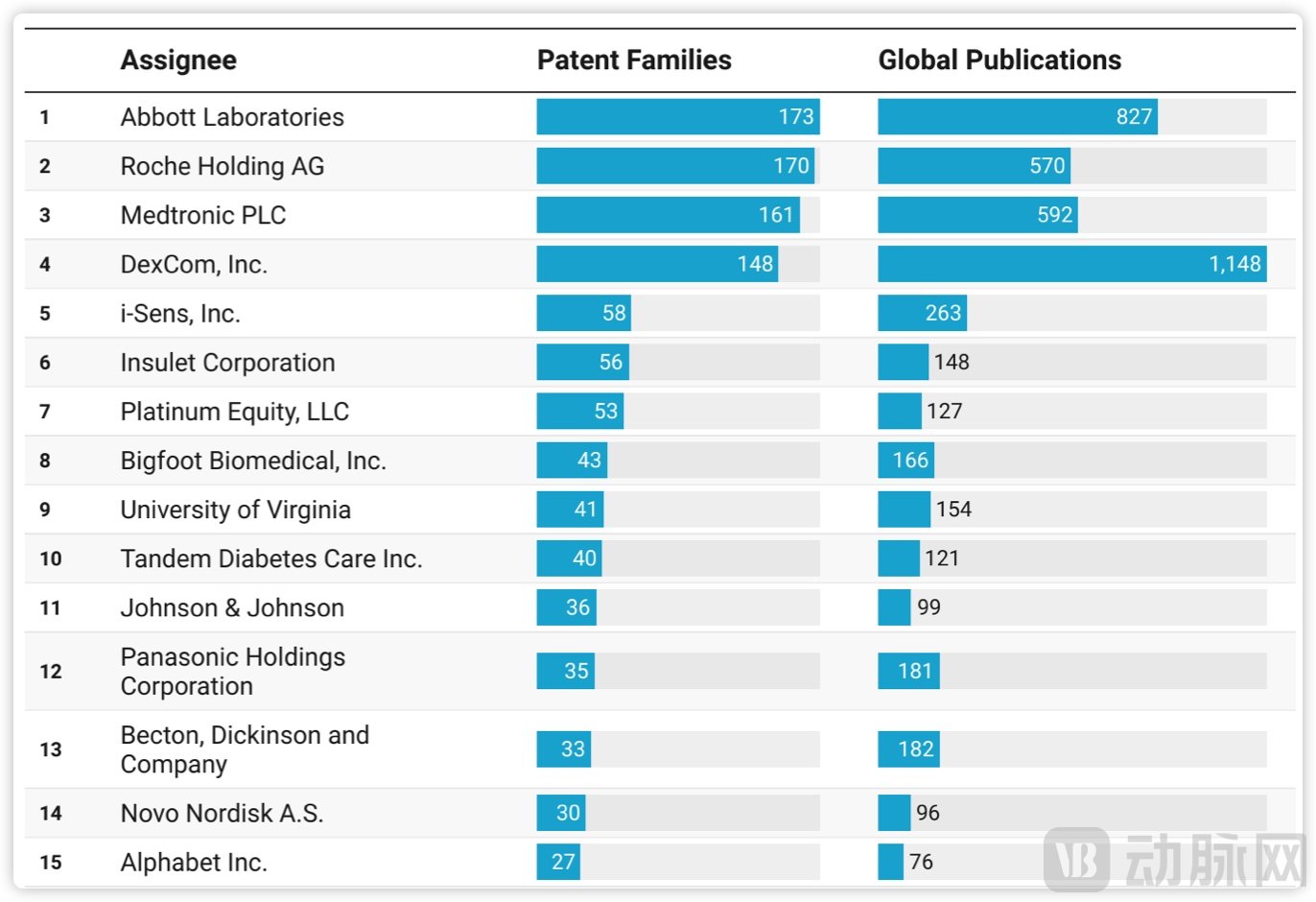
Global CGM Patent Rankings, Source: PatentVest
It is evident that this advantage is not achieved through explosive growth, but rather through accumulation over a time frame of the past decade or even longer. Over the past ten-plus years, the number of relevant patent applications filed by these four companies has generally shown an upward trend, and their patents cover all aspects of CGM products, such as sensor design, algorithms, and user interfaces.
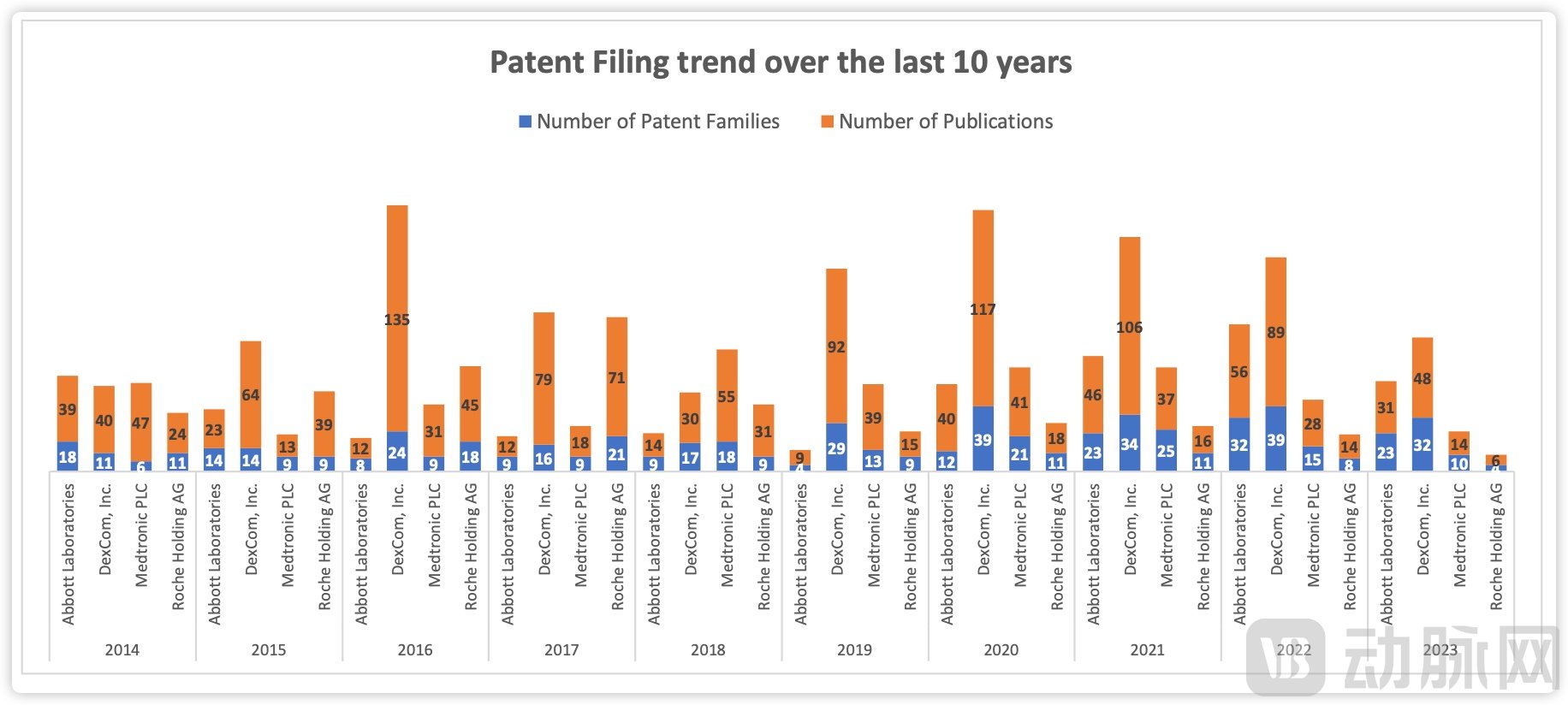
CGM Patent Growth of the Top 4 Companies Over the Past Decade, Source: PatentVest
In particular, starting from 2016, Dexcom has adopted an aggressive patent strategy, with a significant increase in the number of patent applications. This is closely related to the preliminary settlement and cross-licensing agreement it reached with Abbott in 2014. Through that litigation, Dexcom gained a thorough understanding of the importance of patents in market competition.
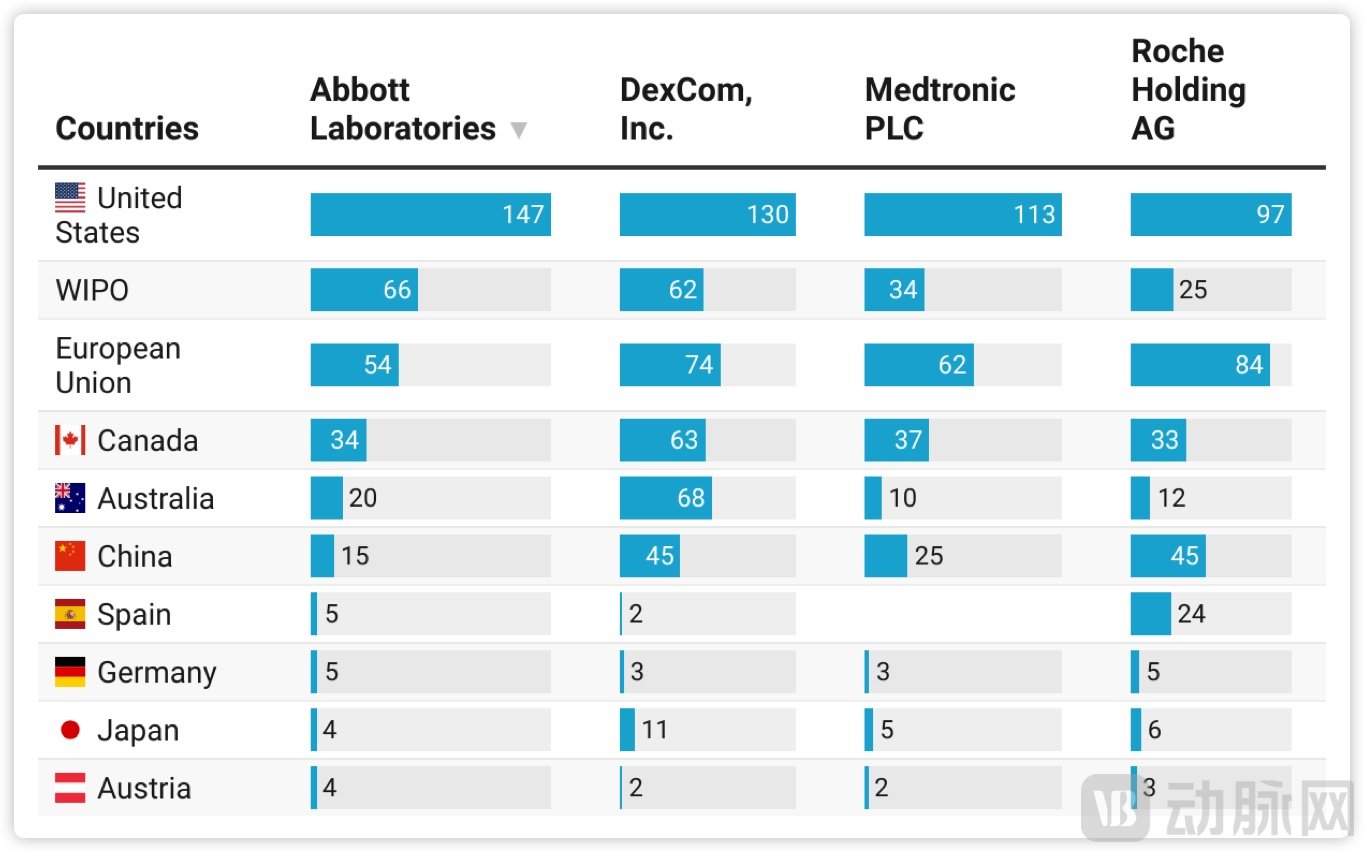
Patent Status of 4 Companies in Different Regions and Organizations, Source: PatentVest
Furthermore, the extensive layout of patents also deserves attention. Taking these four enterprises as an example again, while they prioritize covering key jurisdictions such as the United States, Europe, and the World Intellectual Property Organization (WIPO), they also focus on gradually penetrating and expanding their patent influence into other regional markets. It is obvious that they are using patent strategies in a planned manner to protect their CGM innovations.
Judging from the number of CGM-related patents held by several major global patent offices, the number of such patents from China is still far lower than that from the United States. This, to a certain extent, indicates that Chinese enterprises still lack sufficient accumulation. The essence of patent wars is technological competition; only by possessing a solid and independent patent portfolio can an enterprise possibly gain an advantage in patent disputes. This requires Chinese enterprises to abandon low-level internal competition, achieve genuine innovation and breakthroughs in core technologies, rather than engaging in "me-too" incremental innovations.
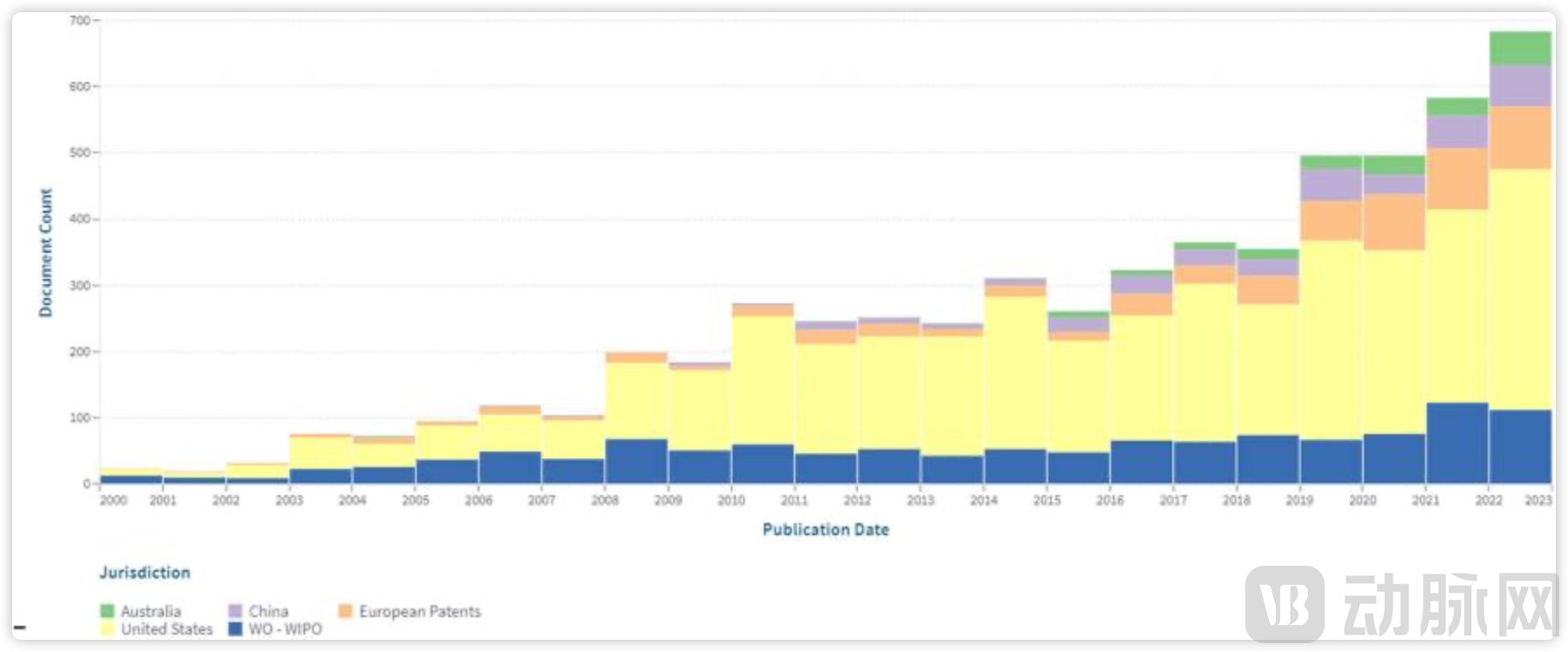
Trend of CGM-related patent numbers in five global patent offices, image source: doi:10.3389/fpubh.2023.1205903
A CGM manufacturer that has already launched overseas operations told VCBeat that patent challenges from international giants are an inevitable issue during the global expansion process. Therefore, the company took this issue into consideration at the very beginning of product R&D, conducted in-depth research on the patent layouts of these giants, and aimed to avoid potential patent infringements to a certain extent during the R&D and design phase. Additionally, they have adopted a more cautious approach when selecting overseas markets. Beyond the traditional target market analysis, they will also conduct a comprehensive assessment of the patent regulatory policies in the target regional market before deciding whether to enter it.
In other words, for a smooth expansion overseas, companies must be familiar with this set of rules and be proficient in applying local intellectual property regulations. For instance, they should establish a professional legal team to conduct Freedom-to-Operate (FTO) patent investigations, and carry out comprehensive patent checks in the target market at every stage—such as product development initiation, product finalization, and product export—to identify potential infringement risks. Additionally, they should proactively utilize legal tools like patent invalidation appeals and counterclaims for defense.
CGM is only the beginning, and Chinese innovative medical device companies will still face these challenges in their subsequent global expansion.
It is evident that even in a niche sector like CGM—where Chinese enterprises have achieved rapid development and quickly narrowed the gap—their patent accumulation still lags far behind that of traditional giants. This gap will be even more pronounced in other sectors where overseas companies hold a more significant first-mover advantage.
China's medical industry has long emphasized the importance of innovation. However, from the CGM patent dispute cases, we can see that the so-called innovation should definitely not be low-level internal competition like price wars. Instead, enterprises should invest resources in basic research and development to build their own unique technological systems and embed them within the framework of intellectual property rules. Sinocare's previous victory in the trademark lawsuit in the UK is a typical example of understanding and making good use of these rules.
In the future, patent layout strategies will become a key focus for enterprises to strengthen their core competitiveness, and enterprises need to proactively and continuously build a "patent moat" with forward-looking vision. Furthermore, patent development should cover all their product lines, not just core products—enterprises must consider patent issues from both offensive and defensive perspectives.
The medical device industry encompasses numerous niche sectors, and competitors in the high-end medical device segment are often multinational giants. Abbott serves as a vivid example of this. When facing such competitors, enterprises should conduct patent risk screenings and design patent applications at the very beginning of product R&D.
Furthermore, patent alliances are another viable path worth exploring. Previously, some regional governments in China took the lead in establishing similar organizations, such as the Shenzhen Medical Device Industry Patent Alliance. Its purpose is to effectively reduce patent disputes among members, provide information and resource services to alliance members in the face of large foreign medical oligopolies, and effectively mitigate intellectual property risks. Building on this foundation, could we establish patent alliances represented by specific industries? By adopting a model of "cross-licensing + joint defense," these alliances could increase the success rate of negotiations in international patent disputes. This shift from "fighting alone" to "group combat" would significantly reduce the risk of Chinese enterprises being defeated one by one by overseas giants.
Returning to the patent lawsuit between Sinocare and Abbott, if Sinocare can secure another victory in the core patent litigation, it will undoubtedly break through the patent wall built by Abbott and Dexcom. This would send a message to the world that Chinese enterprises will henceforth be able to compete head-on with giants in the global intellectual property arena. By then, domestic CGM manufacturers will form a tripartite balance of power with Abbott and Dexcom.
Regardless of the outcome, September 3rd is bound to become a memorable and pivotal day in the development history of China's CGM industry.