

Optical surface monitoring unlocks China’s multi-billion market boosted by pricing policy
In 2025, optical surface tracking and positioning can finally be charged.
By the end of 2024, the National Healthcare Security Administration organized the compilation of the "Guidelines for the Establishment of Radiotherapy Medical Service Price Items (Trial)," which maps and integrates the current radiotherapy price items into 15 categories, including the "Motion Management" item represented by optical surface monitoring. Subsequently, provinces and regions such as Hunan, Inner Mongolia, Hebei, Shanxi, Qinghai, and Tibet have successively issued the "Notice on Standardizing Radiotherapy Medical Service Price Items," updating the charging catalog based on the Guidelines.
Taking the policy recently issued by Hebei Province as an example, it has standardized and integrated the current radiotherapy-related medical service price items within the province in accordance with the requirements of the Notice on Issuing the "Guidelines for the Establishment of Radiotherapy Medical Service Price Items (Trial)" by the National Healthcare Security Administration: adding 15 new medical service price items such as "formulation of radiotherapy plans"; discontinuing 72 medical service price items such as "131Iodine - Hyperthyroidism Treatment".
Among them, the newly added radiotherapy simulation and positioning exercise management project has a provincial guideline price of an additional 270 yuan per session, and a municipal guideline price of an additional 243 yuan per session.
Previously, radiotherapy charges did not reflect the value of dynamic monitoring, treating patients as fixed phantoms and neglecting issues such as respiratory motion, positional shifts, and involuntary movements during sleep in pediatric patients. These risks are difficult to detect without surface monitoring. After optical surface monitoring was included in the charge catalog, it not only promoted the true clinical implementation of precision radiotherapy but also directly ensured patient safety and improved treatment accuracy. This is essentially an official recognition of the precise risk-control value of optical surface monitoring technology.
Domestic optical body surface manufacturers told Artery Network: "The policy stimulates hospitals' motivation to purchase equipment and apply technology by clarifying charging standards, accelerates the clinical popularization of optical surface monitoring technology, and simultaneously promotes the upgrading of positioning accuracy. Compared with traditional laser lamp positioning and body mold fixation methods, the monitoring precision has been significantly improved. In the longer term, the charging policy will drive the technology to penetrate grassroots-level hospitals, stimulate demand for hospital equipment purchases, and create conditions for the integration of cutting-edge technologies such as artificial intelligence, cloud computing, and robotics with the field of radiotherapy. This forms a positive cycle of technology implementation, hospital investment, industry upgrading, and patient benefits, becoming an important policy boost in the field of precision radiotherapy.
This supportive policy aligns perfectly with the accelerating market authorization rhythm of local optical surface monitoring devices.
Since 2024, self-developed optical surface monitoring systems from companies including JancsiTech, Klarity Medical, OUR UNITED CORPORATION, and Rayer Medical have obtained market approval. For years, although imported products were promoted earlier, their market expansion was hindered due to the lack of clear reimbursement support, making it difficult to generate economic returns.
Driven by policy support, a new high-value medical technology segment has emerged in China.
To understand optical surface monitoring, we need to start with radiotherapy.
As one of the common methods for treating malignant tumors, radiotherapy primarily uses various types of radiation or particle beams generated by radiotherapy equipment to destroy tumor cells, thereby achieving the goal of cancer treatment.
Clinicians have always pursued a core objective in radiotherapy: to precisely target tumor cells with high-energy radiation while minimizing damage to surrounding healthy tissues. This pursuit has driven the emergence of innovative technologies, advancing radiotherapy from a crude approach into the era of precision radiotherapy.
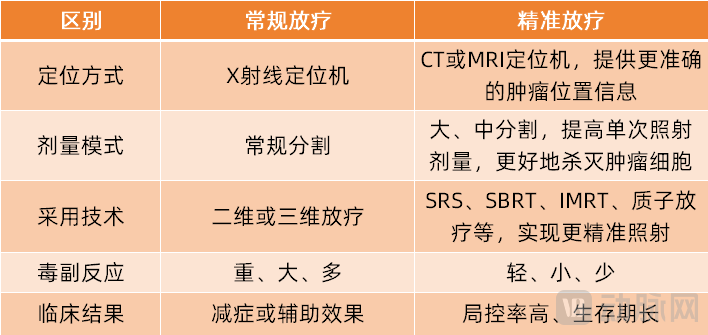
Compared with traditional conventional radiotherapy, precision radiotherapy employs innovative technologies in positioning methods, dose delivery patterns, and radiotherapy techniques to enhance accuracy across all procedural steps. This advancement helps reduce radiotherapy-induced toxic side effects, improve treatment efficacy, and extend the survival of cancer patients.
Among these improvements, precise patient positioning is a critical step in ensuring accurate radiotherapy. Unlike other treatment modalities, radiotherapy requires periodic irradiation of patients. Taking intensity-modulated radiation therapy (IMRT) as an example, the entire treatment course involves 25 to 35 irradiation sessions, lasting approximately six weeks or longer. Each session requires the patient to maintain the same body position.
In the past, physicians primarily used laser lights, vacuum cushions, and body masks for three-dimensional positioning, which resulted in low positioning accuracy with potential errors exceeding 5 millimeters and poor reproducibility.
Optical surface monitoring technology, however, enables precise patient positioning. This technology utilizes imaging devices that actively emit light and capture reflected images, employing principles such as optical triangulation to reconstruct real-time 3D models of the patient's surface. These models are then compared with the preset reference model from the radiotherapy plan, and any detected deviations are used to correct the positioning and guide the radiotherapy process.
Compared with traditional positioning methods, optical surface monitoring systems achieve positioning accuracy within 0.5 millimeters while also increasing positioning speed and simplifying workflow.
Beyond patient positioning, another critical component of precision radiotherapy is the image-guided system. This aspect aims to ensure accurate tumor localization before, during, and after radiation delivery, minimizing damage to surrounding healthy tissues.
Currently, widely used image-guided systems include electronic portal imaging devices (EPID), kilovoltage cone-beam CT (kV-CBCT), kilovoltage X-ray imaging and fluoroscopy equipment, and megavoltage cone-beam CT (MV-CBCT), alongside emerging guidance modalities such as optical surface tracking.
Optical surface monitoring systems are not intended to replace guidance modalities such as CBCT or EPID, but rather serve as a complementary technology that addresses the gaps in real-time positioning guidance and non-radiative treatment monitoring during radiotherapy, further advancing precision radiotherapy.
Specifically, technologies such as EPID and CBCT are primarily applied before radiation therapy to ensure accurate patient positioning and precise tumor targeting. However, during the actual radiation delivery, patient movements—including respiratory motion, gastrointestinal peristalsis, minor limb shifts, and coughing—can alter the tumor's position. These subtle movements are difficult to detect visually during treatment and cannot be corrected using conventional repositioning methods. Such deviations may cause the high-energy radiation intended for the tumor to instead irradiate surrounding healthy tissues or organs, resulting in significant treatment errors.
In response, optical surface monitoring systems enable real-time intrafraction monitoring and can detect submillimeter patient movements or displacements. During radiation delivery, if the patient's surface position deviates from the reference points established in the treatment plan based on CT or MRI images, or if the calculated discrepancy exceeds predefined thresholds, the system immediately detects these changes and provides adjustment guidance.
Optical surface systems can also interface with radiotherapy equipment to control the radiation beam—enabling automatic beam hold or resumption based on real-time patient positioning—thereby minimizing the risk of mistreatment and reducing unnecessary side effects.
In view of the role of optical surface monitoring systems, they can be used for radiotherapy of all tumors. Currently, these systems are mainly used for tumors that require extremely precise positioning, such as head and neck tumors and vertebral tumors; lung cancer, liver cancer, and breast cancer, whose positions change due to respiratory motion; intracranial tumors and pancreatic cancer that require stereotactic radiotherapy; and cases using precise radiotherapy techniques such as conformal intensity-modulated radiation therapy.
Today, China has adopted various precision radiotherapy technologies such as intensity-modulated radiotherapy (IMRT), adaptive radiotherapy (ART), and stereotactic radiotherapy (SBRT/SRS). The application of optical surface monitoring will elevate China's precision radiotherapy to the next level.
Currently, the value of optical surface monitoring systems is universally recognized by the global medical community. According to the "SGRT: An International Survey of Clinical Practice" report published by the European Society for Radiotherapy and Oncology (ESTRO), optical surface technology has been widely adopted in clinical practice across numerous radiotherapy institutions in Europe. Among the 278 medical institutions surveyed, 62% are equipped with at least one optical surface monitoring system.
According to the "Survey on the Use of SGRT in Radiation Oncology in the United States" published by the American Association of Physicists in Medicine in 2019, among the 439 medical institutions surveyed, 234 have installed optical surface monitoring equipment (accounting for 53.3%). Nearly half of the medical institutions without the equipment have plans to purchase it within three years.
The domestic medical community also highly recognizes the value and role of optical surface monitoring technology. Based on the effectiveness of optical surface, the National Cancer Center released the "Quality Control Guidelines for Optical Surface Image-Guided Radiation Therapy" in December 2021 for domestic doctors to refer to and apply.
However, since optical surface monitoring services have not been included in medical service pricing items, fees cannot be charged to patients. This has also meant that, since the first imported optical surface monitoring system was approved in 2019, although oncology hospitals generally recognize such systems, their willingness to purchase them has been extremely low. Domestically, only a handful of leading oncology hospitals have purchased the equipment based on their capacity-building needs.
All this began to change at the end of 2024. After the National Healthcare Security Administration (NHSA) released the Interim Guidelines for Establishing Medical Service Price Items for Radiation Therapy at the end of 2024, the optical surface monitoring market suddenly heated up: oncology hospitals have shown a surge in enthusiasm for purchasing optical surface monitoring systems.
An optical surface professional stated: "After the policy is implemented, hospitals will generate economic benefits through the optical surface monitoring system. This system can also promote precise radiotherapy, enhance treatment effects; simplify doctors' workflow, increase positioning speed, and shorten treatment time. This will make tumor hospitals more willing to purchase optical surface monitoring systems."
Taking a single charge of 230 yuan for optical surface monitoring services as an example, if an oncology center treats 50 patients daily, its revenue from this service would be approximately 2.07 million yuan in half a year and about 3.45 million yuan in 10 months. The price of an optical surface monitoring device ranges from 2 million to 3 million yuan, with no consumable costs incurred. This means that after purchasing the device, an oncology center can recover its costs within 6 to 10 months, and continue to gain economic benefits thereafter (the service life of the device is approximately 10 years).
In addition, a key focus of China's current medical service pricing reform is to make medical service fees more directly reflect the comprehensive capabilities of doctors, and to encourage doctors to increase their incremental income by improving their technical skills. In the past, there was a lack of assessment indicators for patient positioning in radiation therapy, making it difficult to evaluate the work efficiency of positioning. After the application of optical surface monitoring systems, doctors' positioning accuracy can be demonstrated through digital means, which reflects their work value and capabilities.
Based on its clinical value and economic benefits, it is expected that after the nationwide implementation of fee charging for optical surface monitoring services, hospitals across China will accelerate the procurement of optical surface monitoring systems, and such equipment will also become a standard configuration for radiation therapy.
As of now, provinces and municipalities including Hunan, Inner Mongolia, Hebei, Shanxi, Qinghai, and Tibet have already implemented the Medical Service Price Items for Radiation Therapy. According to information released by the National Healthcare Security Administration (NHSA) in November 2024: the NHSA will continue to accelerate the progress of formulating project establishment guidelines, basically complete the top-level design for the standardization and regularization of national medical service price items, and at the same time guide all provinces to complete docking and implementation by the third quarter of 2025. It will continue to guide all localities in conducting a trial operation for 2 to 3 years, and launch a new version of the national standardized catalog of medical service price items in a timely manner after revision and improvement.
This means that all provinces and cities across the country will complete the reform of radiotherapy medical service prices within this year, adding a new charge item for optical body surface services. It is expected that cancer hospitals nationwide will accelerate the procurement of optical body surface monitoring systems. The long-awaited opportunity for optical body has truly arrived.
According to the "14th Five-Year Plan" for the allocation of large medical equipment, by 2025, China will allocate 5,333 conventional radiotherapy devices, 125 high-end radiotherapy devices, and 60 heavy ion proton radiotherapy systems, totaling 5,518 units.
If every radiotherapy device is equipped with an optical surface monitoring system, and calculated at 2 million yuan per monitoring system, the market size of optical surface monitoring systems will reach 1.1 billion yuan.
Making optical surface monitoring systems a standard configuration is not an unattainable expectation. Taking the Department of Radiation Oncology of Peking Union Medical College Hospital (PUMCH) as an example, at present, except for some accelerators that cannot be adapted for installation, all other accelerators have been equipped with optical surface tracking technology and put into clinical use. The application of optical surface monitoring systems in the Department of Radiation Oncology of PUMCH basically covers all disease types, multiple body sites, and various immobilization methods.
In addition, precision radiotherapy is an inevitable and unstoppable trend. Precision radiotherapy technology demands higher accuracy in positioning and intraoperative tumor targeting; otherwise, high-dose radiation exposure to non-target areas will result in more severe harm than traditional low-dose radiation. This also leads to an increased demand for optical surface monitoring systems in various cancer centers under the trend of precision radiotherapy.
Therefore, we expect that: In the future, existing radiotherapy equipment will gradually be equipped with optical surface monitoring systems. In the short term, optical surface monitoring systems will also experience a period of explosive growth, driving the accelerated development of related enterprises.
Two years ago, the optical surface monitoring systems available in the Chinese market were primarily imported products, namely the AlignRT system developed by UK-based Vision RT and the Catalyst HD system developed by Sweden's C-RAD. Although Varian had launched the Varian Identify system, it had not received market approval in China.
Taking the AlignRT system as an example, it projects near-infrared light to create a textured pattern on the patient's surface. Optical cameras use this pattern to generate a real-time surface contour, which is then compared to the reference surface via rigid registration for positioning calibration.
The system enhances positioning accuracy through posture correction for larger movements in non-rigid areas (e.g., arms, jaw), and enables gated therapy with six-degree-of-freedom precision via free-breathing surface reference positioning and deep inspiration breath-hold surface monitoring.
Due to limited approved imports, the unit price of optical surface monitoring systems previously ranged between RMB 4-5 million. With the approval and adoption of domestic systems, competition from local manufacturers has driven prices down to RMB 2-3 million.
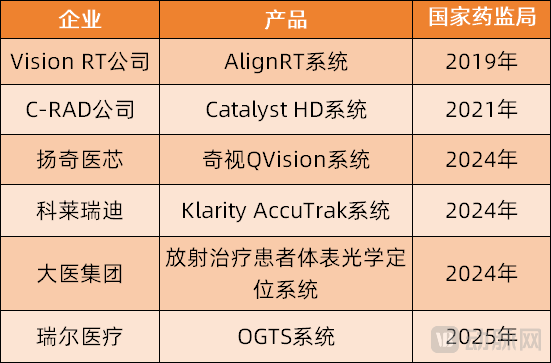
Approval Status of Optical Body Surface Monitoring Systems in China
Since 2024, self-developed optical surface monitoring systems from JancsiTech, Klarity Medical, OUR UNITED CORPORATION, and Rayer Medical have successively received market approval.
Compared to imported optical surface monitoring systems, these Chinese companies have achieved innovations in multiple aspects. For example, the QVision system launched by JancsiTech has fully realized independent R&D and production from software to hardware entirely within China.
Through hardware and software innovations, the accuracy of the QVision system has been upgraded compared with imported products: the positioning accuracy and positioning repeatability can achieve a monitoring error of less than 0.2mm/0.1°, both of which are higher than those of imported brands. The monitoring frame rate can reach up to 20Hz, which also has a significant advantage over imported products.
In terms of application, the QVision system can monitor subtle movements of the patient's body surface within 0.2mm, and can connect with radiotherapy equipment to intelligently control the operation of the accelerator (motion control + energy control). This enables adaptive radiotherapy under optical surface monitoring, improving the accuracy of radiotherapy.
More importantly, JancsiTech uses miniature cameras, allowing the QVision system to be embedded and installed inside the ring gantry linear accelerator, enabling close-range optical surface monitoring. In contrast, imported brands, which mount their cameras on the ceiling of the treatment room, can only perform long-range optical surface monitoring and are incompatible with ring gantry linear accelerators. Beyond conventional linear accelerators, the QVision system can also be integrated with various particle radiotherapy machines such as proton and heavy ion therapy systems.
The optical surface monitoring system launched by Klarity Medical also adopts structured light technology. Compared with the traditional infrared marker tracking and guidance technology, the optical surface tracking technology based on structured light has more intuitive body surface image acquisition capabilities and higher positioning accuracy. Moreover, it eliminates the need to place infrared tracking markers on the patient's body surface, further enhancing the convenience and accuracy of treatment.
In terms of performance, the optical surface monitoring system by Klarity Medical also outperforms the standards set in the TG302 report of the American Association of Physicists in Medicine (AAPM) in key performance indicators such as positioning accuracy, measurement repeatability, and drift. Additionally, some of its performance indicators surpass those of similar products from international manufacturers.
For instance, its positioning accuracy reaches 0.24 mm, which is better than the 0.5 mm or 1 mm of imported brands; its repeatability stands at 0.13 mm, outperforming the 1 mm or 0.2 mm of imported brands. From an application perspective, the system achieves sub-millimeter error control, significantly improving the accuracy of target area positioning.
Currently, this product has been implemented and put into use in over 30 hospitals across China. Klarity Medical is actively conducting interface docking work with linear accelerators from major international manufacturers, while advancing the product's international certifications. Among these efforts, the product obtained U.S. FDA certification in March 2025.