

Vaccine Giant Intensifies Portfolio Rationalization: WuXi Vaccines Terminates Multiple mRNA and COVID-19 Programs
Walvax
Human Vaccine Research and Development, Manufacturer

Abogen
Nucleic Acid Drug Developer
On June 25, Walvax announced: The company signed a "Termination Agreement" with Abogen to terminate the technical development cooperation for the COVID-19 mRNA vaccine and the shingles mRNA vaccine; after the termination of the cooperation, all parties will settle the preliminary R&D, clinical, and other related expenses.
This is not the first time Walvax has "cut losses" on its pipeline this year.
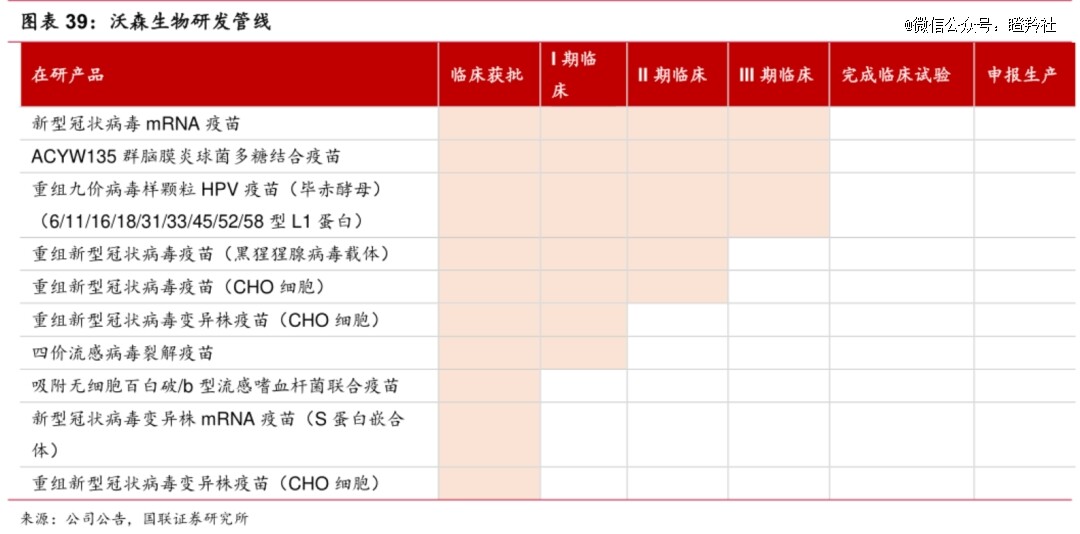
In April and June this year, Walvax Biotechnology Co., Ltd. respectively terminated the clinical trials of its subsidiary Weida Biotechnology's recombinant novel coronavirus vaccine (chimpanzee adenovirus vector), its subsidiary Zerun Biotechnology's recombinant novel coronavirus vaccine (CHO cell), and its variant strain COVID-19 vaccine (CHO cell).
In this way, Walvax has nearly conducted a "thorough clean-up" of its COVID-19 vaccine pipelines, and the era of five parallel COVID-19 vaccine pipelines has become history.
As it turns out, astute observers had long foreseen that Walvax and Abogen were already drifting apart.
As early as 2020, Walvax had started cooperation with Abogen. However, in early 2022, when Walvax simultaneously announced its collaboration with another mRNA vaccine developer, Shanghai Rnacure Biopharma, to develop a next-generation mRNA COVID-19 vaccine, rumors about the breakdown of the partnership between the two parties began to circulate in the market.
Walvax/Abogen's ARCoVax, developed in collaboration by Walvax Biotechnology Co., Ltd. and Abogen Biosciences, obtained clinical approval in China in June 2020. However, it has faced delays in securing domestic approval, with only an Emergency Use Authorization granted in Indonesia in September 2022.
Whether it is due to the existing cooperative pipeline falling short of expectations or internal conflicts between the two parties, the cooperation has already become an empty shell, and the termination of the partnership is only awaiting an official announcement.
From the latest investor Q&A exchange of Walvax, the cooperation between Walvax and Rnacure Biopharma is still ongoing. The cooperative products include: mRNA vaccine for COVID-19 variants, mRNA vaccine for respiratory syncytial virus, and mRNA vaccine for influenza virus.
01 Walvax "Gun Hunt" Fails
Walvax could be described as having a leaky roof during a downpour.
At that time, in order to capitalize on the COVID-19 opportunity, the company spent a huge amount of money. After 2020, Walvax's R&D expenses significantly increased from 2021 to 2023, with R&D expenses reaching 622 million yuan, 933 million yuan, and 776 million yuan respectively. Taking 2021 as an example, Walvax spent 326 million yuan on the R&D of its mRNA COVID-19 vaccine, which exceeded half of the total R&D expenditure for that year. Meanwhile, to support the commercial production of the mRNA vaccine, Walvax established a production base with an annual capacity of 200 million doses at the vaccine industrial park in Yuxi High-tech Zone, costing 520 million yuan.
In terms of COVID-19 vaccines, the one that *bore fruit was the mRNA vaccine for COVID-19 variants developed in collaboration with Shanghai Rnacure Biopharma, which received emergency use authorization in China by the end of 2023, but unfortunately, the market had already vanished.
Walvax's fundamentals are also being tested amidst fierce competition within China.
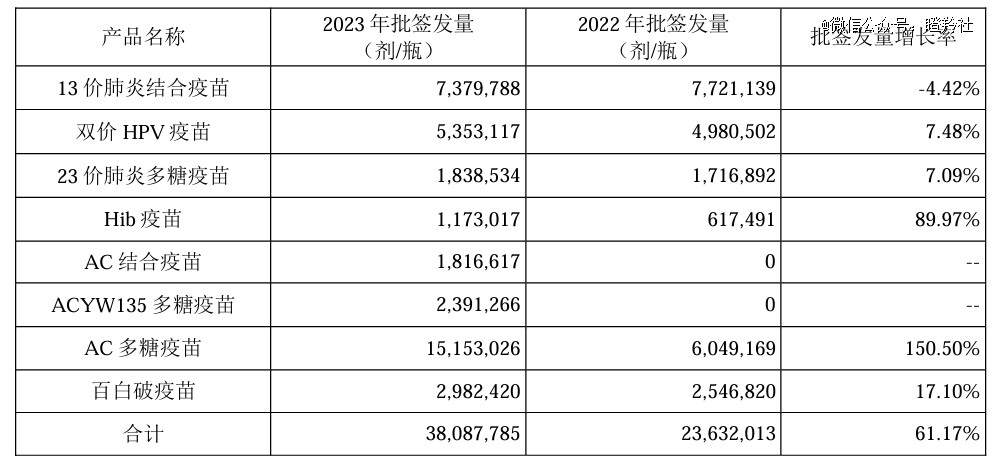
Since 2020, Walvax's 13-valent pneumococcal vaccine has been the company's primary core revenue source. With the commercial launch of its bivalent HPV vaccine in 2022, Walvax benefited as the second-largest domestically produced option in China, driving a revenue peak for the company in 2022, with total revenue reaching 5.086 billion yuan and a CAGR of 31.55% from 2020 to 2022.
Unfortunately, the good times didn't last. Reviewing the 2023 batch release volume, the batch release of the 13-valent pneumococcal vaccine decreased by 4.42% year-on-year. The company explained that this was due to factors such as a decline in the number of newborns in China and increased market competition. More seriously, although the batch release of the bivalent HPV vaccine recorded year-on-year growth, the increase in batch release volume could not offset the revenue loss of the bivalent HPV vaccine, affected by factors such as the age expansion of the nine-valent HPV vaccine, a significant increase in imports, and substantial price reductions.
In fact, it is also understandable that Walvax is eager to integrate and expand its own pipeline. The company urgently needs new growth points to support its performance. After this integration and clean-up, the only pipeline that has entered phase III clinical trials and has the potential for large-scale production is the 9-valent HPV vaccine. Once it is truly launched, it may repeat the development process of the price war for the 2-valent HPV vaccine.
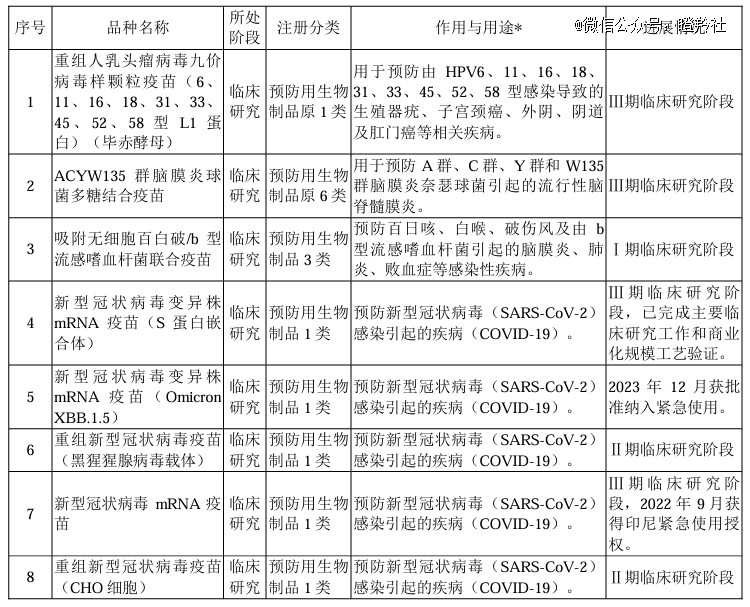
Therefore, the company's urgent and不惜重金 "search for talent" to lay out mRNA technology can be seen as a vote of confidence in this future mainstream technology field. The layout includes respiratory syncytial virus vaccines, influenza vaccines, herpes zoster vaccines, etc.
02 Abogen "Lament for Zhongyong"
The situation of the other protagonist of the incident, Abogen, is also complicated.
Abogen's cumulative financing amount has reached up to 1.1 billion US dollars, surpassing the scale of Stemirna Therapeutics. However, it has not gone down the path of "extravagance and near bankruptcy." After the Stemirna incident, it is believed that Abogen's primary shareholders' main task might be to strengthen the management of the company's finances to prevent funds from "quietly slipping away" for various reasons.
Since Abogen's unsuccessful development of the COVID-19 vaccine ARCoVax, there has been little news about the company expanding into other new pipelines.
Abogen's mRNA technology applications have two main areas: one is in the field of infectious disease prevention and control, where, apart from the COVID-19 vaccine, no new pipelines have entered clinical trials to date; the other is in the oncology field, where between 2023-2024, the company has only one product, ABO-2011, registered and accepted for clinical trials by the Center for Drug Evaluation, with the rest of the products shown to have entered clinical trials being Investigator-Initiated Trials (IIT).
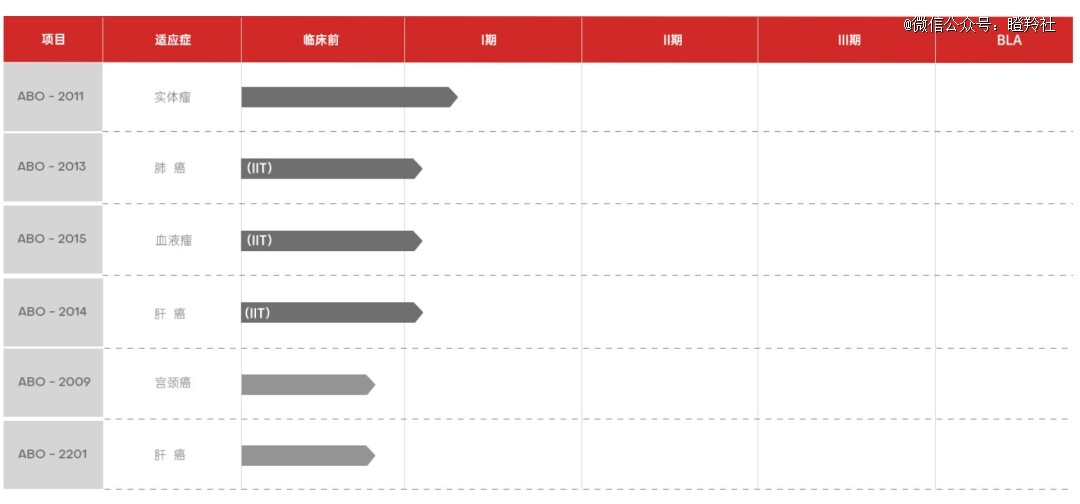
Abogen's ABO2011, which has entered the clinical stage, is a lipid nanoparticle injectable encoding the cytokine IL-12 mRNA. By expressing the IL-12 protein, it activates immune cells to exert anti-tumor activity. The first clinical indication applied for is advanced solid tumors that have progressed or metastasized after systemic standard treatment.
For Abogen, focusing on the field of cancer vaccines may not necessarily be a bad thing, as it can preserve cash to a certain extent while avoiding the risk of pipeline failures leading to a collapse in value due to overexpansion. However, this means that the company’s related products may not enter the commercialization stage for at least another five years. Moderna's mRNA-4157 is expected to become the world's first approved mRNA cancer vaccine, with an estimated 5-6 years from entering clinical trials to reaching the market.
As time goes by, Abogen is very likely to become just another ordinary company.
03 Seeing the Rise of Overseas mRNA
Overseas companies' mRNA technology is actively tackling indications other than COVID-19, with the fastest progress being made in the field of respiratory infectious diseases.
Take the mRNA technology giant Moderna as an example. Its RSV vaccine mRNA-1345 was recently approved by the FDA, becoming the third FDA-approved RSV vaccine and the *first mRNA RSV vaccine, with an efficacy rate of 50% just announced.
In addition, Moderna's seasonal flu vaccine mRNA-1010 has met all immunogenicity endpoints in three Phase III clinical trials, and an application for market approval is expected to be submitted to the FDA within this year.
Building on its mature technological foundation, Moderna is also rapidly advancing its "multivalent vaccine" project, planning to launch a "flu + COVID-19" combination vaccine by 2025, and potentially a "COVID-19 + flu + RSV" trivalent vaccine by 2026.
Tumor vaccines are also a popular choice in the current mRNA technology R&D pathway.
Merck/Moderna's personalized cancer vaccine mRNA-4157 (V940) latest published a phase IIb study three-year follow-up data on the combination with Keytruda for high-risk stage III/IV melanoma after complete resection: Compared with the Keytruda control group, the combination therapy group reduced the risk of recurrence or death by 49%, and the risk of distant metastasis or death was reduced by 62%. In addition, the 2.5-year recurrence-free survival rate was higher in the combination therapy group, at 74.8%, while it was 55.6% for Keytruda alone.
BioNTech/Genentech's personalized cancer vaccine BNT122 is even more "potent," targeting the "king of cancers," pancreatic cancer. According to Phase I data of BNT122 reported in *Nature*: Among 28 patients who had undergone surgery, 19 received atezolizumab post-surgery, of which 16 were subsequently administered the BNT122 vaccine. Additionally, 15 patients received mFOLFIRINOX (a modified four-drug chemotherapy regimen). The median recurrence-free survival (RFS) for the 8 non-responding patients was as long as 13.4 months. This suggests that incorporating BNT122 in the treatment of postoperative pancreatic cancer patients has the potential to reduce the risk of recurrence and prolong patient survival.
Overseas mRNA giants are making significant advances, while in China, the scarcity of stunning Biotech companies with robust product pipelines and technology platforms is notable. Conversely, in terms of progress in mRNA vaccine development, pharmaceutical companies like CSPC have taken the lead in this field—a situation that warrants deep reflection.
Conclusion:The "easy-money tradition" of Chinese vaccine manufacturers has led to long-standing issues within the industry, which has also, to some extent, occupied the resources for subsequent emerging Biotech companies. With the arrival of this wave of vaccine product reshuffling, it is hoped that it will elevate vaccine innovation in China to the next level.
[This article is authorized for release by瞪羚社, a WeChat Official Account partner of Zero2IPO. This platform only provides information storage services.] If you have any questions, please contact (editor@zero2ipo.com.cn) for Zero2IPO to handle.