

Deep Surgery secures series A funding, pushing clinical advancement and global expansion of microsurgical robots

DeepSurgery
Developer of Intelligent Microsurgical Equipment

RCCAPITAL
Financial Advisory Service Agency

Bayland Capital
Equity Investment Institution
Recently, Deep Surgery, a leading enterprise in microsurgical robots, announced the completion of its Series A financing round, led by the medically-specialized fund with a robust industrial background, Bayland Capital. This round of financing reflects the ongoing attention of medical professional funds to the field of microsurgical robots, as well as their high recognition of the technological uniqueness and team execution capabilities of Deep Surgery. Following this funding, Deep Surgery will further accelerate its clinical development, regulatory registration, and market expansion both in China and internationally. Robust Cloud Capital served as the exclusive financial advisor for Deep Surgery and will oversee its subsequent financing efforts.

Deep Surgery is a founding member of the Microsurgery Branch of the China Association for Medical Devices Industry, dedicated to developing intelligent equipment that covers the full spectrum of microsurgical procedures. Deep Surgery's flagship product, the FUNZAR Microsurgical Robot (hereinafter referred to as "FUNZAR"), has been recognized by the Microsurgery Society of the Chinese Medical Association as a major advancement in the field of microsurgery for two consecutive years (2024/2025). In 2025, it was ranked as the top achievement among the five major advancements in microsurgery. The product entered the clinical validation phase in December 2024, ahead of other solutions, and is currently accelerating enrollment for multiple indications/procedures in pivotal clinical trials at several leading hospitals.
From October 6 to 9, 2025, the premier event in Chinese microsurgery—the "Third Chinese Workers' Technical Association · Super Microsurgical Vascular Anastomosis Skills Competition"—was held as scheduled. The event introduced an innovative challenge format: a head-to-head contest between the manual anastomosis champion surgeon team and a robotics group, titled the "First Super Microsurgical Vascular Anastomosis Human vs. Machine Competition."
This contest marked the world's first head-to-head event in which a microsurgical robot performed live-animal vascular anastomosis against surgeons using manual techniques, setting an exceptionally high bar for participating robotic systems. After rigorous selection, FUNZAR emerged as the sole robotic device to qualify for the finals, where it competed head-to-head with the champion of the manual surgery group. The robot successfully completed an end-to-end anastomosis of a mouse tail artery with a diameter of only 0.1 mm. This "human vs. machine" challenge attracted widespread attention within the global microsurgery academic community as well as the surgical robotics industry both in China and internationally.

Team and Experts Pose for a Group Photo Following FUNZAR's Success in the Human vs. Machine Challenge
Developed independently by Deep Surgery, the "FUNZAR" Microsurgery Control System is the world's first modular, universal microsurgery robotic system. This innovative product is expected to redefine the standard of microsurgery, shifting from the traditional "M (Microscope)" to an integrated "MS (MicroSystem)," thereby providing a novel solution for the field of microscope-assisted surgery. The system integrates multiple groundbreaking technologies and demonstrates outstanding performance:
1) Hand-Eye Integrated Operation: As the world's first ultra-high-magnification system that combines purely digital vision with dexterous robotic arms, it offers hand-eye-aligned magnification capabilities ranging from 10× to 100×, empowering surgeons to achieve a new paradigm: "What can be seen IS what can be done."
2) Multi-Arm Collaboration: Utilizing the world's first small, modular, and configurable microsurgery system design, it allows for the flexible combination of multiple robotic arms. This addresses a major challenge in existing international microsurgery robotic systems, which often require assistant intervention, thereby enabling fully autonomous microsurgical operations.
3) Universal Configuration: Featuring the world's first, PCT-patented "Multi-Remote Center of Motion (MRCM)" universal microsurgery architecture, it covers a wide range of surgical scenarios under the microscope. FUNZAR is the industry's only multi-scenario microsurgery system capable of supporting both ophthalmic and non-ophthalmic surgeries—including microsurgical repair and reconstruction, plastic surgery, orthopedics, neurosurgery, otolaryngology, head and neck-maxillofacial surgery, cardiothoracic surgery, general surgery, andrology, obstetrics and gynecology, among others.
Furthermore, FUNZAR incorporates advantages such as an adaptive closed-loop force feedback system enabled by robotic modules and a modular split design. These features not only significantly reduce surgical risks but also allow the system to fully adapt to the practical constraints of operating rooms, which are often space-limited and equipped with numerous devices.
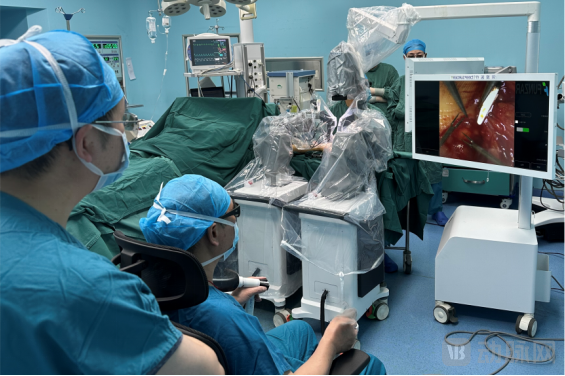
Doctor Operates FUNZAR for Microsurgery
As a company that commenced formal operations in April 2024, Deep Surgery has rapidly advanced through key milestones including product development, animal trials, type testing, human research trials, and patient enrollment for pivotal clinical studies, demonstrating exceptional execution efficiency in terms of both timeline and resource utilization. In December 2024, FUNZAR successfully enrolled the first clinical patient in China, achieving a "breakthrough from zero." By September 2025, the multicenter pivotal clinical trial for FUNZAR was officially initiated.
Currently, clinical trials for FUNZAR are being conducted concurrently at leading hospitals in cities such as Beijing, Shanghai, Changsha, and Guangzhou. The technology has shown clear advantages and robustness across dozens of completed patient cases and has already been successfully extended to multiple indications and surgical procedures.
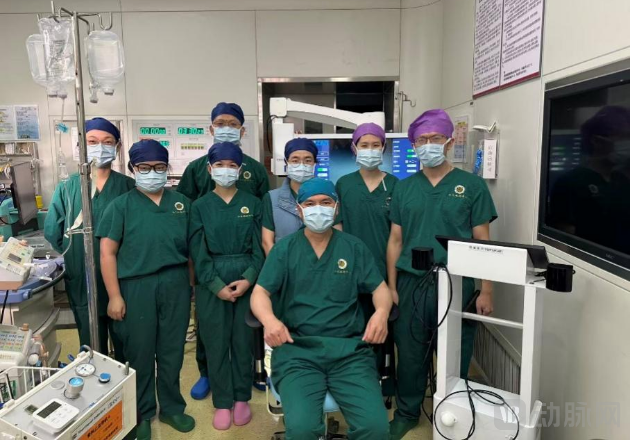
Clinical PI Professor Zhu Qingtang, Vice President of the First Affiliated Hospital, Sun Yat-sen University, Post-Operative Photo with Clinical Team