

World's First Non-Invasive Optical BCI: PBM Large Model Unveiled

Airdoc
Retinal Imaging Artificial Intelligence Field Product Developer
October 30, Wenzhou. During the Vision China 2026 Autumn academic conference on innovative development in visual health, as the countdown on the big screen reached zero, Airdoc founder Zhang Dalei and several leading ophthalmology and brain science experts pressed the launch button together, and the non-invasive optical BCI PBM large model was officially unveiled.
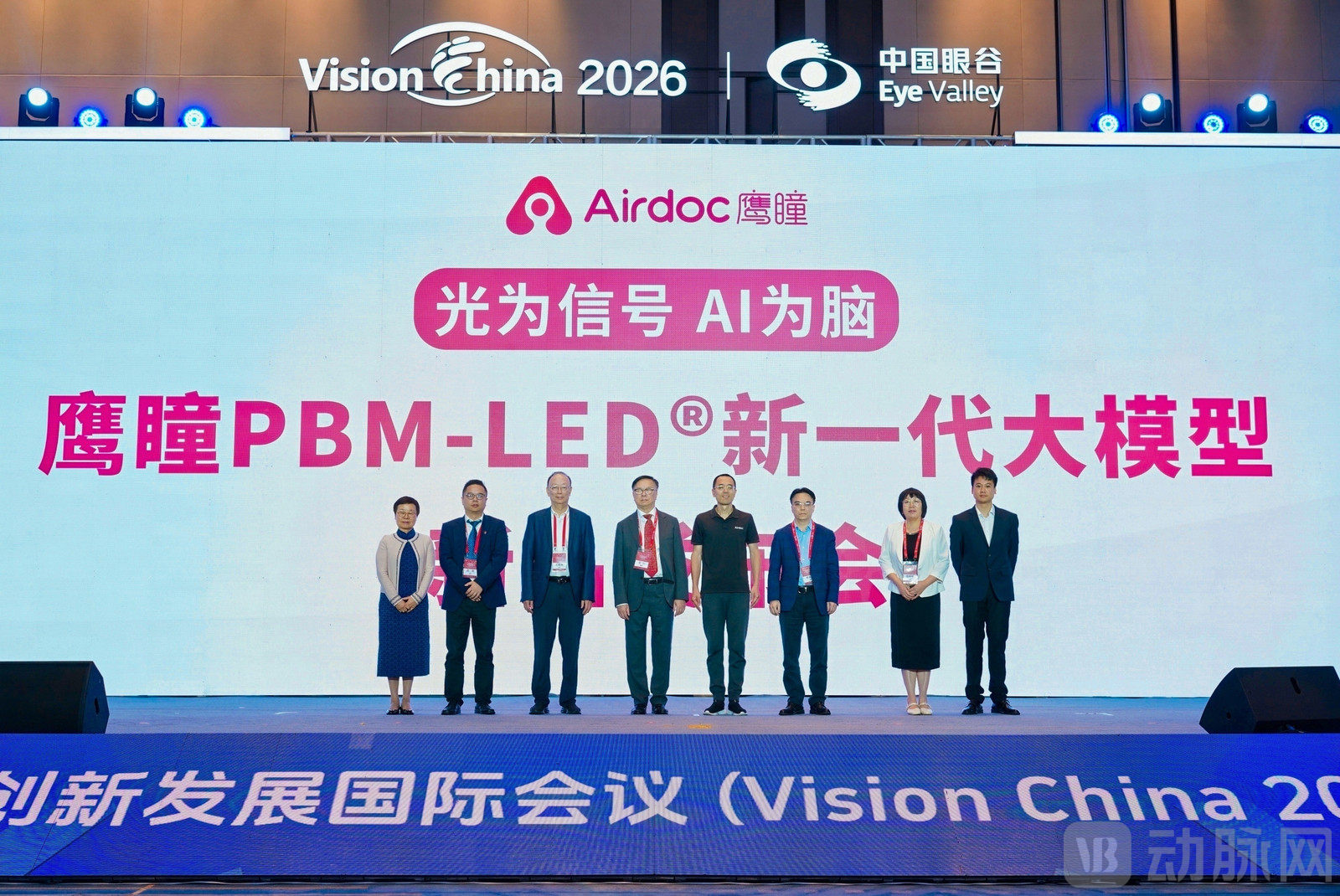
This was Airdoc's second strategic product launch in nine years. In 2017, the company launched its first retinal AI diagnostic product and set a goal of serving 10 million people; to date it has covered 55 countries and more than 50 million patient visits. Nine years later, it has set its goal for the next decade at one billion people, and the path to getting there has shifted from "using AI to read the fundus" to "using light to modulate nerves".
This pivot in its roadmap happens to be in step with the global frontier of neuroscience. The 2026 Nobel Prize in Physiology or Medicine went to optogenetics, and light has become an important signal carrier for neuromodulation and brain-computer interfaces.
And the PBM technology R&D that Airdoc started eight years ago is precisely the corporate-side implementation of this trend. As the world's first non-invasive BCI large-model company to achieve eye-brain modulation with light signals, the non-invasive optical BCI PBM large model Airdoc launched this time is a closed-loop neuromodulation platform that uses light as the signal carrier and AI as the decision-making core.
Its technical logic is this: temporal coding, spatial coding and individualized parameters are loaded onto the light signal and converted into neural electrical activity by the retina, a natural photoelectric converter, then travel along the optic nerve pathway to the brain, after which intervention parameters are dynamically adjusted based on physiological feedback. Zhang Dalei summed it up as "light as the signal, AI as the brain": light carries the information, while AI interprets the feedback and generates the next instruction.
And the first application scenario for the PBM large model landed on myopia prevention and control.
At the launch, Airdoc also released six-month multicenter randomized controlled clinical data for PBM-LED® combined with single-vision lenses in pediatric myopia prevention and control, and announced that the Airdoc PBM-LED® myopia treatment device has obtained a Class II medical device registration certificate and been approved for myopia treatment.
From large model to treatment device, from platform to application, Airdoc's integrated diagnosis-and-treatment pathway has thus entered the clinical validation stage.
1Why Myopia Became the First Scenario
The severity of myopia prevention and control is the starting point of all the discussion at this launch, and also the practical reason the PBM large model chose myopia as its first application scenario.
Qu Jia, professor and deputy director of the National Key Laboratory of Visual Health and lifetime honorary president of the Eye Hospital of Wenzhou Medical University, laid out the defining challenge of the times at the event: pathological myopia is mostly seen in people with high myopia, its incidence keeps rising, and it causes irreversible visual damage and even blindness, making the prevention and control situation extremely severe. Myopia prevention and control was elevated to a national strategy long ago; in the past the industry addressed the question of "whether there are means of prevention and control", and now it has to answer "whether they work well and whether they are enough".
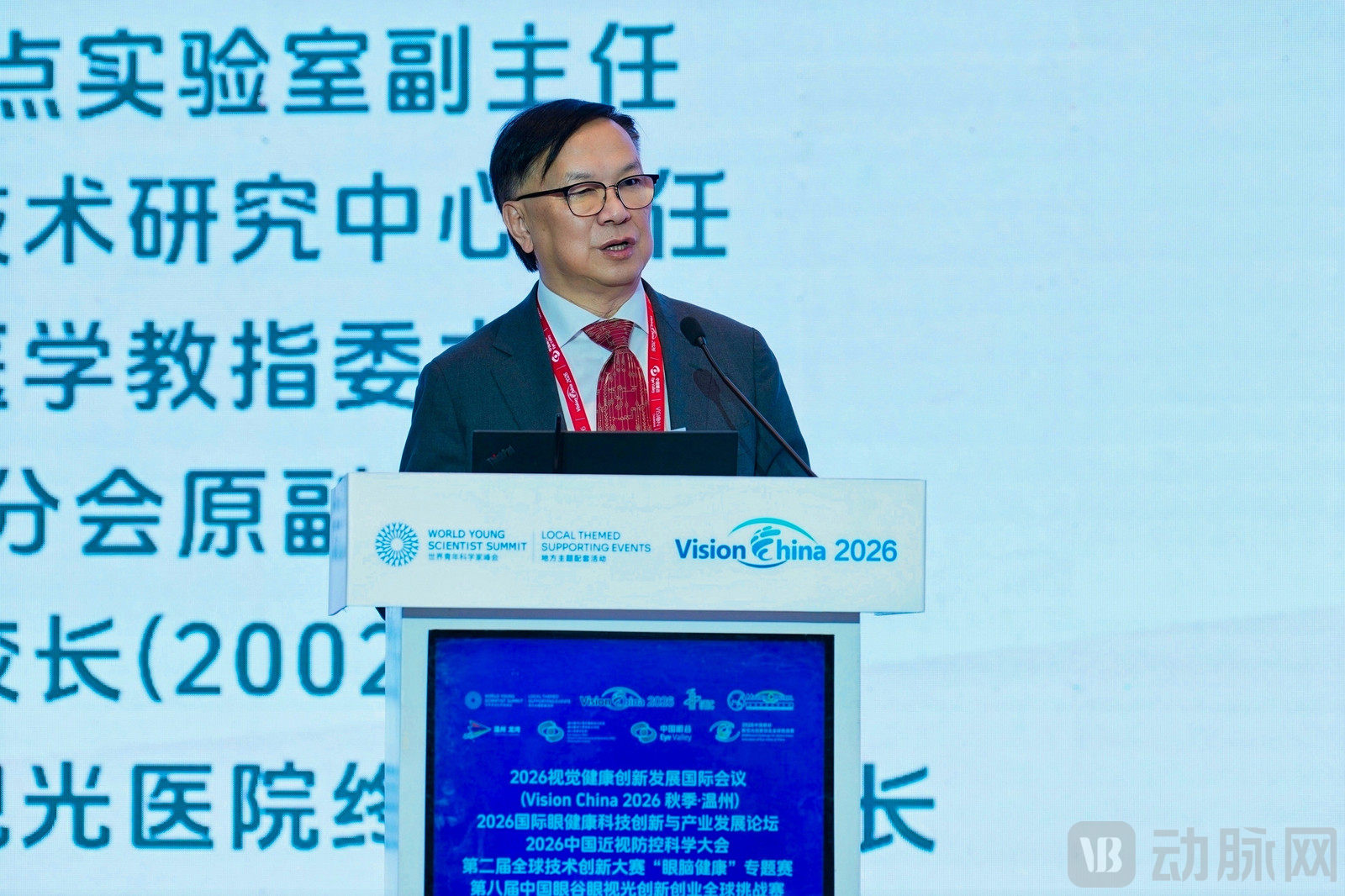
Qu Jia, professor and deputy director of the National Key Laboratory of Visual Health, and lifetime honorary president of the Eye Hospital of Wenzhou Medical University
In the existing myopia prevention and control system, behavioral intervention is the foundation but has poor compliance, optical lenses are widespread but have limited control effect, and pharmacological options are still being explored. Hu Liang, executive president of the Eye Hospital of Wenzhou Medical University, said: "No single approach can solve all the problems, and each method has its value. PBM is an effective link in the myopia prevention and control system and should not be overlooked."
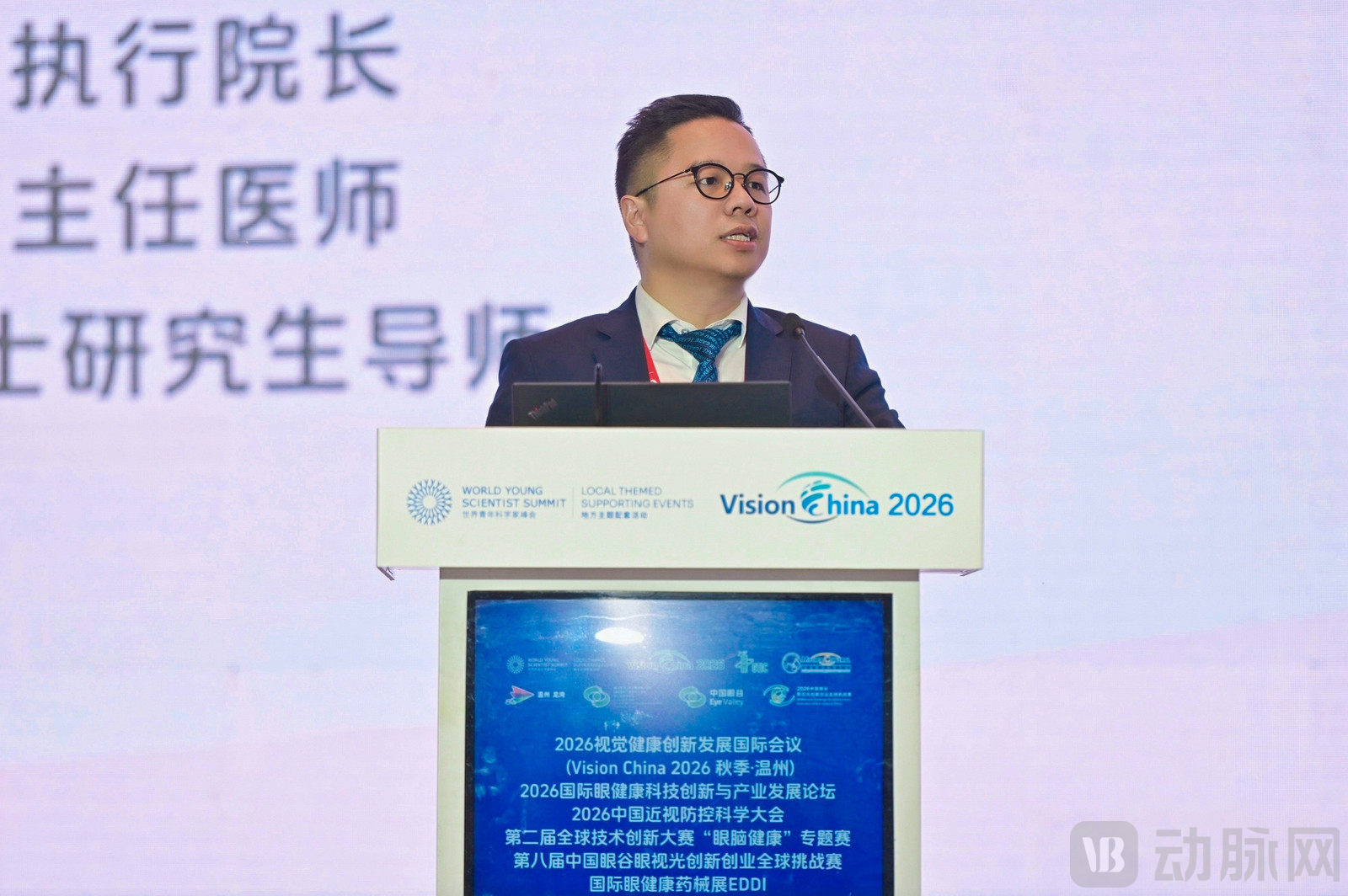
Hu Liang, executive president of the Eye Hospital of Wenzhou Medical University
It is precisely at such a point in the industry that Airdoc's entry is essentially an inevitable extension of a decade of deep work on the fundus.
As the world's first company to obtain a Class III certificate for AI-assisted retinal diagnosis, Airdoc found in its vast past screening data that myopia-related fundus changes have consistently been the abnormality with the highest detection rate: large numbers of children are screened out as at risk of myopia, yet there has consistently been a lack of sufficiently diverse and effective intervention options.
"Our mission is to make health everywhere, not just to make the discovery of health everywhere." This is the underlying logic behind Airdoc's launch of PBM R&D eight years ago. A decade of technical accumulation in reading the fundus not only lets it precisely anchor intervention targets in the retina and choroid, but also gives it the ability to combine AI algorithms with photobiomodulation and carve out an integrated pathway from diagnosis to treatment.
2Turning Light into a Carrier of Information
On the brain-computer interface track, Musk's Neuralink represents the invasive direction: implanted electrodes act directly on the visual cortex, transmitting signals in an "electricity to electricity" manner. This path is precise, but invasive, and is destined to serve only the minority with a hard medical need; it cannot become a health tool accessible to the general public in daily life.
"If we want to move health services from diagnosis to intervention and make them accessible to more people over the long term, we must prioritize the non-invasive route." In his speech, Zhang Dalei clearly drew the dividing line in Airdoc's approach.
Among the five common non-invasive physical intervention carriers of sound, light, electricity, magnetism and heat, Airdoc ultimately chose light: the retina itself is the human body's natural photoelectric converter, and light entering the eye is converted into neural electrical signals that travel along the optic nerve to the brain. This is a non-invasive "brain-computer interface" that the human body comes with.
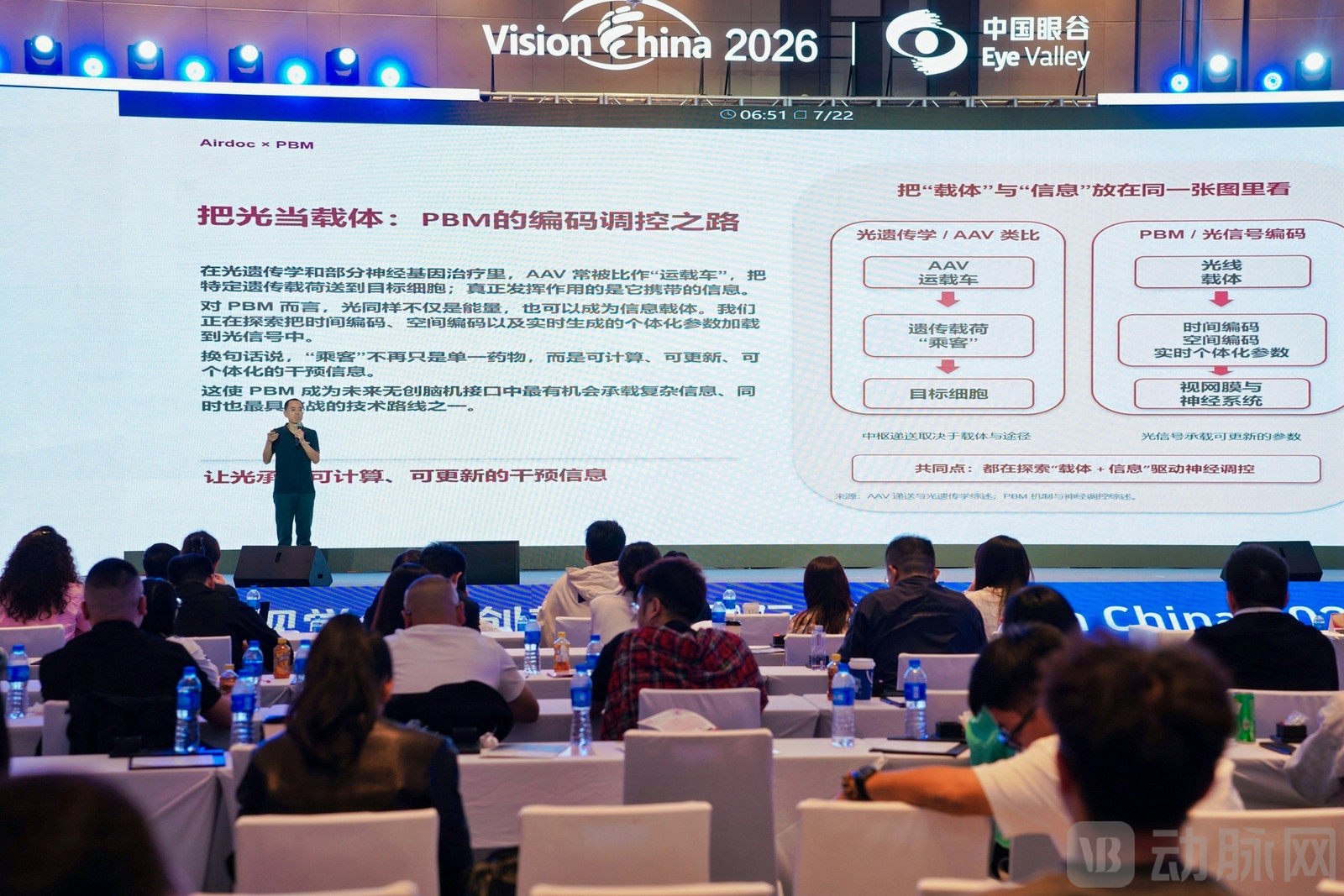
Zhang Dalei, founder of Airdoc
Airdoc's PBM large model takes the "closed-loop" route, building a complete regulatory chain of "measure-predict-intervene-re-measure-adaptively optimize": it first collects multi-dimensional data such as the user's refraction, axial length, fundus and visual function, then has AI predict the visual development trend and generate a personalized light regimen, and after intervention collects physiological feedback through re-measurement, ultimately iterating subsequent parameters dynamically.
Robert Desimone, member of the US National Academy of Sciences and director of the McGovern Institute for Brain Research at MIT, who serves as Airdoc's global chief scientific advisor, dissected the scientific value of this system in a remote presentation: it is essentially a brain-science-oriented closed-loop neuromodulation platform that treats the eye as the signal interface to the brain, and rather than merely delivering light to act on the eye, it integrates optical input, ocular readouts and neural state estimation into one whole.
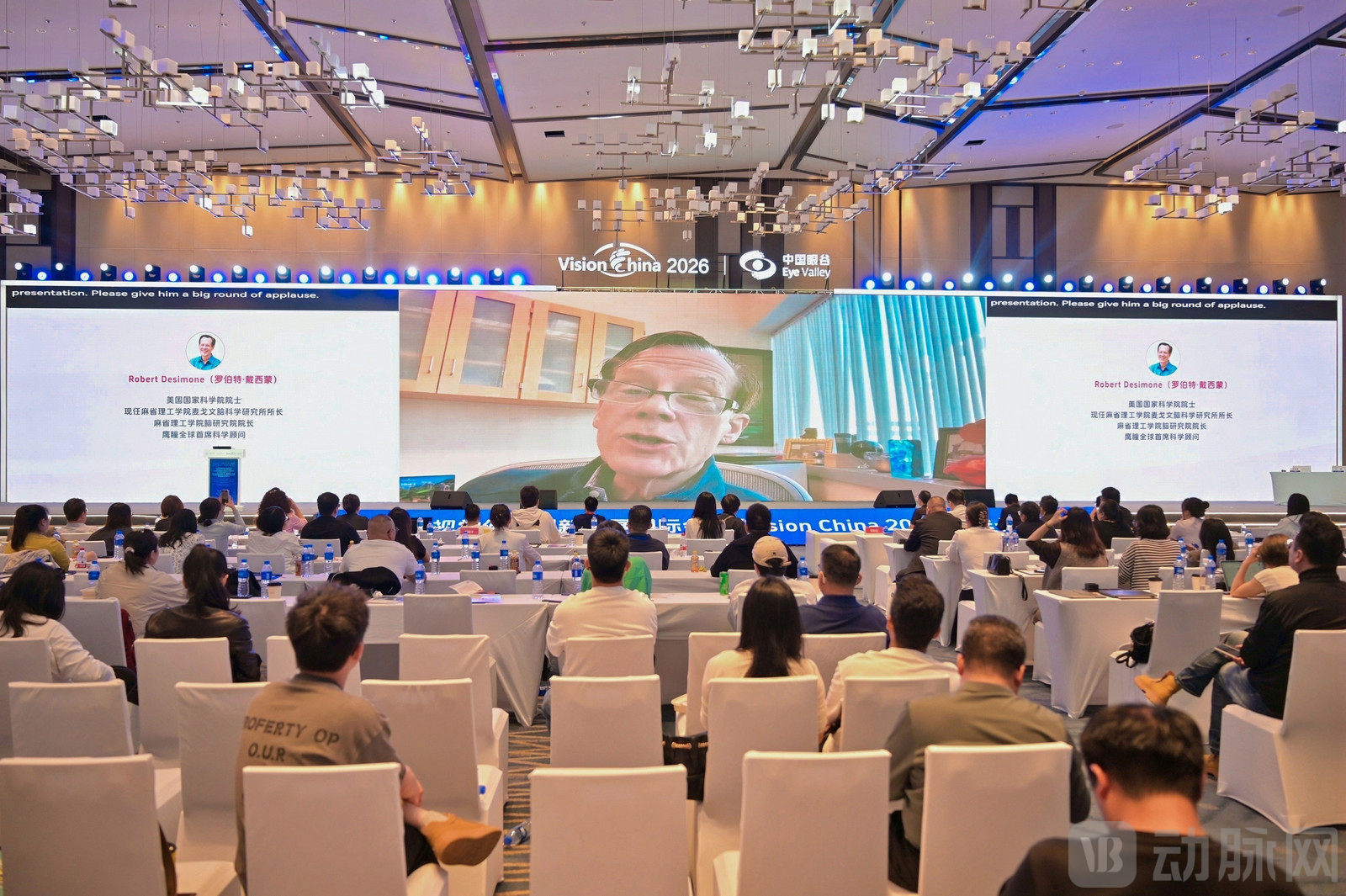
Airdoc's global chief scientific advisor, member of the US National Academy of Sciences, and director of the McGovern Institute for Brain Research at MIT, Professor Robert Desimone
In this system, AI takes on the core roles of neural state estimation, individual response prediction and intervention strategy optimization. Based on longitudinal multimodal datasets, AI can mine hidden associations between growth and development and electrophysiological signals, distinguish local ocular effects from central nervous system-mediated effects, and automatically iterate to derive the optimal light signal generation scheme.
3Six-Month Clinical Data Validates Efficacy and Safety
Clinical data is the core basis for validating a product's value.
As the first clinical application of the PBM large model, the clinical study of Airdoc PBM-LED® combined with single-vision lenses, built on the PBM large model, was led by the National Clinical Research Center for Eye and Vision Diseases, conducted under the leadership of Professor Jin Wanqing of the Eye Hospital of Wenzhou Medical University, and carried out jointly with a number of top eye centers in China. It adopted a multicenter randomized double-blind controlled design, enrolled a total of 185 subjects, and used mainstream defocus lenses as the control group to comprehensively verify the efficacy and safety of the regimen.
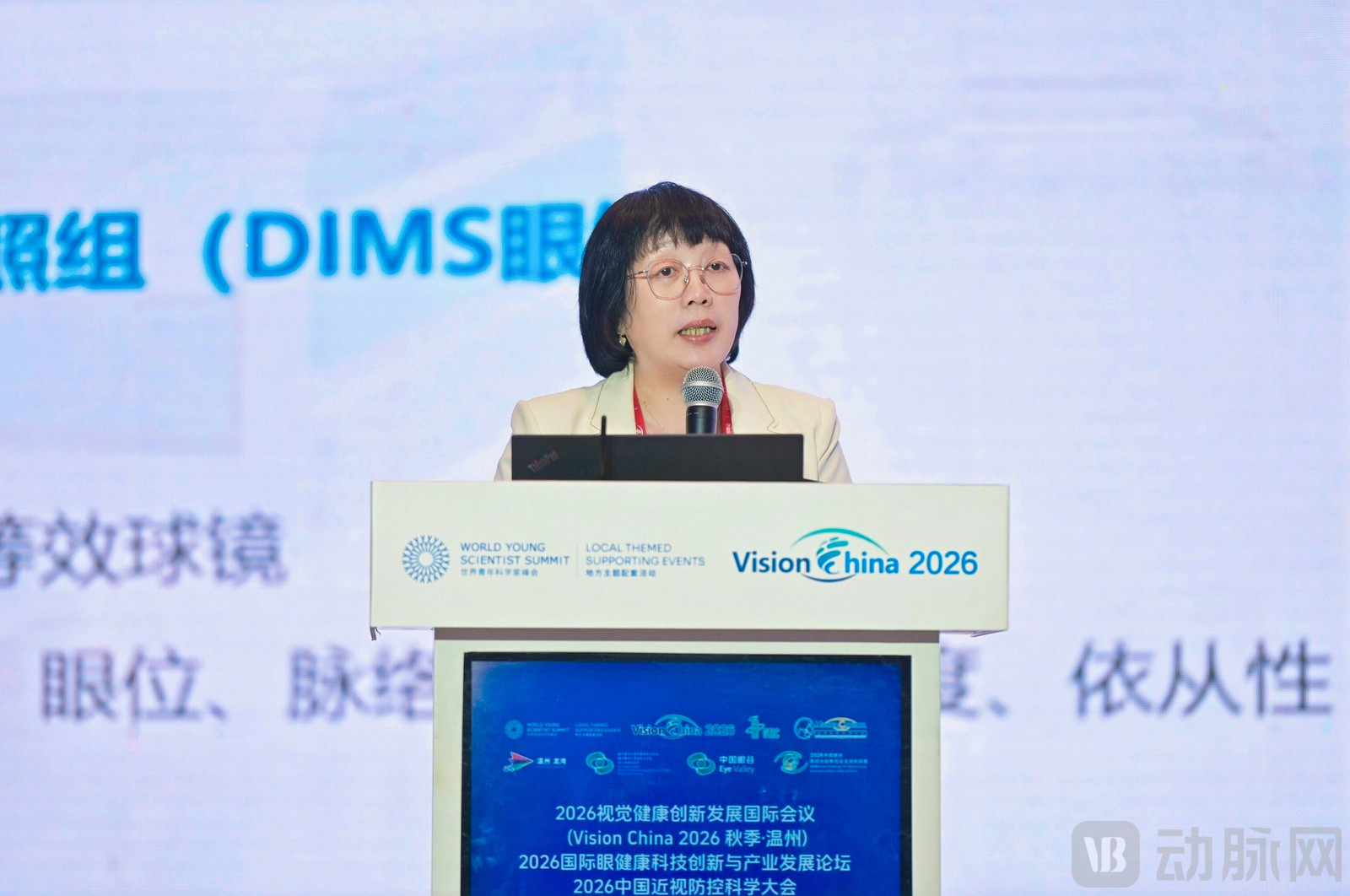
Professor Jin Wanqing of the Eye Hospital of Wenzhou Medical University
The six-month interim data released at the launch confirmed the potential of this technical route.
In terms of efficacy, axial control was outstanding: 57.9% of children in the trial group achieved effective axial control in the left eye (no change + shortening), versus only 17.4% in the control group (P = 0.016); the right eye showed an equally clear advantage. The results confirm that the product not only effectively controls axial elongation but also enables some children to achieve axial shortening and regression.
In terms of myopic refractive error, at six months the spherical equivalent in the right eye of the PBM group had progressed by -0.036 D from baseline, versus -0.370 D in the control group, a between-group difference of 0.334 D that was statistically significant (P = 0.012). The research team noted that the inhibitory effect of Airdoc PBM-LED® photobiomodulation technology on axial length continues to amplify over time, with the benefit at six months further expanding on that at three months.
Safety design is another core highlight of the regimen. Addressing the macular damage risk that the industry watches most closely, the product adopts a patented annular light spot design that avoids the fovea; together with an intelligent protection system, this achieves ample safety redundancy. A light safety assessment published in JAMA Ophthalmology in 2026 showed that the Airdoc PBM-LED® device retains a 126-fold margin for dose escalation, giving it a standout safety advantage among comparable products.
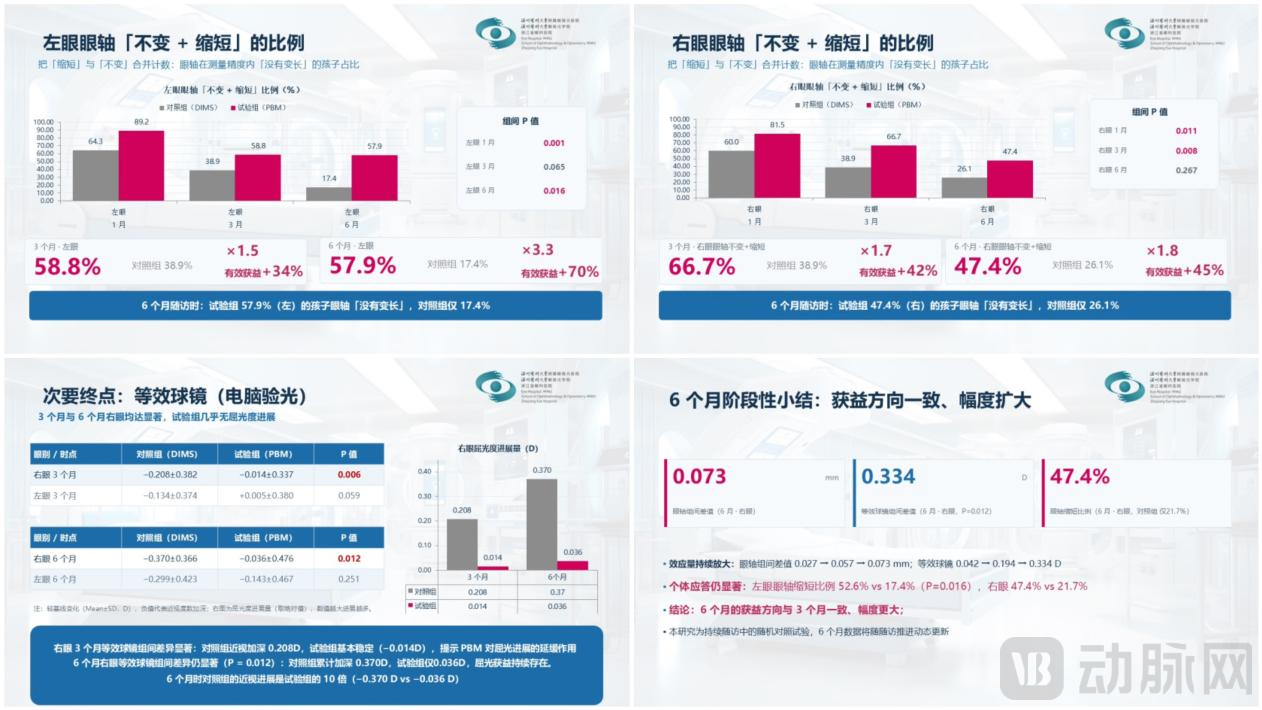
Airdoc PBM-LED® three-month and six-month clinical data for myopia prevention and control
During the six-month follow-up, no clinically meaningful abnormalities were seen in subjects' visual acuity, intraocular pressure, fundus, color vision or structural indicators, and there were zero serious adverse events, verifying that the regimen can be safely applied to myopia prevention and control in children and adolescents.
For Airdoc, this interim data is only the beginning of the evidence-generation path.
4Touching the Vision and Nerves of One Billion People with Light
Starting from myopia, what Airdoc really wants to verify is the possibility of the entire non-invasive eye-brain modulation pathway.
The physiological basis of this pathway has long been confirmed by basic research. Desimone's research shows that intrinsically photosensitive retinal ganglion cells (ipRGCs) in the retina are responsible not only for regulating circadian rhythms and the pupillary reflex, but can also project to multiple functional areas of the brain, affecting higher neural activities such as emotion, attention and cognition. This means the boundary that light signals can reach goes far beyond the eye itself.
Based on this underlying mechanism, and following a research list of 35 categories of fundus abnormalities, the Airdoc PBM large model will gradually extend to visual diseases such as color blindness and color weakness, glaucoma and macular degeneration, as well as neurological diseases such as traumatic brain injury, Parkinson's disease and Alzheimer's cognitive impairment.
"We go to the moon not because it is easy, but because it is hard. But in the age of artificial intelligence, this road can exceed imagination." As the launch drew to a close, Zhang Dalei compressed Airdoc's next decade into a single goal: to improve the visual ability of one billion people with the PBM system.
Using AI to understand fundus risk was the starting point of Airdoc's past decade; now it is using encoded light signals to actively intervene in the health process. Where light and AI meet, this company that began with fundus imaging is extending along the optic nerve deep into the brain, and toward a more inclusive healthy future.