

Nasolabial Folds Are Not Short of Fillers: Why Is CHAMFOND Still Betting on Dermal ECM?

CHAMFOND
Innovative Biomedical Material Developer
The nasolabial fold, commonly known as the "smile line", is a common early sign of facial aging and a classic indication in aesthetic injectable filling. Hyaluronic acid, collagen and various regenerative materials offer multiple options for nasolabial fold filling.
As patients' expectations rise, smoothing out the lines is no longer the only demand. Whether the effect can last longer, whether the facial state looks natural, retains a native feel and avoids overfilling and stiffness have all become important considerations, raising higher requirements for the durability, naturalness and long-term safety of filler materials.
Recently, the dermal extracellular matrix (ECM) implant developed by Ningbo CHAMFOND Life Health Technology Co., Ltd. (formerly Ningbo Changfeng Biotechnology Co., Ltd., hereinafter "CHAMFOND") has made new progress. As of October 23, 2026, the product has completed the activation of all five clinical trial centers and finished staged enrollment. Among them, the leading site, which began enrollment first in August, has enrolled more than half of its target.

A total of five centers are participating in this clinical trial, which aims to "evaluate the safety and efficacy of the dermal ECM implant in correcting moderate to severe nasolabial fold wrinkles". The study adopts a prospective, multicenter, participant- and evaluator-blinded, randomized, parallel-controlled, non-inferiority design, with the widely used collagen filler as the control, and plans to complete full enrollment within 2026.
In addition, CHAMFOND will soon launch a multicenter clinical trial of another entirely new extracellular matrix implant material.
With multiple materials already available for nasolabial fold filling, why does CHAMFOND still dare to bet on dermal ECM? What advantages does dermal ECM offer in nasolabial fold applications? And which unmet needs of existing options can it address? To answer these questions, one must first return to the clinical reality of nasolabial fold filling.
The nasolabial fold is not a simple wrinkle but the intersection of multiple systems of facial aging. It runs from the outer edge of the nasal ala to the corner of the mouth, sitting exactly at the junction of the midface and the perioral expression zone. Its formation is related to multiple factors including aging, changes in soft tissue volume, structural changes in the dermal matrix, ligament traction and the activity of facial expression muscles.
Compared with wrinkles such as crow's feet and forehead lines, which are mainly formed by repeated contraction of expression muscles, the nasolabial fold has more complex anatomy and formation mechanisms, and may also become asymmetrical as it deepens with age.
More critically, this is one of the most frequently moving areas of the entire face, constantly pulled during speaking, chewing and smiling, which imposes stricter requirements on filler materials: they must provide appropriate support and withstand mechanical stress, while preserving natural facial expressions as much as possible and avoiding stiffness.
At present, injectable filling options for the nasolabial fold include cross-linked hyaluronic acid fillers (HA fillers), collagen injections and regenerative materials (such as PLLA "baby-face" injectables and PCL "girl-face" injectables).
Take hyaluronic acid as an example. As a classic volume filler, it can provide immediate support and has strong shaping capability. But extending its duration requires a higher degree of cross-linking, and repeated injections can easily lead to problems such as overfilling, migration and the Tyndall effect; overfilling in dynamic zones can also affect the naturalness of expressions.
Collagen is safe and not prone to overfilling, but the effect of some products lasts a relatively limited time, and it mainly works by supplementing exogenous collagen without elastin, making it difficult to achieve regeneration of the entire dermal layer.
Regenerative materials can stimulate new autologous collagen, and some products last up to a year, but they act slowly and often require multiple injections; what is regenerated is only a single type of collagen, with limited support and skin quality improvement; for moderate or greater depression they are often combined with hyaluronic acid.
Overall, existing options all revolve around "replenishing volume" or "stimulating regeneration of a single component", and support, naturalness and durability remain hard to achieve at the same time. What the nasolabial fold really lacks may not be another filler, but the dermis itself that can carry this volume, which leaves room for extracellular matrix (ECM) materials.
ECM is a complex network that exists between cells and is secreted by them, containing multiple components such as collagen, elastin and glycosaminoglycans. Compared with single-component materials, ECM retains the three-dimensional reticular morphology of natural tissue, and can induce cell migration, proliferation and differentiation through integrin-mediated mechanochemical signaling pathways, achieving vascularization of the material and integrating with local tissue to form new tissue structures and complete structural remodeling.
To use an analogy, a single-component material provides "cement" that is filled in to prop up volume, and its effect gradually weakens as the material degrades; ECM is more like an "expansion bolt" that grows together with surrounding tissue and, beyond providing support, induces in situ regeneration of autologous dermis.
The dermal ECM implant from CHAMFOND is designed along exactly this logic: it uses porcine dermal tissue as raw material, removes immunogenic cellular components through decellularization, retains ECM components such as collagen and elastin, and is then mixed evenly with a dispersant through processes such as granulation.
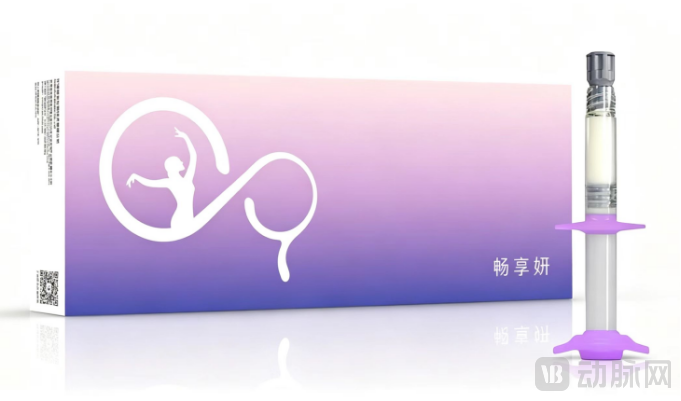
The choice of a dermal source is based on the tissue specificity of ECM regeneration: the ratio of type III and type VII collagen in porcine dermis is close to that of human dermis, and the injection plane for nasolabial fold filling is precisely the dermal layer, where dermal-derived materials have better tissue matching.
In terms of the material body, this product is based on pure dermal ECM and does not rely on cross-linked hyaluronic acid for support. There are also approaches on the market that compound ECM microparticles with cross-linked hyaluronic acid. In such designs, the durability of the product is to a considerable extent borne by cross-linked hyaluronic acid, with ECM accounting for a limited share; once the hyaluronic acid degrades, the effect declines accordingly; and cross-linked hyaluronic acid still carries the risk of overfilling.
CHAMFOND's choice is to let the matrix "carry it all": support comes from the natural structure of dermal ECM, while the ability to induce regeneration is retained; after providing appropriate support in the early stage, the material gradually participates in local tissue repair, inducing in situ regeneration of autologous dermal tissue, so that the "baton" of effect is ultimately handed to autologous tissue rather than degrading together with the foreign material.
"What will be regenerated is a dermal matrix containing multiple components such as collagen and elastin, the patient's own tissue, rather than a single collagen deposit induced by a regeneration stimulator," added the founder of CHAMFOND. The dermal ECM implant does not "fill volume" into the nasolabial fold, but implants a scaffold material that retains the structure and molecular complexity of natural dermal ECM to induce in situ regeneration of autologous dermis, with the goal shifting from "filling in the groove" to "repairing the dermal foundation that carries the groove".
This also gives the CHAMFOND dermal ECM implant multiple advantages in nasolabial fold filling:
Dermal ECM retains the natural three-dimensional reticular structure, providing an ideal microenvironment for the adhesion, migration and proliferation of fibroblasts and actively inducing tissue regeneration;
The company's accumulated decellularization process can thoroughly remove immunogenic cellular components, ensuring excellent biocompatibility and safety;
Immunogenicity-related indicators test far below industry standards;
And internationally leading granulation technology makes the particle size more suitable for aesthetic injection.
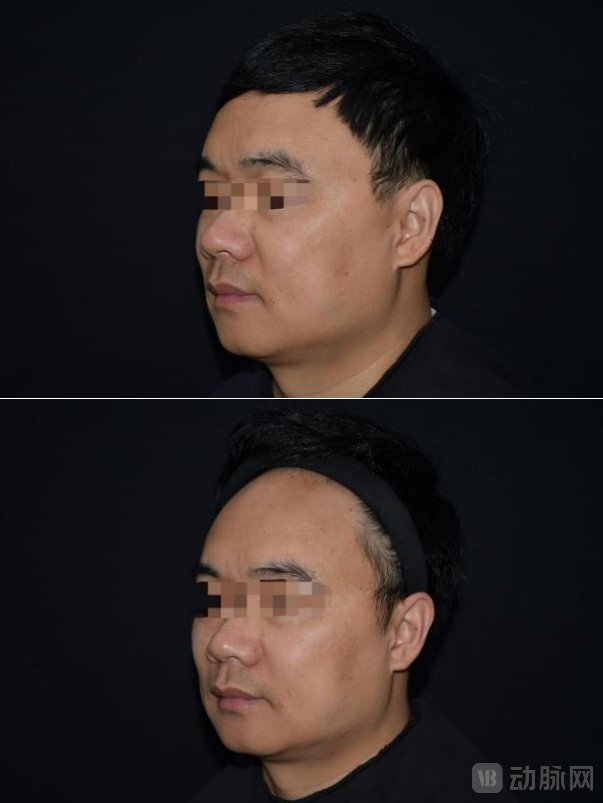
The upper image shows the state before injection, and the lower image shows 2 months after injection.
Judging from the clinical data already available, the product shows excellent natural regenerative aesthetic improvement in nasolabial fold filling, and has exhibited very low adverse reactions since enrollment and in earlier preliminary clinical studies, indicating high safety; at the same time, based on earlier research and the application of similar products abroad, dermal ECM products can maintain natural aesthetic improvement for around one year.
CHAMFOND was founded in January 2024, formerly Ningbo Changfeng Biotechnology Co., Ltd. On October 16, 2026, the company officially completed its name change.
Its brand philosophy, "invigorating life, harmonizing with all things and enriching life", also reflects the extension of its business positioning: with ECM materials at the core, it builds positions in medical aesthetics, dental medical devices and pet medical devices, and continues to explore applications related to regenerative medicine and anti-aging.
The founder comes from a clinical medicine background and has three successful entrepreneurial experiences. The team has worked in the ECM field for nearly 20 years, and its core scientist once led the successful translation of China's first and the world's second dECM nerve material, with deep accumulated experience in developing dECM materials from multiple tissue sources. The company is also one of the few in the industry able to develop more than four different ECM materials while covering both consumer healthcare and serious medical care.
The company has built a nearly 3,000-square-meter GMP factory and R&D center in Ningbo, cooperates with multiple universities and institutes on more than ten projects, owns more than 20 independent intellectual property rights, and is a nationally recognized technology-based SME and high-tech enterprise. The company has successively received multiple rounds of tens-of-millions-of-yuan investment from professional institutions and industrial capital including Chengshu Investment, Dongfang Fenghai, Ningbo Yongke Angel, Ningbo Kangxi Biotech and Ningbo Wanli.
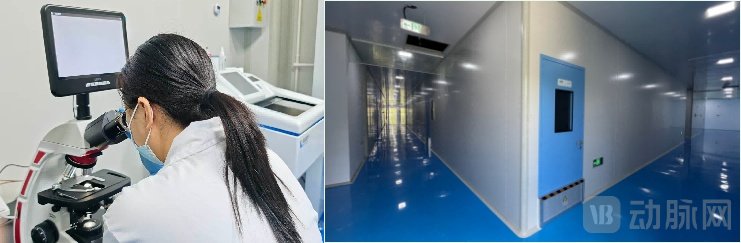
The team's accumulation, R&D and production facilities and capital support have provided the foundation for CHAMFOND to advance ECM product development. But whether the platform capability holds up ultimately depends on whether material design can form a clear product pathway, whether products can withstand clinical validation, and whether the relevant technologies can be reused across different application scenarios. Based on current progress, CHAMFOND's layout can be observed from three dimensions:
First, the material generation shift from "physical filling" to "matrix replacement/microenvironment repair". Existing mainstream products in the nasolabial fold track, whether hyaluronic acid, collagen or regenerative materials, all revolve around "volume supplementation" or "stimulating autologous collagen".
The difference of ECM implant materials lies in that, in the form of decellularized matrix, they replace or repair the matrix itself in the dermis that has already undergone structural changes. From this dimension, CHAMFOND's dermal ECM product belongs to the generation of "intervention at the matrix level", rather than adding one more option within the "filler" generation.
Second, the ECM narrative is moving from a "material story" to "clinical endpoints". ECM has become one of the most concentrated technology narratives in regenerative medical aesthetics, but narrative heat does not equal a product's clinical advantage. From raw material processing to the final formulation, decellularization processes, immunogenicity control, and particle size and dosage form design are all interconnected, and any link may affect how the product performs in the human body. Precisely for this reason, ECM projects that can cross these process thresholds, enter registrational clinical trials and achieve substantive enrollment remain limited.
CHAMFOND is one of the few companies that has gotten through, with all five centers of the nasolabial fold project activated, the leading site starting enrollment in August and passing halfway by late October, a rapid pace. Behind this progress is the smooth operation of decellularization and formulation processes in a real clinical environment, and also direct proof of its platform translation capability.
Finally, the scenario reuse capability of "develop once, output many times". Besides the dermal ECM implant (CF202101) now in multicenter clinical trials, CHAMFOND's second ECM injectable material in medical aesthetics (CF202401) and its first dental restoration product (CF202301) are expected to start clinical trials in the first quarter of 2027; a second, globally exclusive ECM product in the dental field (CF202402) is also poised to launch. Multiple pipelines moving in parallel demonstrate the long-term explosive potential of a high-barrier platform company.
As the goal of completing all clinical enrollment within the year advances steadily, the milestones of this dermal ECM implant continue to be written. Taking a longer view, the combination of ECM with technologies such as 3D printing is pushing the application of such materials toward tissue repair and even organ reconstruction.
Aesthetic injection is only the beginning. Starting from a single nasolabial fold, CHF Biosciences is writing the word "regeneration" into more tissues and more scenarios.