

From a $1 Billion BD Deal to $70 Million in Funding: An Irish Founder's Race to Keep Up with "China Speed"
Ochre Bio
RNA Drug Developer
In Galway, Ireland, there's a pub called Lonergan's. It sits facing the sea, has been open for 66 years, and is said to pour a very good pint of Guinness. It doesn't serve food. People come here purely to drink and talk.
In the autumn of 2024, Jack O'Meara had just left Ochre Bio, the liver disease RNAi company he'd co-founded five years earlier. Soon after, he arranged to meet an old friend at this pub for a few drinks. Both had studied entrepreneurship, and both had family members affected by Alzheimer's disease.
As they talked, the conversation turned to something Jack had been mulling over for years: could siRNA be delivered into the brain to treat Alzheimer's?
The idea itself wasn't new. RNAi had already been proven in the liver — Ochre Bio itself was evidence, having signed BD deals with Boehringer Ingelheim and GSK within two months, worth over $1 billion in total.
But the brain was a different matter. The blood-brain barrier is an extremely tight line of defense. Typically, less than 1% of an intravenously injected drug reaches brain tissue. And even if it gets through, it can't just sit in one corner — it has to distribute throughout the brain's more than 640 kilometers of capillaries, which makes the challenge even harder.
Over beers, Jack and his friend looked at Roche's data for Trontinemab, an Alzheimer's drug and one of the few brain shuttle antibodies in Phase 3. In 28 weeks, it reduced amyloid levels below the positivity threshold in 91% of participants, with cerebral edema occurring in less than 5%.
That moment stayed with Jack. When he left Ochre Bio, he had said: next, he wanted to explore neuroscience — even if it was extremely difficult.
That night, Jack and his friend talked for a long time. The conclusion was simple: the technology might finally be ready. And if that was true, someone should go and find out.
In October 2025, Aerska, an Irish company, raised $21 million to develop a brain shuttle platform that delivers RNA drugs to the brain. Jack is CEO. Dave Hardwicke is co-founder — and Dave was the old friend Jack had drinks with that night.
By May 2026, within eight months, Aerska had raised $70 million in total, roughly RMB 470 million.
A newly founded biotech raising this much this quickly comes down to Jack answering a long list of questions from investors. The first one: can you keep up with the pace of Chinese pharma? But to truly understand Aerska — and why investors were willing to bet on it — you have to go back to Ochre Bio.
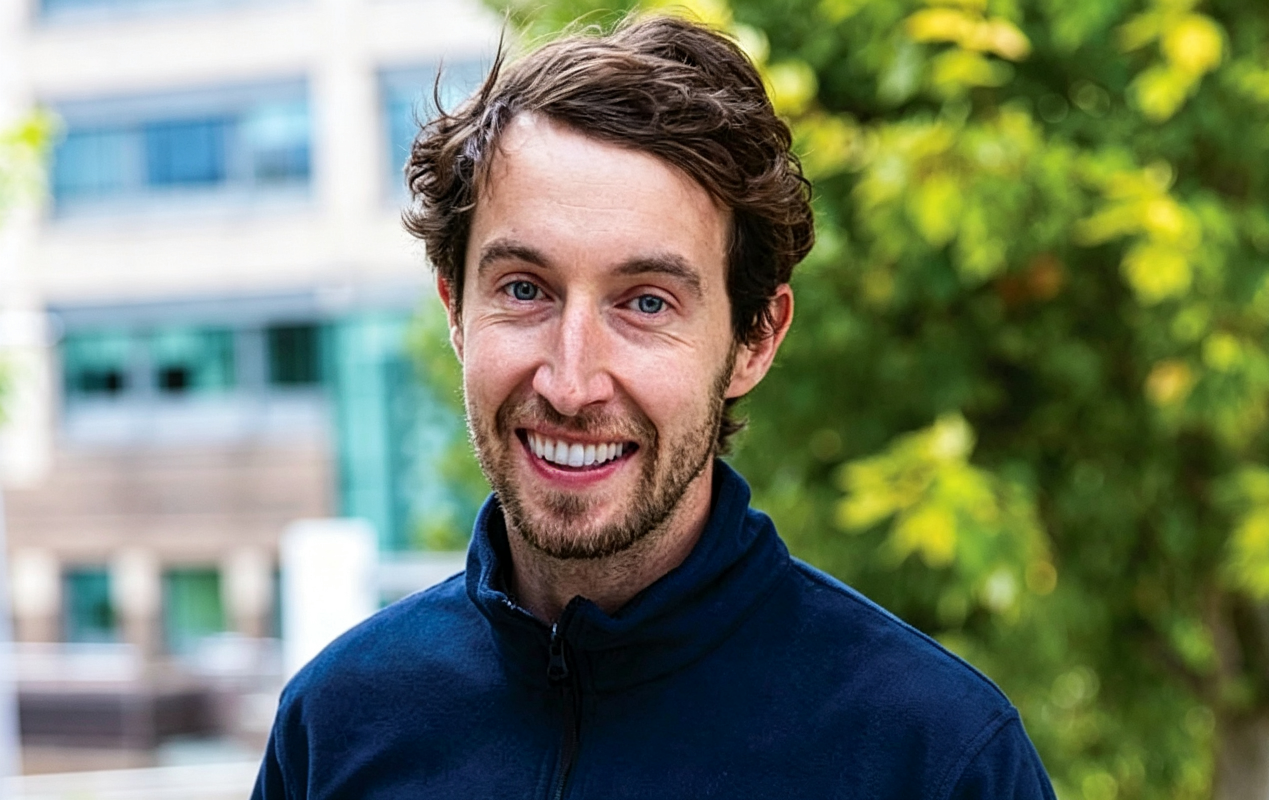
Jack O'Meara
Chief Executive Officer, Co-founder
Former Co-Founder and CEO of Ochre Bio.
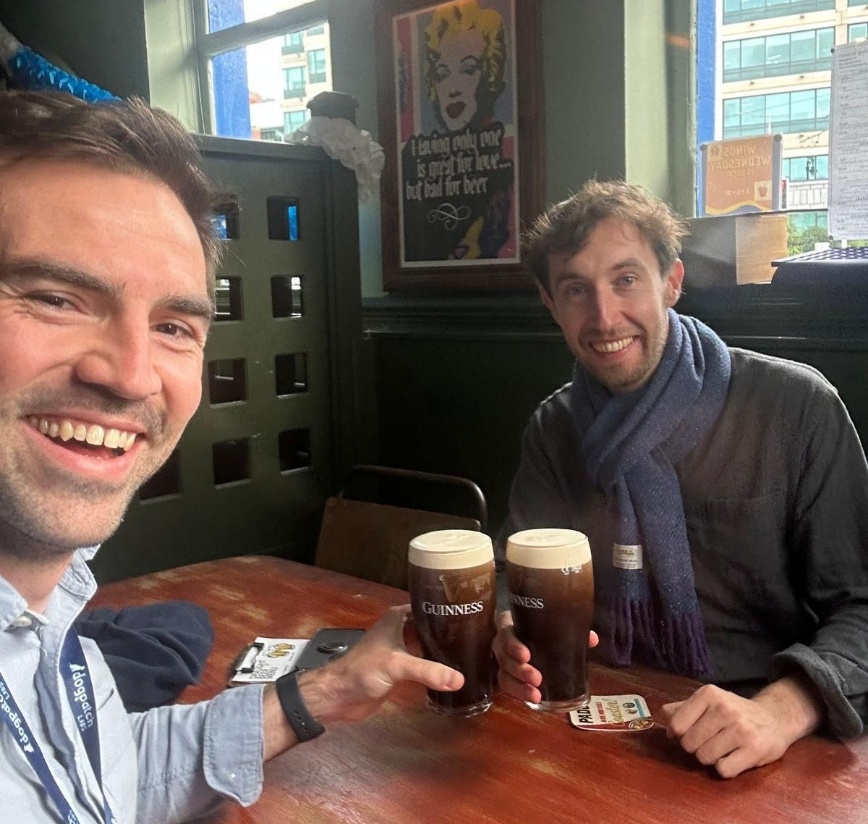
Jack O'Meara (right) and Dave Hardwicke (left) enjoying a Guinness together
1What a $1 Billion Deal Taught Him
Around the world, more than a million people die from liver disease each year. Only about 40,000 receive a transplant. Meanwhile, many donated livers are discarded because they are too fatty, come from older donors, or carry underlying disease, failing to meet transplant criteria.
To Jack, this seemed like a terrible waste.
In 2019, Jack and a partner founded Ochre Bio, headquartered in Oxford, UK. Their idea: use human donor livers rejected by transplant centers to test liver disease drugs — not mice.
Jack's explanation was blunt: liver diseases get cured in mice all the time, but that success has never translated to humans.
They placed these livers in machines called "liver ICUs," simulating human physiological conditions to keep the organs alive outside the body — usually for several days — and then used them to test RNA drugs, seeing whether they could repair the liver or improve its function.
By its Series A, Ochre Bio had analyzed more than 1,000 diseased human livers across three continents. These livers came from real human bodies, carried real disease phenotypes, and were almost closer to real patients than any animal model could be.
This approach — and the data it generated — was what enabled Ochre Bio to secure BD deals with multinational pharma companies.
In April 2024, Boehringer Ingelheim signed a pipeline collaboration with Ochre Bio focused on liver regeneration, with $35 million in upfront and milestone payments and a total potential value exceeding $1 billion.
Two months later, GSK signed a data licensing agreement with Ochre Bio worth $37.5 million, aimed at developing treatments for liver disease.
Jack and Ochre Bio's Chief Business Officer at BIO Europe, trying to close pharma partnerships
When Jack spoke with VCBeat, he preferred to talk about what happened before those deals.
Take the Boehringer deal. The two sides had actually been in contact three years before signing. "At that point, we had nothing tangible to sign," Jack said. "What ultimately won BI over wasn't a pitch — it was seeing us deliver on what we said we'd do, quarter after quarter, over a long period of time."
That's something many founders overlook: in the discovery stage, commercial returns are years away. What the buyer is really betting on is the team — whether they can execute, whether they can get things done.
The same was true with GSK. Ochre Bio spent enormous time on modeling, data prioritization, and data quality — enough rigor to win GSK over. "Novelty gets MNC attention," Jack said. "But only rigor gets a signature. Big pharma doesn't buy ideas. It buys evidence — proof that the project can be trusted with you."
The GSK deal was also unusual in another way. Proving the data had value wasn't hard — GSK saw that quickly. The hard part was that this kind of data licensing deal had almost no precedent in the industry, no template to follow. The entire deal structure had to be designed from scratch.
Exclusivity: after GSK gets the data, can Ochre Bio still license it to others? Target scope: can GSK use the data to study all liver disease targets, or only certain ones? And how do you draw boundaries around an asset that can be used repeatedly without being depleted?
The breakthrough came when both legal teams treated it as a design problem rather than a negotiation.
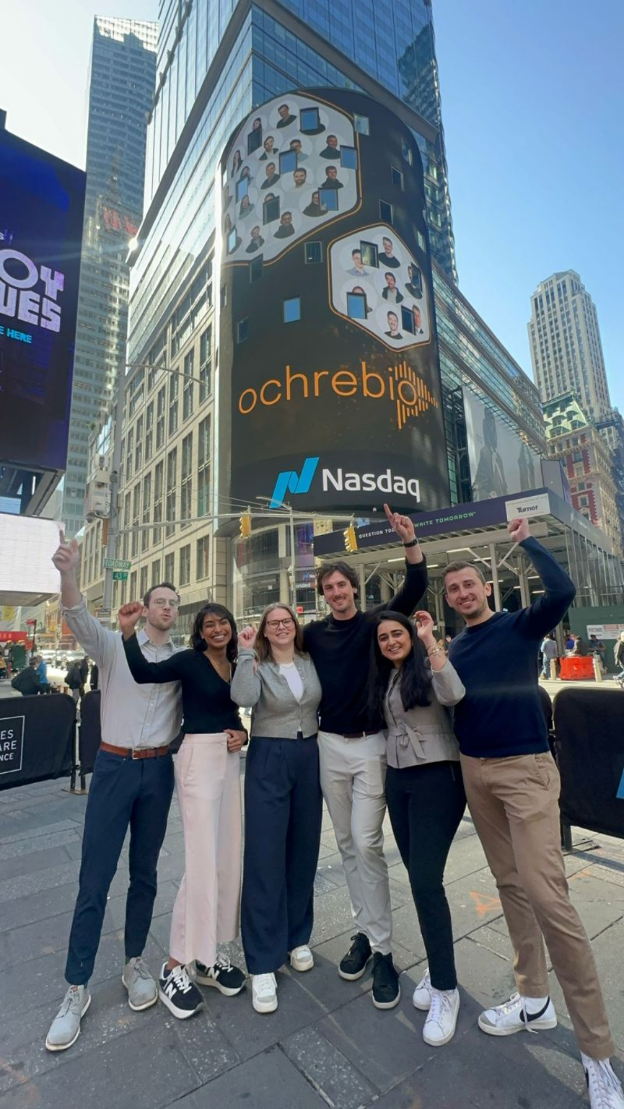
The Ochre Bio team in front of the NASDAQ tower
Those two deals taught Jack something fundamental: what gets a deal done is patience and rigor.
"In this industry, everything truly valuable grows slowly," he said. "The BI deal came from three years of showing up and doing the work. The GSK deal worked because the data quality was real, not because the story was good. Patience with plans and relationships, rigor with data and execution — none of this sounds new. But for me, those are the only two things that have ever actually worked."
"These deals didn't just happen either," Jack told VCBeat. "Ochre Bio's platform was designed from the start around the standard of 'pharma will need this someday.'"
The logic behind those two deals carried through to why Jack founded Aerska: spend a long time building something that truly lasts.
To Jack, Ochre was a good company, but its core was a capability — and capabilities tend to realize their value through partnership. With Aerska, he wanted a different starting point: build a company that can stand on its own. Then choices and opportunities will follow naturally, rather than the other way around.
"I often think about a statistic," he said. "Over the past forty years, thousands of biotech companies have existed. But fewer than twenty have gone from one approved drug to becoming a true multi-product organization. Very few. And they tend to follow the same path: a platform that is repeatable and works across diseases, not a single molecule that worked once."
"That's what Aerska wants to do — build a platform that can be used again and again. That's worth more than any single molecule," Jack said.
2Second Time Around,Not BD for BD's Sake
After completing two major BD deals, Ochre Bio was well-capitalized and the team's morale was high. But Jack felt his mission was complete. As the company entered its next phase, he decided to hand over the CEO baton to someone else to take the company forward, so that he could focus his energy on an even bigger challenge: the brain.
He joked that "liver was too easy", but after five years at Ochre Bio, Jack concluded that he enjoyed the "zero to one" phase the most — building early-stage companies, taking platforms from scratch.
Aerska is Jack's next zero-to-one journey. Its core technology is called "Brain Shuttle," and the principle isn't complicated.
On the endothelial cells of the blood-brain barrier, certain receptors determine which molecules can pass through. The transferrin receptor is one of them — it's responsible for bringing iron into the brain. The Aerska team attaches transferrin-receptor-targeting antibodies to siRNA, forming antibody-oligonucleotide conjugates. When this shuttle binds to the receptor, the drug payload gets pulled across the blood-brain barrier.
This concept wasn't invented by Aerska. Roche's Trontinemab has already demonstrated that brain shuttle platforms can work in humans. But Aerska's goal is different: they want to achieve subcutaneous injection, allowing patients to self-administer at home, rather than spinal injection or intravenous infusion.
In terms of indications, Aerska is focused on genetic Alzheimer's and Parkinson's disease. And CNS small nucleic acid therapeutics are on the eve of a BD wave.
The siRNA market was about $3.5 billion in 2025 and is expected to exceed $12.4 billion by 2030. But approved products are heavily concentrated in liver targeting. Extrahepatic delivery — especially CNS — will be the next stage's most strategically valuable expansion direction.
According to a July 2026 report from Huafu Securities, buyers in CNS small nucleic acid BD deals are highly concentrated among multinational pharma, with a median deal size of about $800 million.
Alnylam's Mivelsiran has already provided preliminary validation of small nucleic acids' feasibility in neuroscience. Arrowhead's ARO-MAPT subcutaneous dosing data is expected in the second half of 2026. As PoC data for AD, ALS, PD and other indications are disclosed in rapid succession, biotechs that have completed delivery technology development and pipeline layout first will enjoy significant pricing power.
But Aerska, founded in 2025, didn't set out targeting BD or M&A from the start.
Jack told VCBeat that of course they consider big pharma's interest — ignoring it would be negligent. But "knowing demand exists" and "designing for demand" are two different things.
"If you build a company just to be sold, then countless small decisions will unconsciously optimize for 'how to sell it,' rather than around the drug and platform itself. Aerska wasn't founded to be BD'd out. It was founded so that if a BD opportunity comes along in the future, we can negotiate from a position of strength."
Jack is also carefully weighing the competitive landscape. In his view, CNS is changing fast. The first approved Alzheimer's antibodies are reshaping patient and regulatory expectations. And China's new pipeline pace is very fast. But internally, Aerska's focus isn't on who else is in the race — it's on whether they can produce data earlier than anyone else to answer the hardest question about their approach. That's the hardest part, and the only race worth running. Everything else is noise.
As for when the first BD deal might happen, Jack told VCBeat: it's an option, not a must-pursue goal. BD is needed only at the right time and when it benefits the company.
In Jack's view, the right time is when the shuttle platform is validated. Before that, deals are priced on expectations, not on data in hand — often resulting in a discount. Once you have late preclinical or early clinical data, the negotiation is completely different. You're no longer selling an idea — you're speaking with real results.
"At Ochre Bio, BD was essentially financing — non-dilutive capital to support the company's broader pipeline ambitions. But at Aerska, the plan from the start is not to rely on partners for funding — we'll generate the data ourselves. So when the first deal comes, whether to do it and how to do it — the terms will be more up to us," Jack told VCBeat.
3The Startup's Required Answer: Can You Keep Up with China Speed?
Jack's attitude toward BD is clear: he won't chase it. So Aerska's ability to raise $70 million in eight months didn't come from BD potential — it came from answering four questions investors cared about most.
The first question points directly at China: Chinese biotechs are setting a faster pace for the entire industry. Can Aerska keep up?
That urgency has evidence. From 2025 to early 2026, China's outbound licensing deals in small nucleic acids exceeded $15 billion in total. In the first half of 2026, six major small nucleic acid deals collectively exceeded $10 billion, including SanegeneBio's $1.5 billion deal with Roche's Genentech and Ribo Life Science's $4.4 billion deal with Madrigal.
And in global clinical-stage siRNA pipelines, China's share is approaching 40%, about to surpass ADCs and bispecifics.
Jack follows the China market closely. On Chinese innovative pharma companies, the three things he and industry friends discuss most are: execution speed, innovation in chemical design (especially in conjugates), and which targets they're pursuing.
The most unavoidable question — similar to debates within China — is whether these pipelines are first-in-class or fast-follow. To Jack, the question itself is outdated. If you've made a new molecule, you shouldn't be called fast-follow. What really tells the story is how much R&D Chinese companies are putting into new targets.
"The scientific quality coming out of Chinese pharma is world-class, and clinical execution speed is clearly faster than Western companies," Jack said. "I don't want to define Chinese pharma as competitors. I prefer to see them as pace-setters — they've set the speed that everyone in the small nucleic acid space now has to match."
"For Aerska, that's a good thing, because it proves companies should be in China from day one, not added later. We're there for the science and the talent, not just the speed. Aerska is actively seeking talent to build its team in China." Jack told VCBeat.
Notably, to keep up with Chinese pharma's pace, AI has become infrastructure at Aerska, involved in target selection, protein design, knowledge management, administrative burden and every other function. Scientist productivity has increased 30–40%. Ochre needed about 10+ data scientists; Aerska does the same with just a couple of computational staff.
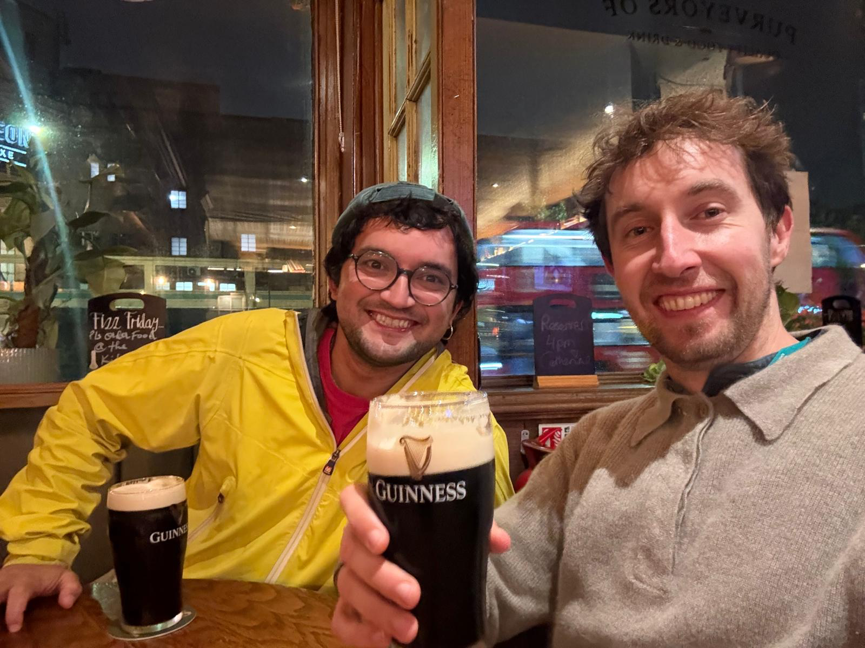
Jack and a friend at a pub in London
Given China's influence, Aerska must also answer a second question: can it produce competitive siRNA candidates?
The team itself is the answer. According to Jack, Aerska's founding team has years of accumulated experience in oligonucleotide design and antibody-oligonucleotide conjugates. In neuroscience, when AstraZeneca's UK neuroscience team was disbanded, a substantial number joined Aerska, bringing translational neuroscience capabilities — a level most startups can't assemble.
The third question investors care about: can Aerska build a shuttle platform that carries siRNA and works in non-human primates?
In siRNA brain delivery, NHP data is the core validation for whether a platform can stand. Rodent brain distribution often appears "falsely uniform," while NHP brain structure and cerebrospinal fluid dynamics are closer to humans, revealing the true heterogeneity of drug distribution in deep brain regions like the striatum. This is the key trust credential for a platform moving from concept to clinic.
Jack didn't avoid the question. What matters to investors isn't certainty. It's that from day one, Aerska has been clear about which questions have answers and which don't. And the shuttle platform question is becoming clearer, surrounding risks have been systematically addressed, and the data so far is encouraging.
The fourth question is the sharpest: is Aerska a pharmaceutical company, or a platform company hoping to become one?
Jack knows clearly: investors aren't buying a delivery platform. They're buying a CNS pharmaceutical company — one that happens to have solved delivery. To Jack, the answer isn't in the technology — it's in the people. With a top-tier board, a scientific advisory board of the best in the field, and a high-quality management team, that question takes care of itself.
Jack spent five years at Ochre Bio proving one thing: everything truly valuable grows slowly. Now, he wants to use the same patience to solve a harder problem — getting siRNA into the brain.
Forty years from now, he hopes Aerska is still here, still making medicines that matter.