

Why Have Chinese Medical Innovation Companies Converged on Riyadh?
Riyadh, the capital of Saudi Arabia, welcomed a landmark gathering of global leaders in medical biotechnology this Mid-September.
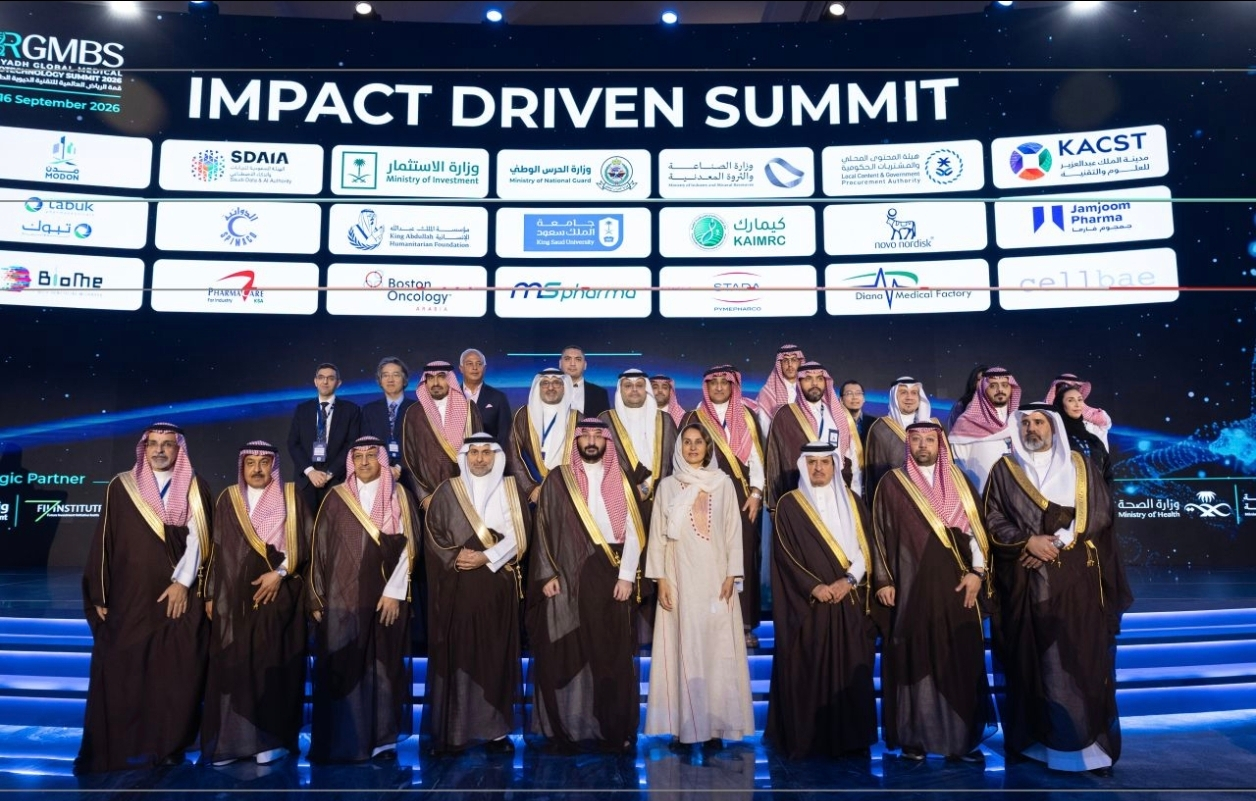
Hosted by the Ministry of National Guard Health Affairs (MNGHA), the 4th Riyadh Global Medical Biotechnology Summit (RGMBS 2026) was held from September 14 to 16 under the theme "Building the Foundations of Biotechnology Excellence."
Over the three-day event, the "China Pavilion," located in the heart of the main venue, was among the busiest areas. Middle Eastern healthcare institution representatives could be seen stopping by the booths to discuss Chinese companies' innovative gene-editing drug pipelines and AI-driven drug discovery platforms, among other biomedical achievements — as well as high-value medical devices such as artificial hearts and CO₂ angiography systems, and IVD products including early cancer screening solutions.
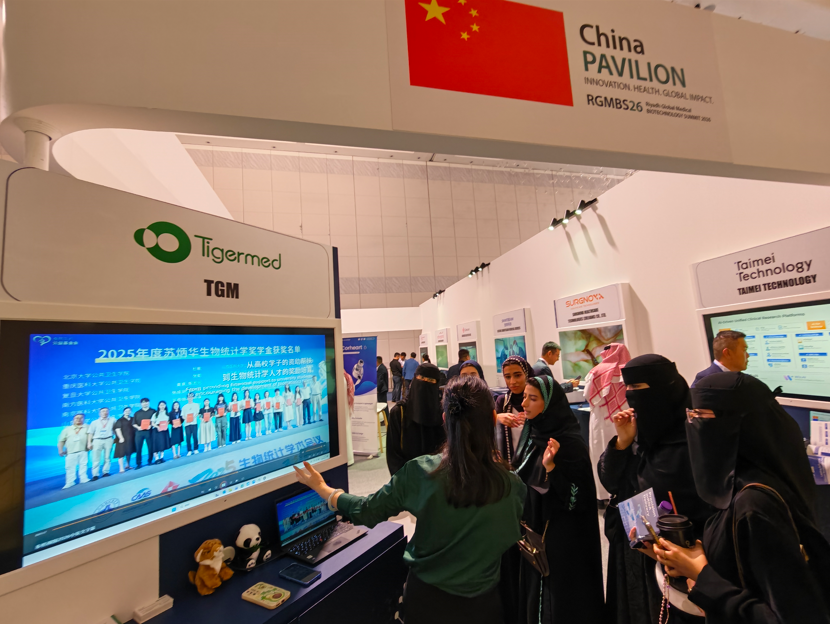
Twelve representative Chinese medical companies, organized by VCBeat Health, appeared at the summit as a unified "China Pavilion" presence — in Riyadh.
The questions naturally follow: Why Riyadh? Why now? And why a "group" of companies?
Behind it all is a shift in the center of gravity of Chinese medical innovation's going-global journey — from traditional markets in Europe and the U.S. to emerging markets such as the Middle East.
For Chinese medical companies, going global is no longer a choice but an industry-wide trend. As centralized procurement and intensifying competition at home continue to squeeze profit margins, seeking growth beyond borders has become a strategic consensus for a growing number of companies. The real question is: where to go?
Traditional markets such as the U.S. and Japan are getting increasingly difficult. According to data from the China Chamber of Commerce for Import & Export of Medicines & Health Products (CCCMHPIE), China's medical device exports to the U.S. fell 10.77% year-on-year in 2025 (a decline linked to trade frictions), while exports to Japan grew by a mere 1.47%. Emerging markets such as the Middle East, by contrast, have been growing steadily. In 2025, China's medical device exports to the Middle East reached US$2.065 billion, up 6.63% year-on-year. Among them, leading markets played a dominant role — Saudi Arabia, in particular, as the region's largest export destination, grew 11.32% year-on-year and became the core driver of regional growth.
The Middle East is becoming the "next stop" for Chinese medical companies going global.
This is no accident. The Middle East is one of the fastest-growing healthcare markets in the world. IQVIA projects that healthcare spending in the Middle East and North Africa will grow 35%–55% between 2023 and 2027, far outpacing the global average of 3%–6%. Moreover, Saudi Arabia's GDP per capita has surpassed US$20,000, giving it exceptionally strong capacity to pay for healthcare. The region presents a demand space almost tailor-made for China's high-end devices and innovative companies.
Even more notable is Saudi Arabia's distinctive disease profile. The Kingdom carries a burden of chronic and genetic diseases far above the global average: diabetes and obesity are highly prevalent, and the incidence of recessive genetic disorders such as thalassemia is several times the global level. This translates into sustained demand for blood-glucose monitoring and chronic disease management, cardiovascular intervention, genetic testing and molecular diagnostics, and medical imaging — precisely the areas where Chinese medical innovation has its densest supply.
Policy, meanwhile, determines "how large the market is and how long the window lasts." Under Saudi Vision 2030, healthcare has been designated a core pillar of national transformation, with US$65 billion planned for upgrading healthcare infrastructure. The National Biotechnology Strategy (NBS) released in 2024 goes further, targeting a contribution to non-oil GDP of roughly 3% — exceeding US$34.6 billion — from biotechnology by 2040.
Within this predictable and sustainable market space, Chinese pioneers have long been "scouting the path." For example, BGI Group established a joint venture in Saudi, launching comprehensive strategic cooperation across three areas — healthcare and medical services, scientific research and innovation, and talent development. United Imaging Healthcare has forged strategic partnerships with multiple Saudi healthcare groups. Mindray has achieved "full product-line in-depth registration" in Saudi and is advancing national-level cooperation. Sansure Biotech earlier announced a major partnership to expand into infectious diseases, public health, and oncology and chronic disease management..
Against this backdrop, going global in the Middle East is undoubtedly well-timed. But it is important to recognize that, from regulatory registration to localized operations, Saudi Arabia operates under entry rules entirely different from those of Europe and the U.S.
This leads naturally to the next question: why did Chinese medical innovation companies choose to converge on RGMBS 2026?
What Saudi Arabia wants has never been mere products or services, but technology transfer, localization of the industrial chain, and regulatory alignment—none of which can be achieved simply by attending an ordinary trade show. From the registration pathway of the Saudi Food and Drug Authority (SFDA), to local-content employment requirements, to the Kingdom's Regional Headquarters (RHQ) Program, every step tests the capability of outsiders.
Going it alone is extremely costly.
What makes RGMBS special is that it is itself the "flagship platform" of Saudi Arabia's national biotechnology strategy. The summit is held under the patronage of the Crown Prince, hosted by MNGHA, with MISA as a strategic partner. This year's theme focuses on "Building the Foundations of Biotechnology Excellence," built around four pillars—capacity building, investment and financing, R&D infrastructure, and government strategy and regulation—which together cover almost every node a foreign company must unlock to enter the Saudi market.
Step inside the venue, and one sees a summit where government, industry, academia, clinical practice, and investment sit in the same room.
On the policy and regulatory front, decision-makers such as Dr. Bandar Al Knawy, Chief Executive Officer of the MNGHA, Hisham Aljadhey, CEO of the SFDA, and Ammar Altaf, Assistant Deputy Minister for Industrial Sectors at the Ministry of Investment, attended in person and delivered remarks or joined discussions on topics such as policy trend and regulation enabler—which means Chinese companies can talk directly at the summit to the policy makers in the field.
On the global industry and capital front, Kasim Kutay, CEO of Novo Holdings — one of the world's largest life-science investors — delivered a keynote on "investing in AI to shape the future of biotechnology"; AstraZeneca's cell and gene therapy leadership team and the CEO of Lifera, Saudi Arabia's national biotech champion, were all present; and experts from KAIMRC, the Kingdom's leading research institution, were deeply involved as well.
On the academic front, leading scholars from Harvard University, Stanford University, MIT, and Korea's KAIST held in-depth discussions on frontier topics including mitochondrial gene editing, CRISPR engineering, immuno-oncology, and nanomedicine.
Naturally, the summit also featured Chinese faces: Steve Yang, Co-CEO of WuXi AppTec, and Xiaoguang Lei, Boya Chair Professor at Peking University, engaged in frontier discussions on biotechnology, while scholars such as George F. Gao of the Institute of Microbiology, Chinese Academy of Sciences, and Lintao Cai of the Shenzhen Institute of Advanced Technology also appeared on the guest list — Chinese academic and industrial forces are already deeply embedded in the summit agenda itself.
The forum design is equally telling. The three-day agenda is organized into six tracks—AI and Biotechnology, Multi-Omics, Investment, Cross-Immune Insights, Bioengineering and Synthetic Biology, and Talent and Regulation—echoing the summit's four pillars. For Chinese companies going global, these tracks correspond precisely to what they care about most: how to understand policy, how to navigate regulation, where to find partners, where the money comes from, and where the talent is. This is less an academic conference than a resource pool, built around a national biotechnology strategy, that companies can tap into on site.
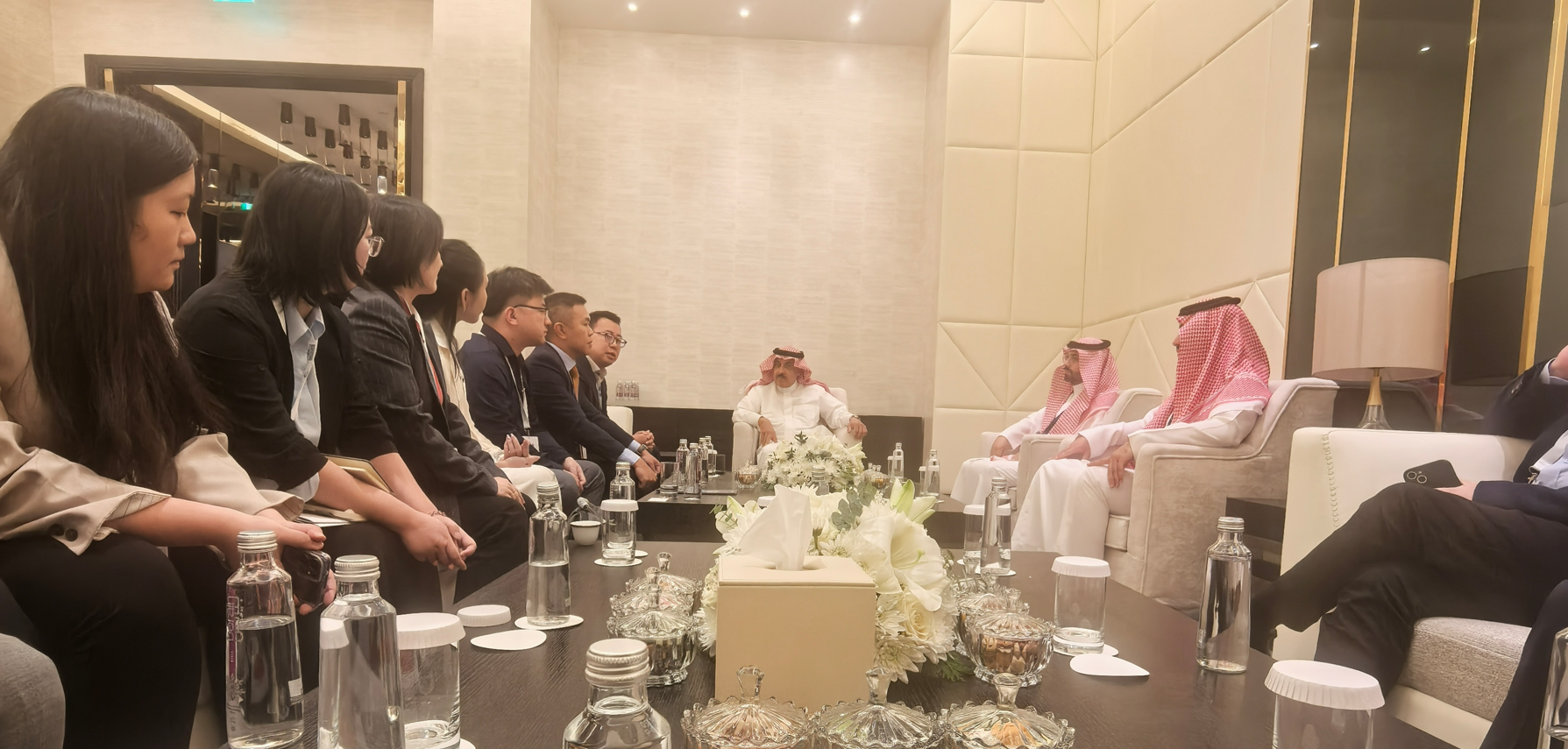
Minister of Health Affairs Dr. Bandarled a delegation to meet with representatives of the Chinese group to discuss cooperation matters.
More importantly, RGMBS has never been "just a forum." Official data shows that the first three editions of the summit produced 59 cooperation agreements in total, with partners including global giants such as Pfizer, AstraZeneca, and Novo Nordisk. This year's official targets are 65-plus agreements, participation from 70-plus countries, and 100-plus speakers.
For Chinese companies, the value of RGMBS as a strategic platform lies in gaining policy insight, making connections, and even signing deals at minimal time and trial-and-error cost—the scarcest resources in the Middle East going-global journey.
Back to the summit floor. VCBeat Health, acting as a strategic partner, organized 12 Chinese medical innovation companies to exhibit under the unified "China Pavilion" image—and these 12 companies happen to form a "panoramic slice" of China's medical innovation going-global solutions.
Over the past few years, Chinese medical going-global has shifted from "single-point trials" to "group expeditions," and what companies take abroad has shifted from "single products" to "end-to-end solutions." The convergence of 12 Chinese innovative companies in Riyadh is not a random patchwork but an optimal combination tailored to the real needs of the Middle East market.
The first group are providers of "infrastructure" for going global. The first problems Chinese companies encounter when entering emerging markets are usually how to run clinical research and how to manage data. Tigermed, as China's leading clinical CRO, has global multi-center clinical research capabilities and can help innovative drug and device companies establish clinical and registration pathways in the Middle East; Taimei Technology provides life-science digitalization solutions, moving the entire clinical research process online — together, they solve the "foundation" problem.
The second group represent original innovation. Middle Eastern countries are systematically building out next-generation biotechnology, and China's supply on this track is accelerating. XtalPi, with its AI- and quantum-physics-driven drug design platform, exports computation-driven R&D capabilities to global pharma; Reforgene focuses on gene-editing innovative drugs, and its gene-editing therapy for thalassemia hits directly at the treatment gap for genetic diseases that are highly prevalent in the Middle East — the most direct response of "Chinese innovation" to "Middle Eastern demand."
The third group are exporters of diagnostic capabilities. Facing enormous testing demand across infectious diseases, oncology, and genetic disorders, Chinese molecular diagnostics companies have clear strengths. Sansure is a leading molecular diagnostics company with complete nucleic-acid diagnostic solutions; Kante Biotech focuses on early cancer screening and digital pathology; CellsVision enters through AI-assisted pathology diagnosis, and its AI-assisted cervical cytopathology diagnostic product secured China's first Class Ⅲ registration certificate in the field — together, they bring the ability to "detect disease earlier" to the Middle East.
The fourth group are suppliers of high-value medical devices. Saudi Arabia's premium healthcare market relies on imports and favors high-end products, leaving ample room for companies with import-substitution capabilities: AMT Medical's CO₂ angiography system is the first domestically approved product of its kind in China, and its 3D-printed biodegradable vascular stents sit at the industry frontier; HXCOREMED's artificial heart, Corheart 6, represents China's breakthrough in high-end implantable devices; Surgnova Healthcare Technologies focuses on minimally invasive surgical instruments; SMARTBEAM has achieved self-reliance in core vacuum electronic components such as CT tubes; and HOMED is deeply engaged in smart nebulization and respiratory health — their going-global points toward being "needed."
From clinical foundations and original innovation to diagnostic capability and high-value devices, the four groups of companies together cover the full-chain demand of the Middle East market, from "detecting disease" to "treating disease."
What VCBeat Health hopes to do is reduce the trial-and-error cost of individual companies by leading group expeditions; and, by presenting this force of innovation, help "China's high-quality medical assets" be seen by overseas markets, so that the value of these companies can be assessed more accurately.
Shift the gaze away from the summit floor, and what the going-global wave needs is calm.
Industry voices have said it plainly: "If you're going global, be prepared to lose money for two or three years." Going global rarely delivers big results in the short term; it is a marathon requiring long-term investment. Others have pointed out that those who truly have the last laugh are never the companies treating going global as a lifeline, but those whose products have real innovation and meet real local demand.
In the Middle East, the thresholds are equally real. The RHQ Program, brand recognition, compliance, and data security—every hurdle demands hard investment and long-term localized operations.
This is precisely why platforms like RGMBS matter: they compress complex policies, scattered resources, and uncertain opportunities into a three-day window, making "going global by leveraging the summit, going global as a group" a viable path for companies.
From a broader perspective, RGMBS 2026 is a vivid testament to China–Saudi healthcare cooperation entering a new phase: Saudi Arabia is opening its doors to global biotechnology innovation with the full weight of a national strategy, while Chinese medical innovation is going global as an industrial cluster. When "Chinese medical innovation" meets the "Riyadh moment," the story is just beginning.
Will more Chinese faces appear in Riyadh at the next summit? The answer is undoubtedly yes.